|
Getting your Trinity Audio player ready...
|
A Los Angeles writer channels heartbreak, identity, and cultural mythology into a debut collection that reads like a breakup album.
There’s a particular kind of Los Angeles story that starts in contradiction; somewhere between access and distance, glamour and improvisation. For Vanessa Bronson, it begins in Santa Clarita, and on weekends, stretches into Beverly Hills.
“We were like the Slums of Beverly Hills,” she says, recalling the split-screen upbringing that would quietly define her perspective. Weekends meant time with her father, a working musician, in tiny apartments, moving between spaces that felt temporary and alive. Nights were spent at his gigs at the Four Seasons Lounge, where he played in the house band, and Bronson, along with her older brothers, watched the mechanics of performance long before she had language for it.
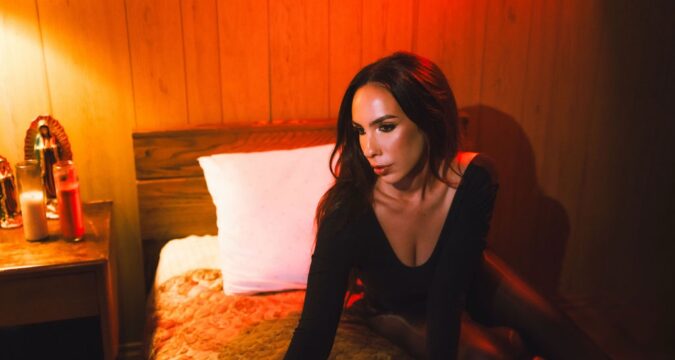
Now based in the Hollywood Hills, Bronson’s work sits at the intersection of those early contradictions: intimacy and spectacle, romance and power, personal mythology and cultural narrative.
Bronson studied at the University of Washington where she began to formalize her instinctive curiosity about people, behavior, and the quiet systems underneath both. Eventually, she found her way into the music industry, working behind the scenes while developing a voice of her own where she doesn’t just observe culture, but interrogates it.
That voice first took shape publicly through her website, where she published an open diary series titled Bedtime Stories, running from 2024 to 2025. The series reads less like a blog and more like a cultural autopsy with essays dissecting masculinity and femininity, love, and power dynamics through the lens of iconic rock ’n’ roll relationships.
While the subjects of famous couples, public implosions, and the mythology of desire are familiar, the framing is unique.Bronson used them as entry points into something more personal, drawing connections between these cultural archetypes and her own experiences, while mapping a broader social landscape. “I’m not really concerned with exploring nostalgia,” she explains. “Rather, I’m interested in what these real-life stories reveal about how we operate.”
The through-line of the idea that personal relationships are never just personal carries into her debut poetry collection, Drink Me Fast, Eat Me Slow.
If Bedtime Stories was analysis, the book is release.
Written over several years, the collection traces what Bronson describes as the “hidden heartbreak” of the not always obvious endings, but the quieter fractures that accumulate over time. The result is a body of work that feels fully realized, steeped in sadness but sharpened by clarity. There’s a dark, controlled and intentional lyricism running throughout that shifts between tones with precision. At times, the work cuts cleanly; at others, it turns unexpectedly wry, even comical. She takes no prisoners. “If I were a pop star,” she halfway jokes “this would be my breakup album,” she says.
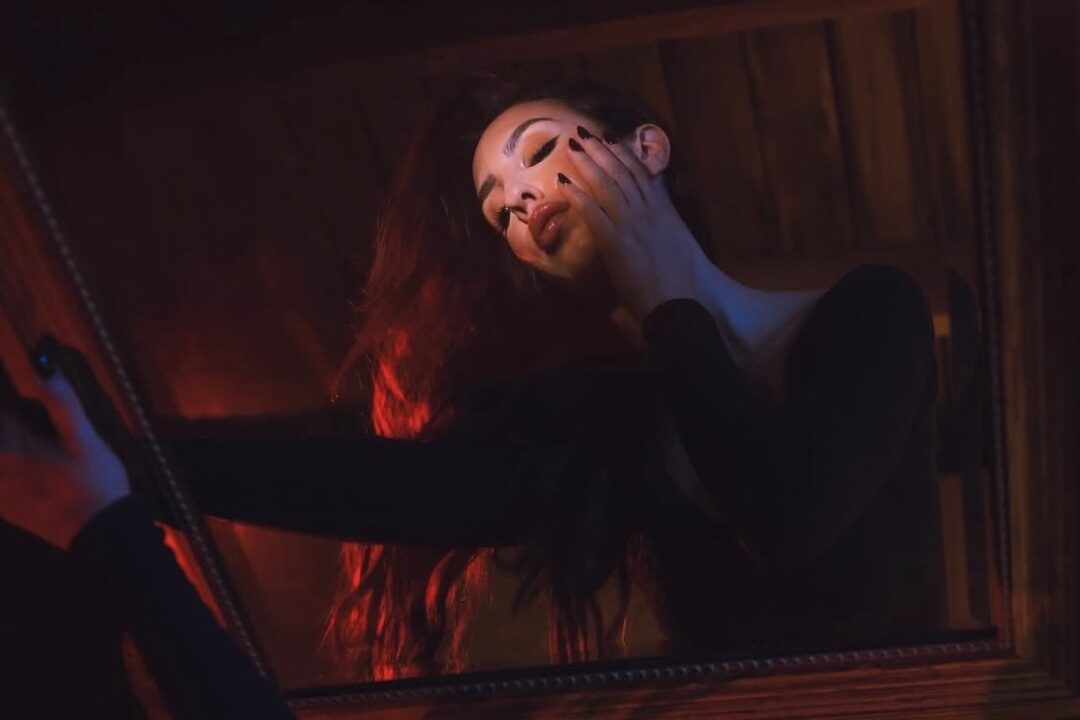
It’s not just a metaphor. The book reads like one with internal rhythm as a cohesive, immersive piece rather than a loose collection. Themes echo and evolve, emotional beats rise and collapse, and what emerges is something structured, almost sonic. Each poem stands on its own, but together they form a unified arc: a narrative of longing, disillusionment, and ultimately, reclamation.
Through emotional crescendos without spectacle, the power shifts across the pages without announcement, pleading, or performing for resolution. Because of this, Bronson may have just invented a new sad girl genre: Revenge Poetry.
Her sense of intention extends beyond the writing itself and into the physical object. In addition to the standard paperback edition available wherever books are sold, Drink Me Fast, Eat Me Slow has been produced as a limited hardcover edition. A tactile, considered piece designed to exist as more than just text. Bound in black cloth with foil debossing, featuring deckled-edge paper and a ribbon marker, each copy is signed and part of an extremely limited run, available directly through Bronson’s website. Expanding the reach of the project that is, at its core, deeply personal but deliberately positioned within a broader cultural conversation is about striking balance, and to Bronson, that matters.
“I want this to feel like something you live with,” she says, “I want it to resist disposability.”
That concept runs through everything she’s building. Between her essays, her poetry, and an expanding body of visual and written work, Bronson is positioning herself not just as a writer, but as a cultural voice with a distinct lens: one that treats romance, identity, and power not as isolated experiences, but as reflections of a larger system we’re all still trying to understand.
In a landscape saturated with commentary, her work doesn’t try to keep up. It slows things down, sharpens the focus, and asks a different question:
Not just what happened, but what it meant.
Official release date for Drink Me Fast, Eat Me Slow, June 18, 2026.
Photography by Dexter Brown
Instagram: @dexterbrownfoto
Website: tellyouastory.co
Instagram: @vbrons