|
Getting your Trinity Audio player ready...
|
Olvera Street has survived nearly a century as one of Los Angeles’ most recognizable cultural destinations, but today the historic marketplace is fighting for its life.
If you had wandered through this corner of Los Angeles in the early 1800s, you would have found yourself in a young pueblo where the sounds of church bells drifted across the plaza, horse-drawn wagons rumbled over dusty roads, and the Los Angeles River flowed much closer to the settlement than it does today.
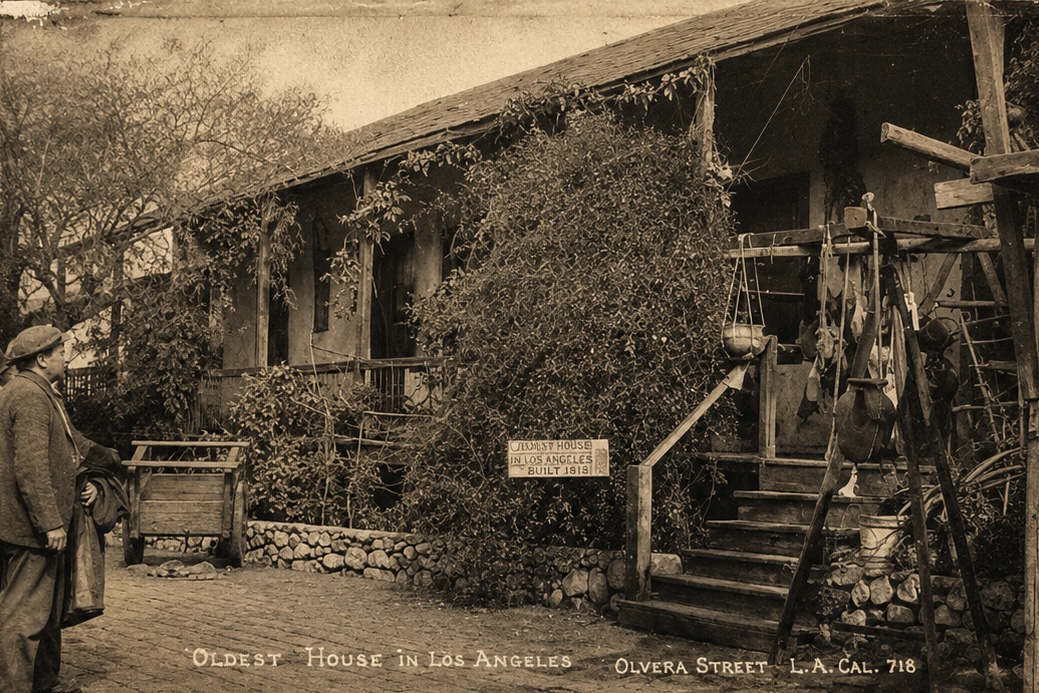
Standing proudly nearby was the newly built Avila Adobe, completed in 1818 by pobladores. Its whitewashed walls gleamed beneath the California sun, its red clay roof tiles were still new, and its cool interior offered refuge from the day’s heat. It wasn’t a museum then. It was simply a family’s home in what would become the birthplace of Los Angeles.
Fast-forward to the late 1920s. The once-proud neighborhood had fallen into decline, and many of its historic adobe buildings faced demolition. Had you stood here then, you would have watched preservationist Christine Sterling fight to save the historic site.
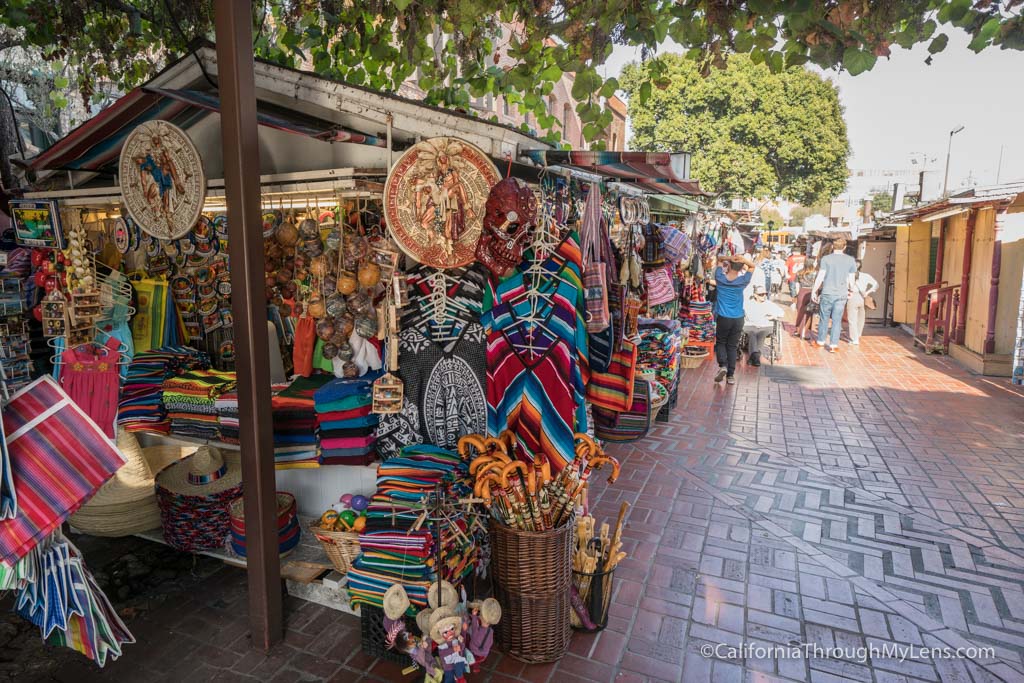
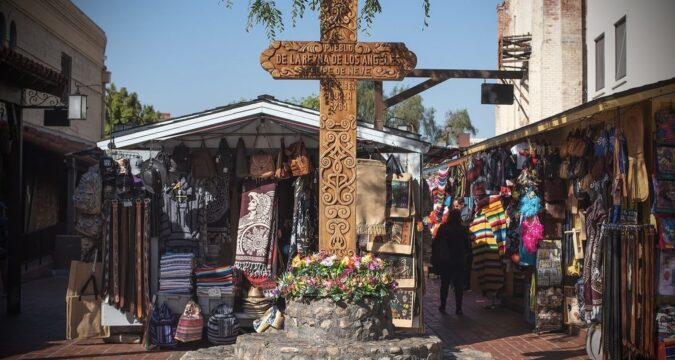
Photo courtesy California Through My Lens
On Easter Sunday, April 20, 1930, her vision became reality as Olvera Street officially opened as a colorful Mexican marketplace. Where wagons and horses once passed the Avila Adobe, visitors now strolled between brightly decorated stalls overflowing with handcrafted pottery, leather goods, embroidered dresses, hand-made leather crafts, toys, piñatas, folk art and traditional Mexican crafts. Mariachis filled the plaza with music, the aroma of fresh tortillas, taquitos and churros drifted through the air, and the reborn street quickly became one of Southern California’s most beloved tourist attractions.
Fast-forward through the decades, and you’d find generation after generation making the same walk. Tourists arrived from around the world. Families returned year after year. School buses lined nearby streets as children came to learn where Los Angeles began.
For modern day families, Olvera Street was a tradition. It was where we gathered to celebrate Cinco de Mayo, Día de los Muertos, Las Posadas and the annual Blessing of the Animals and the list goes on. Through an entrance marketed by a wooden cross planted in stone, we came to shop, dine and immerse ourselves in the sights and sounds of Mexican culture through mariachi music, folklórico and Aztec dancers, and birthday celebrations at our favorite family-run businesses.
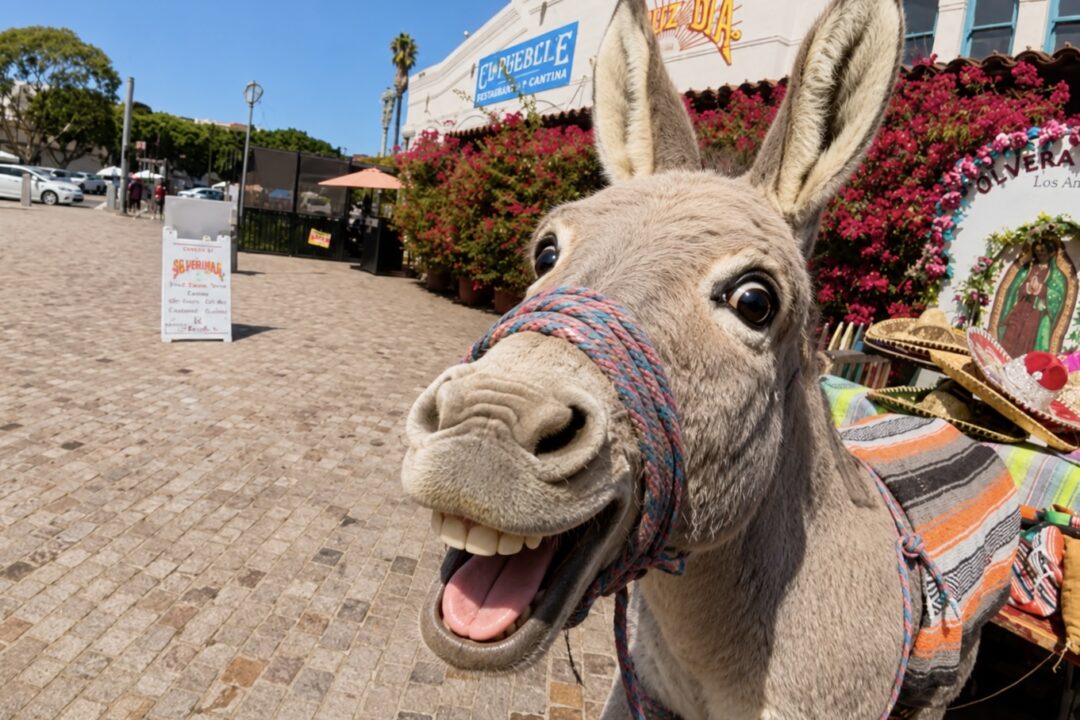
And waiting at the end of it all was that famous burro, Jorge. For more than half a century, we joined the generations before us that climbed onto the saddle while our parents paid the $5 or so to capture a a cherished childhood moment of us in that sombrero.
When public gatherings and tourism stopped in 2020, Olvera Street lost the very activity that sustained it. School field trips disappeared, international travelers stayed home and festivals were canceled. Restaurants could technically offer takeout, but the location was reportedly difficult to access for delivery drivers.
According to the Los Angeles Times, frustration among Olvera Street merchants began mounting during the COVID-19 pandemic as more than 70 businesses appealed to the City of Los Angeles for help, warning that without rent relief and financial assistance, generations of family-owned shops and restaurants could disappear.
Merchants argued they weren’t simply trying to save their businesses—they were trying to preserve one of Los Angeles’ most important cultural landmarks. Although the city ultimately approved millions of dollars in rent forgiveness and other assistance, many business owners later told the Los Angeles Times that the marketplace never fully recovered, citing the loss of tourism, declining foot traffic and the lasting economic effects of the pandemic.
According to La Opinión, approximately 20 businesses have already closed on Olvera Street as merchants continue to struggle with declining tourism, rising costs and the lingering effects of the COVID-19 pandemic. Historic landmarks such as La Golondrina Cafe have already been lost. And Jorge, he’s gone, leaving behind only the photographs and memories tucked away in our family albums.
Many merchants believed the 2026 FIFA World Cup would deliver the customers they desperately needed. Los Angeles welcomed international visitors and hosted major matches, but vendors told LAist that the promised economic boost largely passed them by.
Public-safety concerns have added to the problem. Homelessness and untreated mental-health crises surrounding portions of Downtown Los Angeles have changed how some families perceive the journey to Olvera Street. Merchants raised concerns about panhandling, encampments and nearby homeless facilities even before the pandemic.
A New Hope
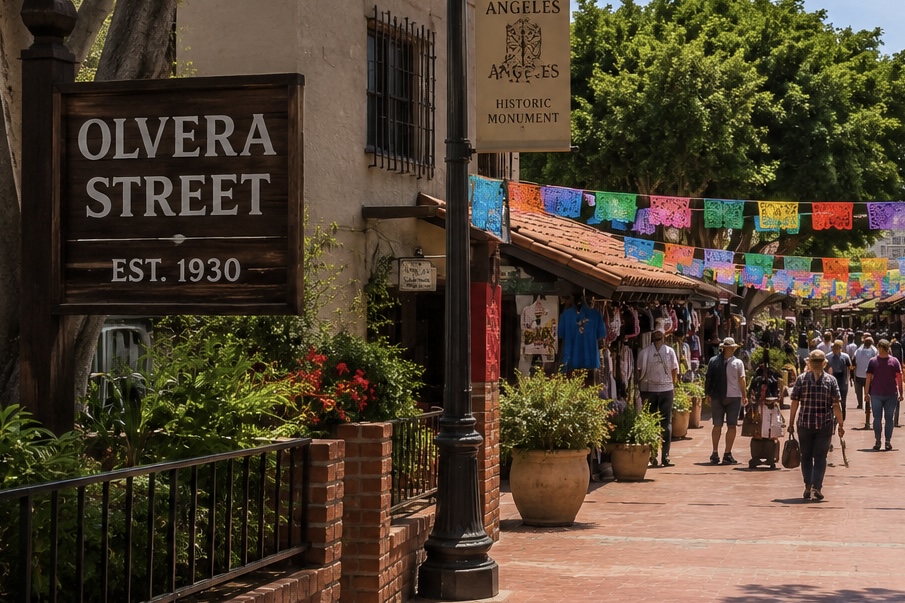
Few stories illustrate both the crisis and the possibility of recovery better than Cielito Lindo.
Founded by Aurora Guerrero in the 1930s, the family-run stand became famous for hand-rolled taquitos covered in avocado salsa. After decades as one of Olvera Street’s best-known food destinations, Cielito Lindo temporarily closed in May 2026 amid rising expenses, staffing difficulties, overdue rent and the lingering effects of the pandemic.
The closure inspired an extraordinary community response. Influencers, food historians and local content creators were already using their platforms to remind Angelenos what is at stake. Their efforts helped bring attention—and donations—to Cielito Lindo.
Cielito Lindo reopened in June 2026 with limited hours.
That same momentum has become a sustained movement, encouraging people to eat, shop, attend events and spend time on Olvera Street throughout the year.
More than anything, the campaign proved through good times and bad, pandemics, economic downturns and even slow-moving city processes, it would have to be us to keep Olvera Street alive.
So, when was the last time you took a trip to Olvera Street? These days, the birthplace of Los Angeles awaits with its historic landmarks, calls to worship, marketplace, eateries and new events like Mercado Night Market joining annual celebrations like Mexican Independence Day, and Día de los Muertos. See you
Olvera Street is located on the corner of Cesar Chavez and Alameda Streets in Downtown Los Angeles Olvera St, Los Angeles, CA 90012.