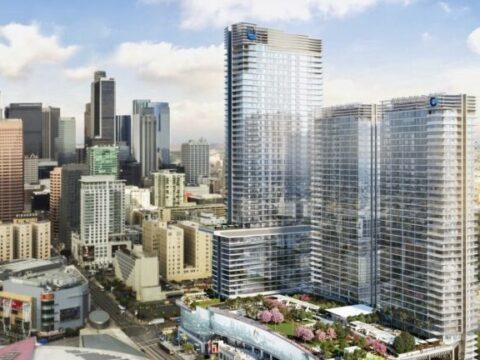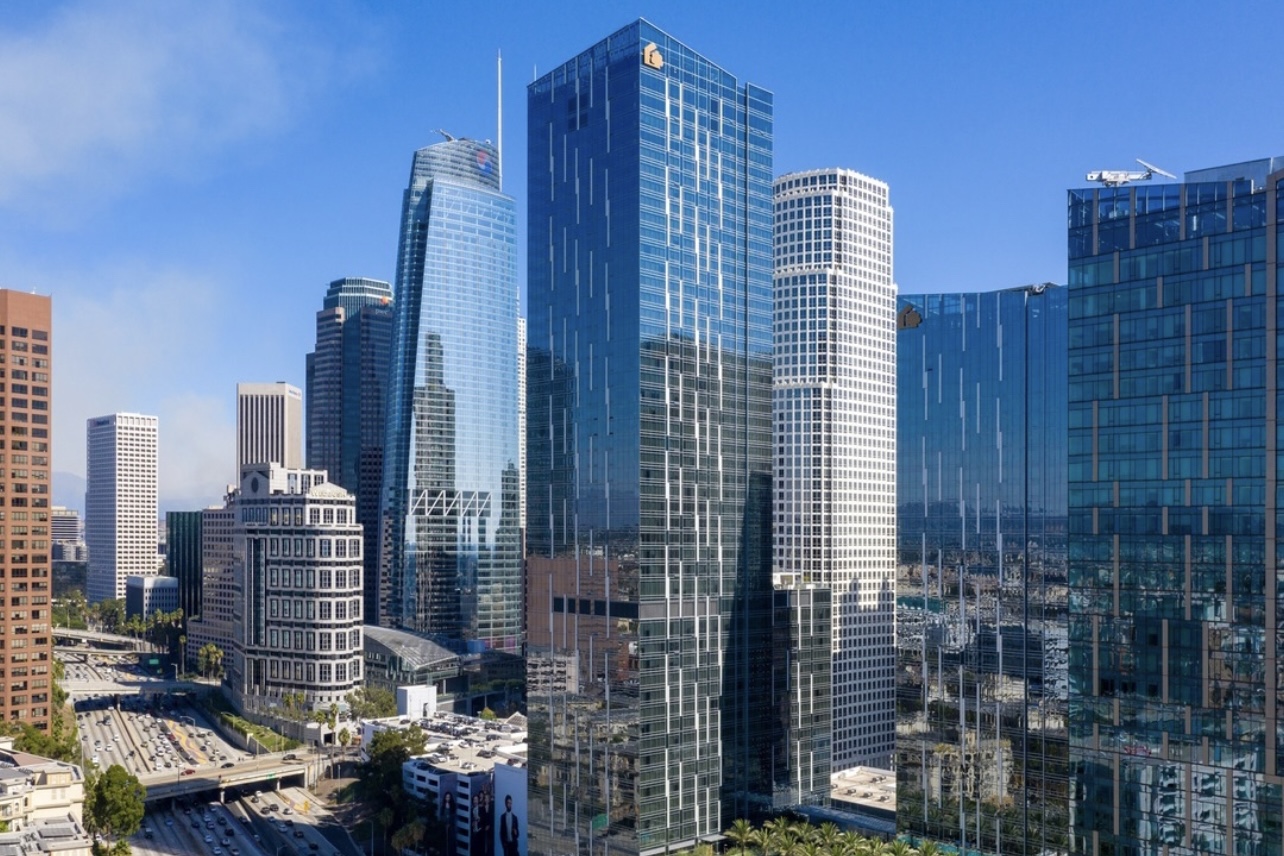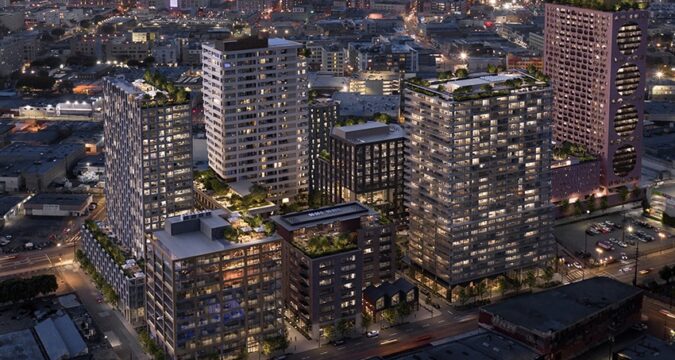
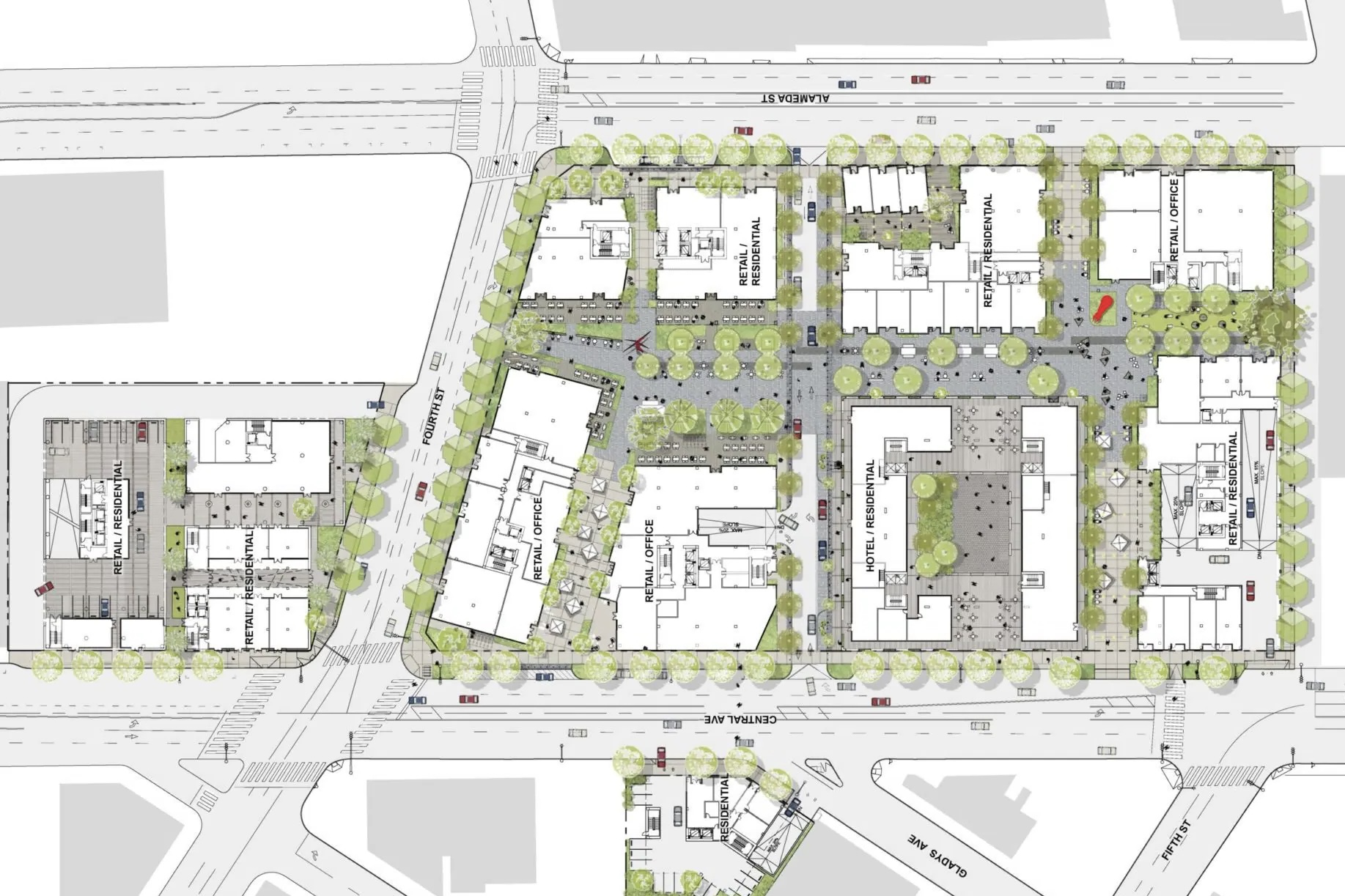
Brace yourself, Downtown LA, because here comes a new development plan for Little Tokyo that promises to pump $2 billion into the local economy and replace a massive cold storage warehouse with a sleek, ten-building complex. It sounds like a masterpiece of modern urban planning… what could go wrong?
Photos courtesy of Forth & Central.
This project, known as Fourth & Central, is being hailed as a historic investment that will create 10,000 union construction jobs and 4,000 permanent positions, effectively acting as a new gateway between the Arts District and Little Tokyo… what could go wrong?
Fourth & Central project aims to deliver 1,589 residential units, including roughly 250 affordable apartments, which the developer claims is the highest number ever proposed for a private market-rate project in the city. With two acres of public open space, 400 new trees, and a 100% electric, carbon-neutral design, again for the last time… what could go wrong?
What could go wrong according to the opposition, is the physical health of the neighborhood’s most vulnerable residents during a construction phase expected to last up to seven years.
Community activists from Sustainable Little Tokyo and the Save Our Seniors Network are sounding the alarm because the project’s own Environmental Impact Report (EIR) admits to “significant and unavoidable” impacts regarding air quality and noise. For the seniors living in the adjacent Little Tokyo Towers—the largest low-income Asian senior housing unit on the West Coast—the constant fine dust and construction pollution pose a direct threat to their respiratory health.
Neighbors are opposed because they feel the developer’s plan to mitigate these effects is vague and lacks a scientifically backed strategy to protect the children in nearby childcare centers and the elderly who cannot simply move away from the noise and debris.
Photos courtesy of Forth & Central.
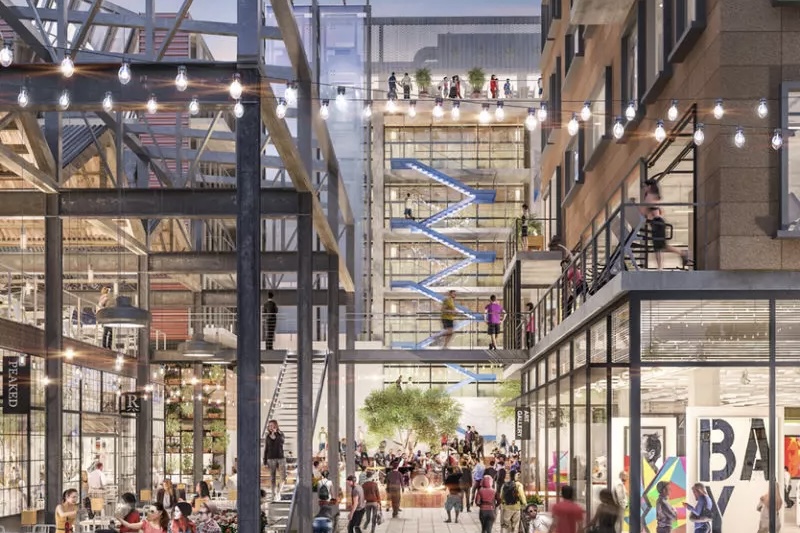
The development promises to be a transit-oriented dream, sitting just a short walk from the new Metro Regional Connector and offering 145,000 square feet of fresh retail and restaurant space to revitalize the area.
Good Bye, Little Tokyo?
Most likely, no. The district is branded heavily as one of America’s top tourism destinations. Yet, for generations of locals caught in the never ending battle to defuse the “gentrification bomb”, from WWII to the present, they and some local business owners fear this newest explosion of change being planned for Little Tokyo will obliterate the cultural identity of the district.
Limited Affordable Housing vs. High Market Rates
While 250 units are affordable, the remaining 1,300+ units are luxury market-rate apartments that critics argue will act as a magnet for land speculation, driving up property values and taxes across the entire neighborhood.
Small business owners, like Carol Tanita of Rafu Bussan, are opposed because they know that even a 10% rent hike can be the death knell for legacy shops that have served the community for decades. They argue this project serves hypothetical newcomers rather than the residents who have spent 140 years building Little Tokyo’s heart.
Photos courtesy of Forth & Central.
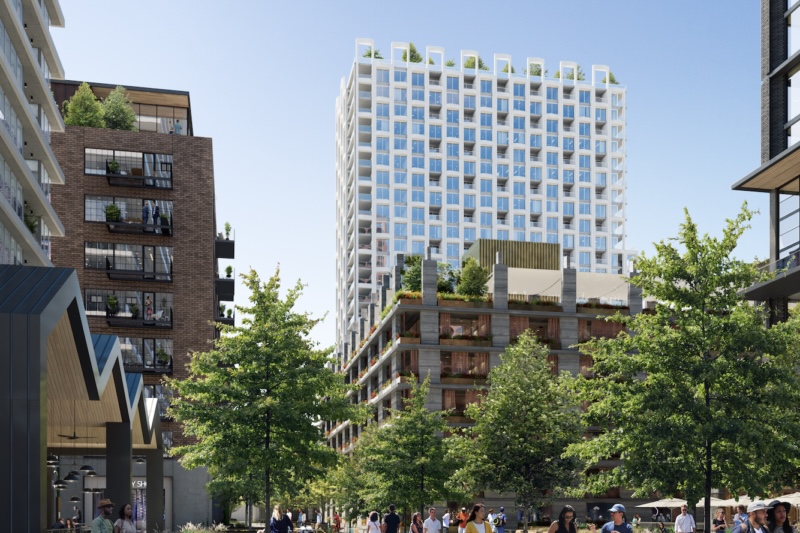
Still the developers promise to include deep community benefits, such as discounted commercial rents for legacy businesses and “wrap-around” social services for residents in the affordable units, yet activist gather the permanent “amputation” of Little Tokyo’s footprint of what they are calling an “orientalist fantasy” of high-rises that ignores actual Japanese American history.
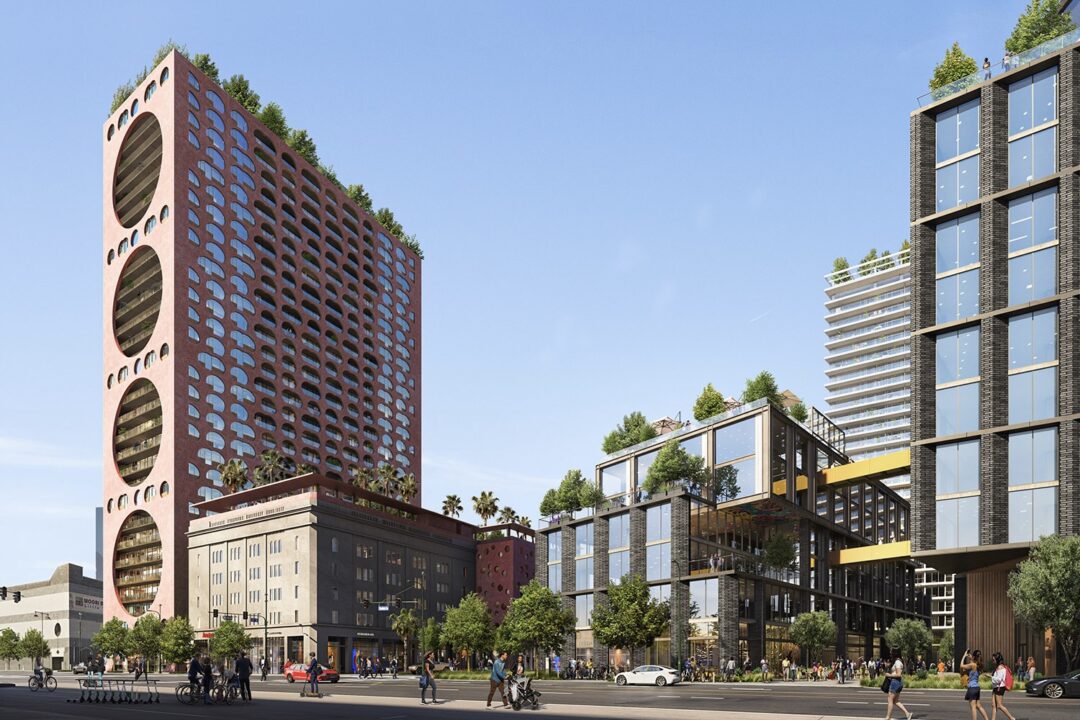
Neighbors argue that the scale of the project—which originally featured a 44-story tower and was only reduced to 30 stories after intense backlash—is fundamentally incompatible with the community’s vision of a culturally authentic village. They are fighting back because they believe the city is prioritizing corporate profit over the survival of one of the last three historic Japantowns in America.
Photos courtesy of Forth & Central.
The community opposed to the development have also expressed they feel the developer, Continuum Partners, has been dismissive in their engagement, even canceling scheduled presentations to stakeholders.
As the dust settles on the initial approvals, the big question remains: can the people of Little Tokyo actually stop this $2 billion momentum, or is the future of the neighborhood already set in stone?
While the Los Angeles City Planning Commission has already voted to move the project forward, the fight is far from over. The development still faces a final showdown at the City Council, where a General Plan amendment and a zone change must be approved. Unless the neighborhood activists can persuade the City Council to stand with them, Little Tokyo may be forced to adapt to a future it they asked for.
Community leaders are banking on these upcoming public hearings in early 2026 to force further concessions, proving that even in a city of skyscrapers, the voice of a historic neighborhood still carries weight. However, with Governor Newsom fast-tracking the project as an “Environmental Leadership Development Project,” the window for legal challenges is shrinking. https://fourthandcentral.com