|
Getting your Trinity Audio player ready...
|
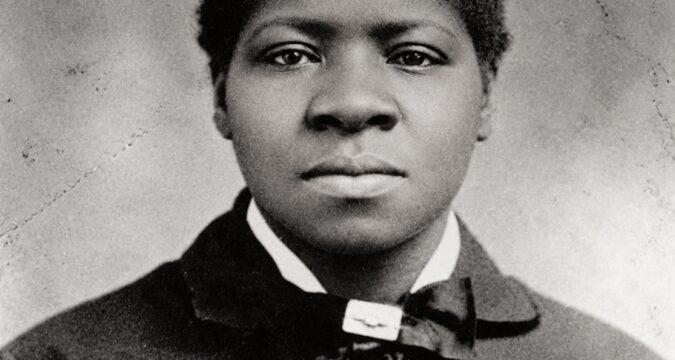
On Sept 5, The Los Angeles City Council voted unanimously to begin renaming Pershing Square for Bridget “Biddy” Mason. The announcement has since inspired the predictable chorus: Why change the name? Why erase history? Why does Biddy Mason need another park?
These are interesting questions—especially coming from a city that has spent generations misplacing, demolishing, relocating, obscuring and occasionally forgetting nearly every important Black historical location or figure in Downtown Los Angeles.
So, what has downtown Los Angeles done for Black history lately?
Renaming one of Downtown’s most recognizable public spaces for a Black woman who actually helped build Downtown is a decent start.
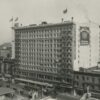
Pershing Square received its current name in November 1918, one week after World War I ended. General John J. Pershing commanded American forces overseas, but he was not a Downtown Los Angeles general, landowner, businessperson, civic organizer or community builder. The square was named for him during the nationwide burst of hero worship that followed the war.
And contrary to claims that Pershing never stepped foot in Los Angeles, historical records show that he made a highly publicized ceremonial visit in January 1920—two years after the park had already been named for him. His connection to the square and its surrounding community was still minimal. He arrived for a national military tour, received honors and attended public events. Then he left.
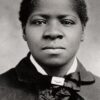
Biddy Mason arrived under considerably different circumstances. She walked into California enslaved, fought for her freedom in court, worked as a nurse and midwife, purchased Downtown property, accumulated wealth, fed and healed people and helped organize Los Angeles’ first Black church.
While Pershing visited Los Angeles, Mason invested her life, labor and money in it.
The argument that renaming the square “erases” Pershing is also slightly theatrical. Pershing has monuments, streets, parks, schools, counties and public spaces bearing his name throughout the country. His military legacy is well documented. Removing his name from one Downtown park will not cause the general to vanish from American history.
Yet, Black history in Downtown Los Angeles, however, has repeatedly been made to vanish.
In the beginning…
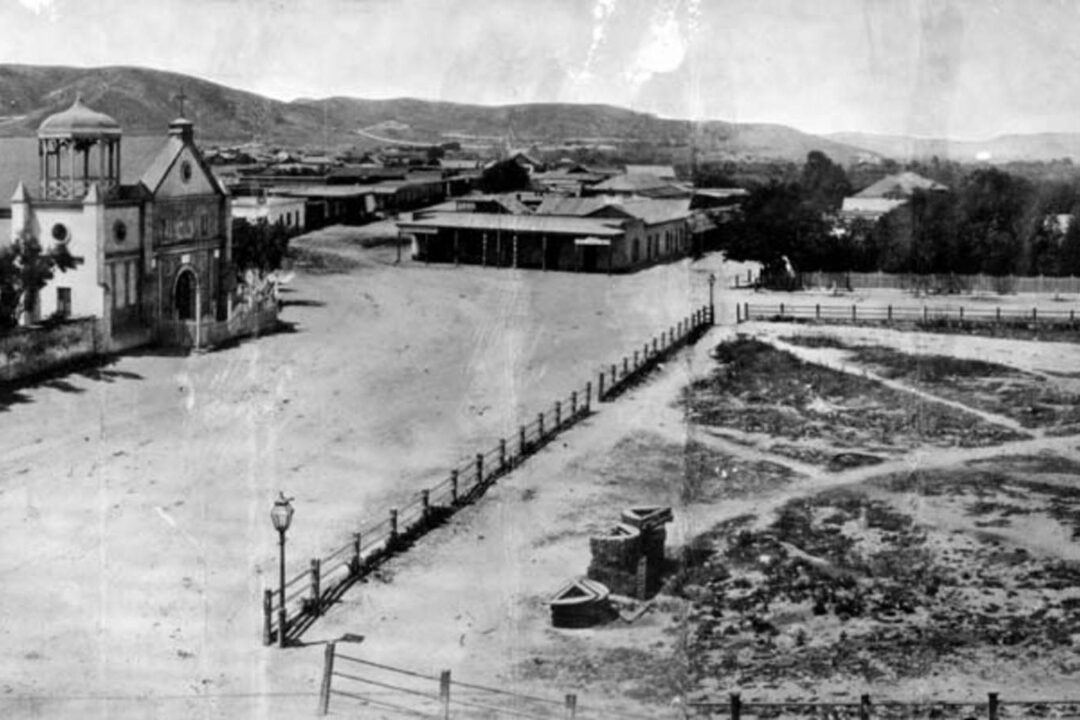
The disappearing act began with the beginning of Los Angeles itself. In 1781, 44 settlers established the pueblo that became Los Angeles. Historical research indicates that as many as 26 of those original settlers had African ancestry. Yet for generations, popular accounts presented the founders as uniformly Spanish or Mexican while treating their African heritage like an embarrassing family secret.
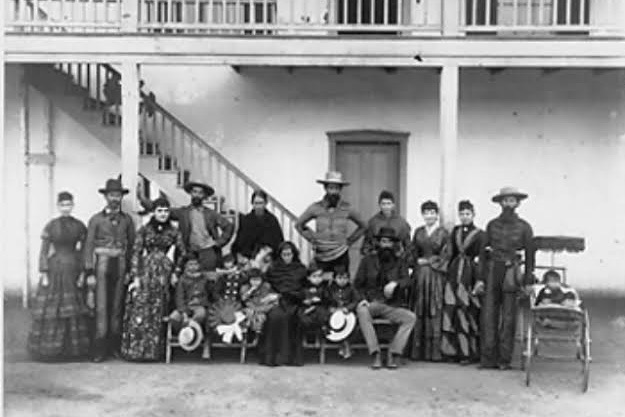
A plaque identifying the settlers’ racial backgrounds appeared at the Los Angeles Plaza during the 1950s and mysteriously disappeared. A replacement plaque installed in the 1970s omitted their African ancestry. It took the persistence of Miriam Matthews, California’s first credentialed Black librarian, and other historians to secure an accurate monument in 1981. When the city declined to finance it, Matthews helped pay for it herself.
Even after its Black history finally made it onto the plaque, portions of the monument were reportedly stolen in 2023. Los Angeles’ Black founders had managed to disappear again—first from the historical narrative and later from the physical plaza.
Then came Biddy Mason.
Born enslaved in 1818, Mason was brought to California by Robert Smith even though California had entered the Union as a free state. In 1856, she successfully petitioned the court for freedom for herself, her children and other members of her extended family.
Mason settled in Los Angeles and purchased property between Broadway and Spring Street in 1866. She became a successful real-estate investor and one of the city’s most generous philanthropists. In 1872, Mason and other Black residents organized First African Methodist Episcopal Church in her Spring Street home.
That history was displaced almost block by block. Mason’s home disappeared. First AME moved from Spring Street to Azusa Street, then to Eighth and Towne streets before eventually leaving Downtown altogether.
Today, the congregation worships on Harvard Boulevard. The church survived, but its Downtown beginnings became increasingly difficult to see.
Biddy Mason Memorial Park was finally established near her former property more than a century later. It contains Sheila Levrant de Bretteville’s long commemorative wall, Biddy Mason: Time and Place, and Black artist Betye Saar’s installation, Biddy Mason: House of the Open Hand.
Yet the memorial was placed in a secluded passage behind the Bradbury Building and a Spring Street office complex. Thousands of people walk past it without realizing it exists. Mason received a memorial, but it exist in the shadows as a scavenger hunt with visitors practically completing to find it.
The Holy Ghost of Azusa Street
The next major disappearing place arrived on Azusa Street.
In 1906, William J. Seymour, a Black preacher and son of formerly enslaved parents, led the Azusa Street Revival at 312 Azusa Street in present-day Little Tokyo. The interracial congregation welcomed Black, white, Latino and Asian worshippers during an era of open segregation. The revival helped launch the modern worldwide Pentecostal movement, which now includes hundreds of millions of followers.
The original mission building was demolished in the 1930s. Its former location was absorbed into the changing Little Tokyo landscape. Today, its presence is represented by modest plaques, a commemorative tree and a city street sign near the Japanese American Cultural and Community Center. One of the most influential religious sites in modern history survives largely as a marker people can easily pass without noticing.
All that Jazz – Just Gone!
Around 1917, an alley behind Spring Street from 2nd to 7th became known as Harlem Place. Before Central Avenue became nationally famous for jazz, Harlem Place was one of Los Angeles’ early Black music and nightlife centers. Musicians, entertainers and late-night audiences filled the clubs surrounding the alley.
However as more and more bankers established their monumental icons along Spring Street creating what they once called “The Wall Street of the West”, the music eventually shifted south to Central Avenue.
Harlem Place remained physically present but historically silent. The name survives on maps and street signs, while little at the location explains why “Harlem” is attached to a narrow Downtown alley. Redevelopment, changing nightlife and limited recognition separated the place from the people who gave it meaning.
Welcome to Bronzeville
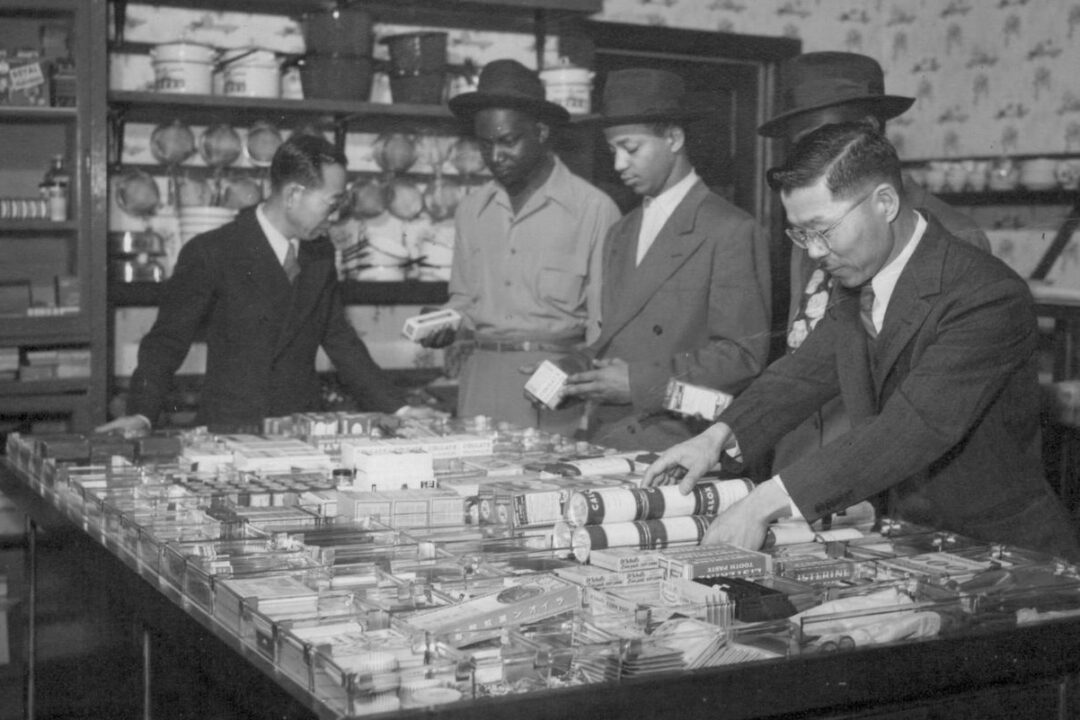
World War II produced another extraordinary but frequently overlooked chapter.
After the federal government forcibly removed Japanese Americans from Little Tokyo, Black defense workers arriving from the South moved into the vacant neighborhood, many at the Japanese owners request
With the government forcing many Japanese landlords into containment camps and racist housing restrictions prevented them from living in most other sections of Los Angeles, Little Tokyo became Bronzeville, a dense Black residential, commercial and entertainment district.
East First Street came alive with restaurants, businesses, jazz clubs and all-night establishments known as breakfast clubs. Shepp’s Playhouse, the Finale Club and the Cobra Club welcomed performers including Charlie Parker, Miles Davis, Coleman Hawkins and T-Bone Walker. Black residents created a cultural center inside a neighborhood emptied by another act of racial injustice.
When Japanese Americans returned from incarceration after the war, the population of Bronzeville’s returned to the Nisei and the Bronzeville name faded. Shepp’s Playhouse disappeared. The Finale Club disappeared. The Cobra Club disappeared. Buildings changed uses or were demolished, and one of Downtown’s richest Black cultural periods was reduced to old photographs and scattered references.
The Japanese American Cultural and Community Center is now working to recover this shared history. But Bronzeville still lacks the kind of permanent, visible public monument its cultural influence deserves. It is possible to spend an entire afternoon in Little Tokyo without learning that it was once one of Los Angeles’ busiest Black neighborhoods.
Fighting Fire with Fire…
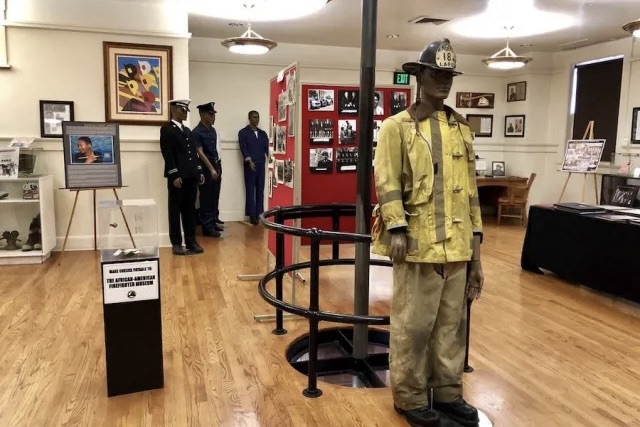
Farther south on Central Avenue, Black firefighters faced another form of official displacement. Fire Station No. 30 became one of the city’s segregated Black fire stations in 1924. Black firefighters worked there until the Los Angeles Fire Department integrated in 1956. The station closed in 1980 and could easily have become another demolished building.
Instead, community members preserved it. The African American Firefighter Museum opened in 1997 at 1401 S. Central Avenue. The building became a designated Historic-Cultural Monument and was added to the National Register of Historic Places.
But apparently surviving segregation, closure and decades of neglect was not enough.
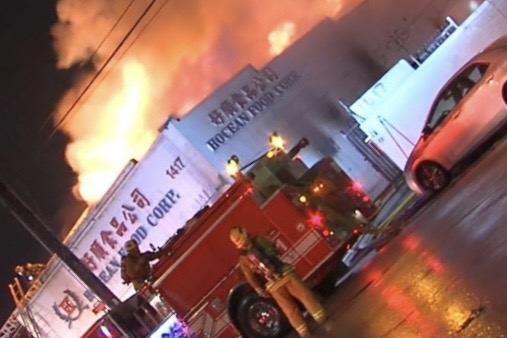
The museum is now closed after a recent arson fire badly damaged the historic building. Its operators are raising donations to restore the station and reopen its doors. The museum relies heavily on volunteers and private contributions, meaning one of the country’s few institutions devoted specifically to Black firefighters is once again fighting for its physical survival.
Tom Bradley’s 360 Views of Downtown LA
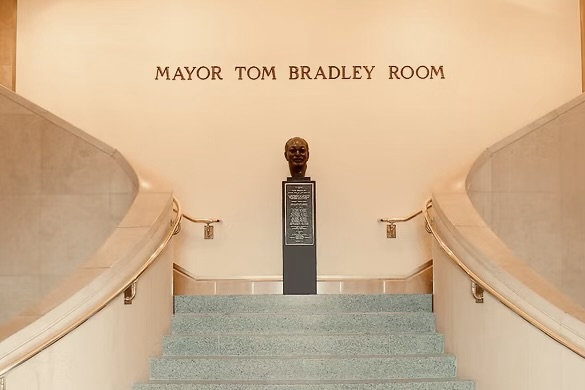
Tom Bradley’s story received greater recognition, although even his memorials became geographically scattered.
Bradley became Los Angeles’ first Black mayor in 1973 and served for 20 years. His administration helped reshape Downtown, expanded job opportunities for people of color, revamped public transportation, modernize the airport and brought the 1984 Olympic Games to Los Angeles. City Hall’s observation room and tower of City Hall offering a free 360 degree birds-eye view of downtown Los Angeles now carries his name, and his mayoral bust is displayed there.
His large bronze bust, however, stands at LAX rather than Downtown. His former residence is in Leimert Park. Tom Bradley is remembered across Los Angeles, but Downtown—where he governed and transformed the city—still lacks a major outdoor monument to him.
That’s entertainment
Somehow it’s become much easier to recognize black entertainers than scholars, visionaries and pioneers of Los Angeles, but Black visibility when it comes to sports is became difficult to miss.
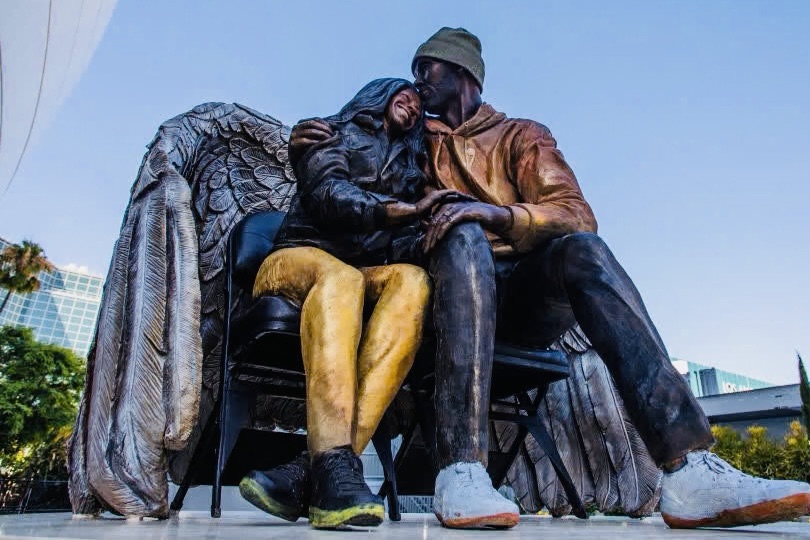
Statues honor Magic Johnson, Kareem Abdul-Jabbar, Shaquille O’Neal, Elgin Baylor, Kobe Bryant and Kobe and Gianna Bryant.
These monuments are prominent, accessible and heavily photographed. They demonstrate that Los Angeles knows how to celebrate Black figures when championships, celebrity, corporate sponsorships and ticket sales are involved. Ask the same people to commemorate a Black librarian, preacher, firefighter, nightclub owner, pioneer or real-estate investor, and suddenly recognition becomes considerably more complicated.
That brings the story back to the square.
Critics are correct about one thing: renaming Pershing Square will not repair every historical omission. It will not rebuild the Azusa Street Mission, restore Bronzeville’s clubs, return First AME to Spring Street, explain Harlem Place or produce an outdoor Tom Bradley monument.
But it will place Biddy Mason’s name on a major civic space connected to the Downtown she helped create.
For more than a century, Los Angeles asked Black history to survive demolition, relocation, redevelopment, incarceration, restrictive real-estate practices, institutional neglect, arson and selective public memory.
The better question is not why Biddy Mason should replace John Pershing.
The question is why it took Los Angeles so long to recognize the name of a Black woman who built Downtown on a Downtown square everyone can actually find.