|
Getting your Trinity Audio player ready...
|
Built by a railway millionaire during Los Angeles’ great expansion, the Hotel Clark has survived two world wars, international political controversy, bitter tenant battles and decades of abandonment. Now, one of Downtown’s most storied landmarks is welcoming guests again.
The year is 1914.
Los Angeles is in the midst of a remarkable transformation. The city’s population has more than doubled over the past decade, motion picture companies are establishing themselves throughout Southern California, and electric streetcars carry passengers between rapidly expanding neighborhoods, bustling commercial districts and seaside communities.
Downtown Los Angeles is becoming a city of grand hotels, financial institutions, department stores and ambitious architecture. Horse-drawn carriages share the streets with automobiles, while businessmen, tourists, railroad passengers and newcomers arrive daily, eager to take part in the city’s growing prosperity.
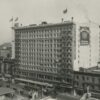
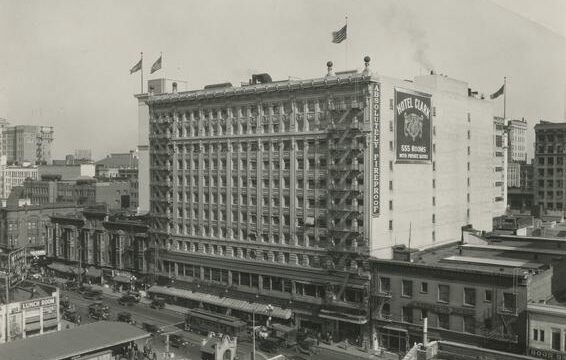
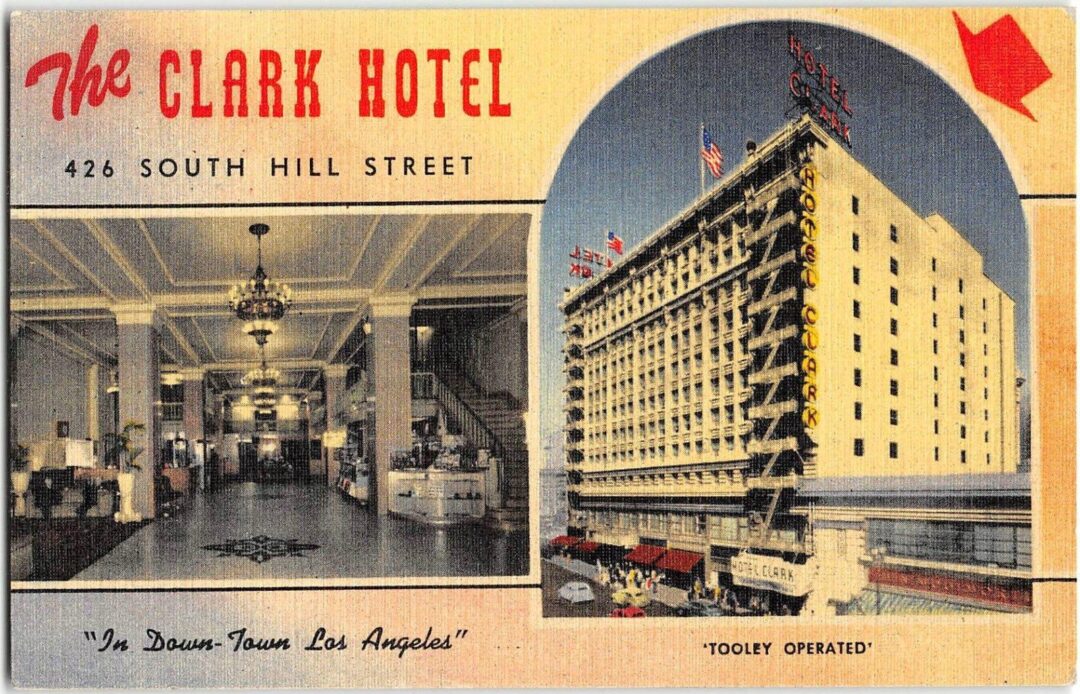
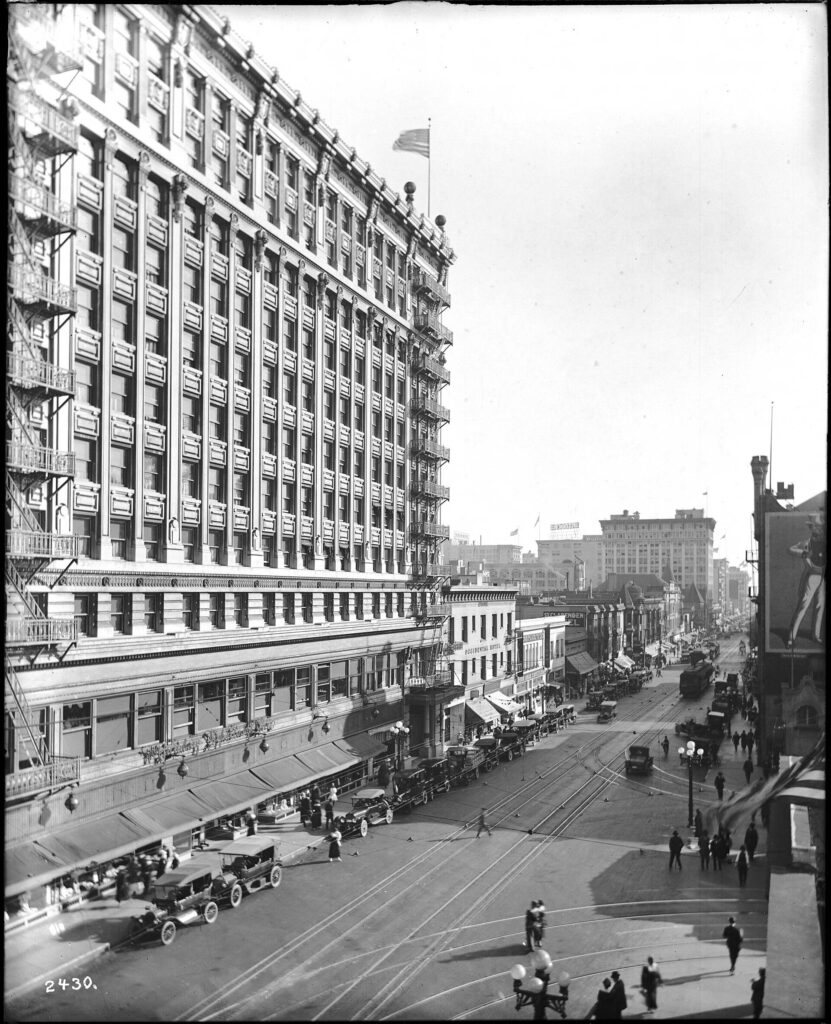
Along South Hill Street, between Fourth and Fifth Streets, a towering new hotel is preparing to welcome the public. Rising eleven stories above the busy thoroughfare, the Hotel Clark boasts 555 guest rooms and promises to become one of the city’s most fashionable destinations.
The man behind the development is Eli P. Clark, a prominent financier, real estate investor and railway entrepreneur whose investments have helped shape Southern California’s expanding transportation network. Clark is betting that Los Angeles will continue its extraordinary growth, and his latest venture stands as an impressive expression of that confidence.
Designed by architect Harrison Albright, the new hotel brings Beaux-Arts elegance to Hill Street. Its commanding white-brick exterior, classical ornamentation and impressive proportions reflect the architectural ambitions of a city determined to rival the great metropolitan centers of the East.
The property has already undergone a dramatic transformation. Just two years ago, in April 1912, demolition crews cleared earlier commercial buildings from the site to make way for the project. Construction followed, with the ambitious structure taking approximately two years to complete.
At a reported cost of $2 million, the Hotel Clark is an extraordinary undertaking. Constructed with concrete, steel and marble, the fireproof building is the sixth skyscraper to rise along Hill Street. Its lobby, reportedly the largest marble hotel lobby in the West, provides a grand introduction to the property.
Every guest room has its own bathroom, a notable convenience in an era when private bathing facilities are not universal in American hotels. Banquet halls, a Dutch Grill, a ladies’ parlor and elaborate public spaces offer guests more than a place to sleep. Three stories below the pavement, an engine room and pumping plant support the building’s operations.
F. M. Dimmick, formerly associated with the prestigious Hotel Alexandria, becomes the Clark’s first lessee, bringing experience from one of the city’s best-known hospitality establishments.
For Los Angeles, the Hotel Clark represents more than another place to spend the night. It is a declaration of confidence in a city whose greatest ambitions appear to be unfolding before its very eyes.
The Roaring Twenties and a City on the Rise
By 1920, Los Angeles is entering another decade of extraordinary growth.
Hollywood is becoming synonymous with the American motion picture industry, oil wealth is reshaping Southern California, and Downtown remains the commercial and social center of the city.
The Hotel Clark is ideally positioned to benefit from the prosperity. Located near Pershing Square, theaters, department stores and major business establishments, the hotel provides convenient accommodations for visitors arriving by rail and for businessmen conducting affairs in the expanding metropolis.
The hotel’s spacious lobby, banquet facilities and dining establishments make it a destination for social gatherings as well as overnight accommodations.
As Los Angeles moves through the 1920s, the hotel continues to adapt to changing tastes. Its entrance and public rooms undergo alterations, reflecting an era when hotels must continually modernize to maintain their fashionable reputations.
The Clark is part of an increasingly competitive Downtown hotel district, where establishments such as the Alexandria, Biltmore and other grand properties compete for guests, banquets and public attention.
Depression, Neon Lights and a Changing Skyline
America is still struggling through the Great Depression in 1936. Los Angeles has not escaped unemployment, business failures and financial uncertainty, yet construction and redevelopment continue in parts of Downtown.
Yet the Eli P. Clark company is moving forward with a project immediately beside the hotel. The neighboring Occidental Hotel is demolished, and the prominent Los Angeles architectural firm Walker & Eisen is commissioned to design a replacement commercial building.
The decision reflects continuing investment in the block even during difficult economic times.
Meanwhile, illuminated advertising is transforming the appearance of Downtown after dark. Neon signs rise above theaters, restaurants and hotels, creating a nighttime skyline that bears little resemblance to the city of 1914.
The Clark joins the illuminated spectacle. Its prominent rooftop signage identifies the hotel from blocks away and becomes part of Hill Street’s recognizable appearance.
Inside, the hotel continues to evolve. Its lobby and dining rooms are remodeled, adapting the building’s early twentieth-century elegance to changing fashions.
Although the Clark is no longer a brand-new architectural sensation, it remains part of Downtown’s established hospitality landscape.
War, Cocktails and the Marine Room
By1945, the Second World War is approaching its conclusion, and Los Angeles is a major center of military manufacturing, aviation and wartime industry.
At the Hotel Clark, the changing national mood is finding expression in a newly remodeled dining and entertainment establishment.
The hotel’s former Grill Room is becoming the Marine Room, a nautical-themed venue designed by architects Heitschmidt & Matcham.
Maritime imagery, naval-inspired lighting and decorative striped canvas give the space an atmosphere associated with American seafaring culture.
The transformation reflects the continuing importance of hotel restaurants and lounges as destinations for entertainment, conversation and social gatherings.
The Clark also offers an English-style tavern and other public rooms, providing a variety of settings for guests and local patrons.
Yet even as the hotel modernizes its entertainment facilities, changes are taking place in the surrounding city that will eventually threaten Downtown’s dominance.
The postwar expansion of automobile ownership, suburban housing and new commercial districts is beginning to redistribute economic activity across Los Angeles.
The Fifties: New Styles, New Rules
By 1951, Hotel Clark is facing an architectural alteration imposed by changes in Los Angeles building regulations.
Decorative finials that have crowned the building for decades are being removed from the roofline following building-code requirements adopted in 1949.
Owner S & L Properties chooses to reinforce the remaining parapet rather than demolish it entirely, preserving a significant portion of the hotel’s original architectural character.
Two years later, another interior transformation is underway.
In 1953, the Marine Room is remodeled into the Orleans Room under architect Wayne McAllister, a prominent Southern California designer whose work is associated with the region’s evolving hotel and restaurant culture.
McAllister is also connected with the hotel’s Pacific Room, an entertainment space distinguished by California Moderne styling.
The Clark is adapting to a new era of hospitality, replacing older decorative traditions with more contemporary designs.
But Downtown itself is changing.
New freeways, suburban shopping centers and expanding business districts are gradually reducing the commercial dominance that once made Hill Street one of Los Angeles’ most desirable hotel addresses.
The Clark still stands proudly, but the conditions that created its original success are beginning to disappear.
From Luxury Accommodations to Affordable Housing
Downtown Los Angeles is no longer the undisputed center of the region’s hotel and entertainment industry by 1979.
The city has expanded far beyond its original commercial district. New hotels and office towers are rising elsewhere, while many older Downtown buildings struggle with declining demand and aging facilities.
The Hotel Clark has undergone a profound transformation.
Rooms originally designed for affluent travelers now provide housing for long-term residents, including elderly tenants and people living on fixed incomes.
For many, the Clark is no longer a temporary stop during a visit to Los Angeles. It is home.
Owner JCG Financial Company has plans to restore the hotel to its former grandeur, but the proposed renovation threatens the residents who occupy its rooms.
A major eviction dispute develops, bringing tenants and ownership into court.
Residents win an important legal battle, establishing that the building’s redevelopment cannot simply disregard the rights of people who have made their homes there.
The conflict illustrates a growing problem throughout Downtown Los Angeles: historic hotels are simultaneously attractive redevelopment opportunities and important sources of affordable residential housing.
The Clark’s future remains uncertain.
The Chinese Government Arrives on Hill Street
It’s 1988 and Hotel Clark is at the center of an unusual international development project after The People’s Republic of China starts expanding its commercial relationships with the United States, and officials connected with Guangdong province have identified the aging hotel as a potential gateway for Chinese merchandise entering the American market.
In March, May Wah International purchases the Clark for approximately $9.5 million.
The new owners announce an ambitious redevelopment intended to transform the property into a combination luxury hotel and permanent American showcase for Chinese imports.
The proposed Yuet Lei Friendship Store is envisioned as a major commercial destination, where American buyers can examine merchandise from China.
A multimillion-dollar renovation is planned.
Architect Bernard Judge is involved in the redesign, while Stromberg & Sons serves as general contractor. The first phase includes a new lobby incorporating Chinese building materials, a 20,000-square-foot showroom on the second floor and parking facilities within the lower portions of the building.
Construction crews begin tearing apart the hotel’s lower floors.
But while the project promises international trade and renewed investment, a serious conflict is developing upstairs.
Approximately 75 permanent residents remain in the building, many of them elderly. Others occupy rooms temporarily, bringing the number of people inside the hotel to approximately 150.
Residents are increasingly concerned that the renovation will force them from their homes.
In August, the situation becomes an emergency.
Los Angeles fire and building officials discover that construction has obstructed essential emergency exits. Stairways are blocked, fire escapes are affected by scaffolding, and the building no longer provides adequate means of escape.
Officials order nearly 150 occupants to evacuate with only 30 minutes’ notice.
The American Red Cross establishes emergency assistance in nearby Pershing Square as residents wait for transportation to temporary accommodations.
For longtime tenants, the evacuation is more than an inconvenience. Some accuse management of allowing conditions to deteriorate in an effort to force them out.
Management disputes the implication that the emergency is deliberate and says it is working to comply with city requirements.
The hotel that once advertised comfort and modern conveniences is now making headlines over safety hazards and the treatment of its residents.
The Battle for the Clark Continues
A year later, the promised international marketplace remains unfinished, and conditions inside the Clark are becoming the subject of another major legal confrontation.
Twenty residents file a lawsuit against past and present owners, alleging systematic harassment intended to drive tenants from the property.
Residents describe periods without adequate heat, interruptions in water service, plumbing problems and construction disturbances.
The accusations are serious, particularly because many remaining tenants are elderly, disabled or unable to afford alternative housing.
The owners are attempting to transform the aging building into an upscale tourist destination, but the residents insist that the renovation does not eliminate their legal protections.
In March 1991, Los Angeles Superior Court Judge Harvey Schneider rules that the owners cannot evict longtime residents merely by converting the hotel’s rooms to other uses.
The decision represents another significant victory for the tenants.
The ambitious Chinese commercial project never becomes the thriving international marketplace its developers envisioned.
Instead, the building’s interior has been extensively disturbed, its original hotel operations have deteriorated, and its future remains unresolved.
In July 1991, a settlement is announced. Twenty tenants will share approximately $1.7 million, ending a bitter three-year dispute.
Among the residents is Cleo Amundson, a 76-year-old retired clerk who has lived at the Clark for 22 years. Another tenant, Isidore Mandel, is a 78-year-old retired telephone company worker who has called the building home for 25 years.
For residents who have spent years fighting to remain in their rooms, the settlement offers compensation but also means leaving the place they have known as home.
The owners maintain that extensive renovation is necessary and that the legal dispute has made financing and operating the building increasingly difficult.
By October, the settling tenants are expected to vacate.
The Clark is approaching the end of the twentieth century with its reputation and physical condition far removed from the glamorous hotel that opened in 1914.
Promises, promises: New York Investors See an Opportunity
Then in 2008, Downtown Los Angeles begins attracting renewed attention from real estate investors. Historic office buildings and hotels are increasingly viewed as candidates for restoration and conversion.
New York-based real estate investment company the Chetrit Group acquires the Hotel Clark. The purchase raises expectations that the long-troubled building may finally be restored. But the promised transformation proves more complicated than anticipated.
The Clark remains closed as redevelopment proposals, financial considerations and construction plans stretch across the following years.
The surrounding neighborhood continues to change. Downtown’s historic buildings attract artists, entrepreneurs, developers and residents seeking an alternative to suburban Los Angeles.
Yet the Clark remains largely absent from the activity taking place around it.
Its monumental exterior still occupies a prominent position on Hill Street, but the building no longer contributes the commercial and social activity for which it was designed.
The Downtown Renaissance Leaves the Clark Behind
With one enormous push towards rejuvenation; from stakeholders, BIDs, developers, media, film and tourist industry heads, artists and sports minions, property owners and city hall, Downtown Los Angeles begins experiencing a residential and cultural revival but historic commercial buildings are being converted into apartments and lofts, new restaurants are opening, and the city’s Adaptive Reuse Ordinance is helping transform aging properties into places where people can live and work.
The Clark appears to be a natural candidate for restoration. Plans emerge to convert the building into an approximately 350-room boutique hotel. But the financial crisis of 2008 disrupts real estate investment throughout the country, complicating redevelopment plans and financing.
The Clark remains closed.
By 2012, another attempt to revive the property is moving forward.
The owners announce plans for a boutique hotel operating under the King & Grove brand, with an anticipated opening in 2013.
Renovation work proceeds, and the project generates excitement among observers of Downtown’s growing hospitality market.
But 2013 comes and goes without the Clark reopening.
By 2014, much of the interior renovation is reportedly complete. Nevertheless, the building remains shuttered.
Years pass.
Other historic Downtown hotels reopen after extensive renovations. The Ace Hotel brings new attention to Broadway, the NoMad Hotel transforms the former Bank of Italy building, and additional hospitality developments introduce new visitors to Downtown.
The Clark, despite substantial investment, continues to sit empty.
Another Grand Reopening That Never Happens
By 2019, Downtown Los Angeles is experiencing another wave of hotel development, driven by tourism, conventions, entertainment and a growing residential population.
The Clark’s owners announce yet another reopening.
This time, the property is expected to operate as a 347-room boutique hotel managed by Journal Hotels.
Plans include a 6,000-square-foot rooftop pool deck, a 10,000-square-foot banquet hall and approximately 7,000 square feet of coworking space.
The hotel is expected to welcome guests in November.
The project represents a significant departure from the Clark’s original design, combining historic architecture with contemporary hospitality amenities. But legal challenges and other complications continue to affect the redevelopment.
Opposition involving hospitality workers’ union UNITE HERE becomes part of the project’s difficulties. November arrives without an opening. The building remains closed.
For Downtown residents who have watched the property for years, the cycle of announcements and delays has become familiar.
The Clark is one of the neighborhood’s most visible examples of a historic building whose restoration has been promised repeatedly but never completed.
Then another crisis arrives.
In 2020, the COVID-19 pandemic devastates the hospitality industry. Hotels across Los Angeles experience unprecedented disruptions, and the future of tourism and business travel becomes uncertain.
The Clark’s long-awaited return is delayed yet again.
Hotel Clark Finally Returns
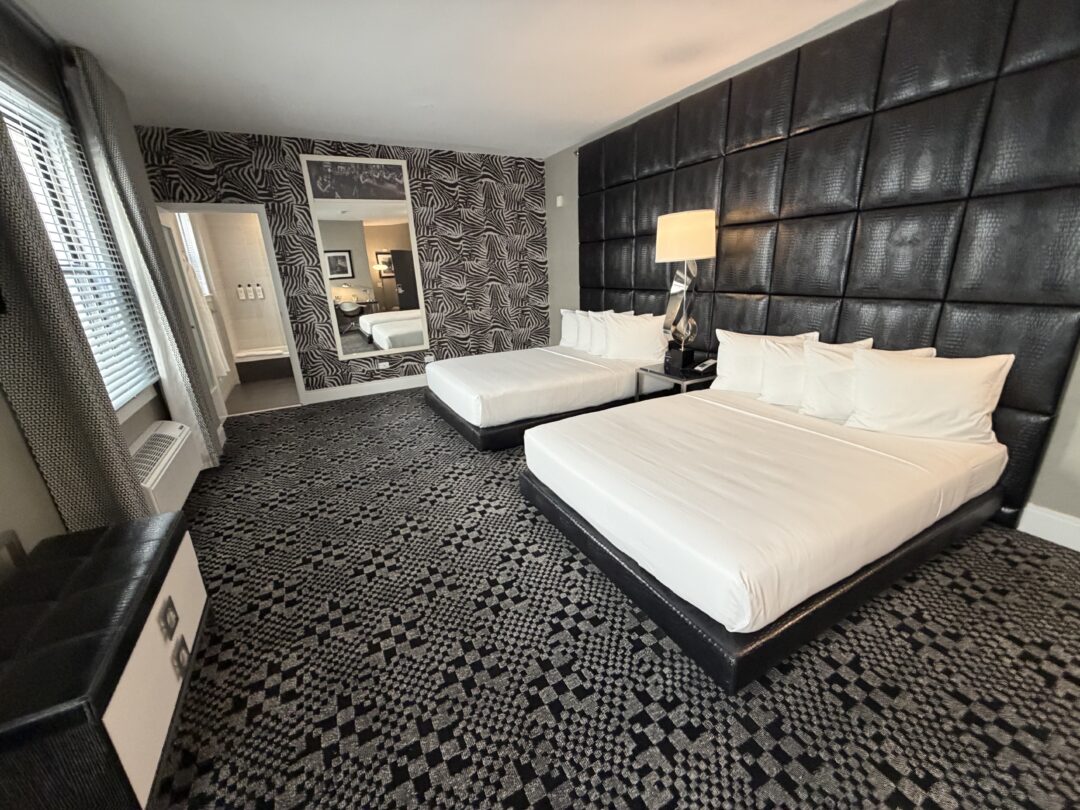
Recovering from hard times, yet steadfast on making a coming back, it’s now 2026 and Downtown Los Angeles is navigating another period of transition. Office vacancies, changing commercial activity and ongoing public safety concerns continue to challenge the city’s historic center.
Yet the neighborhood’s architectural landmarks remain central to efforts to attract visitors, businesses and new investment.
After decades of stalled redevelopment and repeated reopening announcements, the Hotel Clark finally begins welcoming the public again.
In September, the property starts a soft opening, marking the return of hotel operations to a building that has been closed for roughly three decades.
Now managed by OTH Hotels & Resorts, the Clark has been transformed into a 348-room hotel combining its historic Beaux-Arts exterior with modern guest accommodations and hospitality amenities.
The restored property includes a rooftop swimming pool, fitness facilities, meeting and event spaces, and new dining and entertainment establishments.
Among its attractions is Votana, a Mediterranean-inspired restaurant led by Executive Chef Gio Koletty, with an official grand opening celebration scheduled for October 15.
The hotel’s food and beverage plans also include Clubhouse at Clark, a sports bar emphasizing American whiskey, and a lobby lounge.
The reopening represents a significant milestone for Hill Street and the surrounding Pershing Square district.
A building that has spent decades behind closed doors is once again participating in Downtown’s commercial life.
Its return also demonstrates the extraordinary complexity of preserving and repurposing historic urban properties.
The Clark has survived changing ownership, international redevelopment schemes, costly renovations, legal disputes, economic downturns and an extended period of inactivity.
Throughout those years, its exterior has remained a familiar feature of the Downtown skyline, even when the building itself was inaccessible.
A Monument to the City That Built It
More than a century has passed since Eli P. Clark commissioned an ambitious new hotel on South Hill Street.
The Los Angeles of 1914 is almost unrecognizable today.
The electric streetcars that once carried passengers through Downtown have disappeared, replaced by freeways, automobiles and a new regional rail system.
The department stores, theaters and financial institutions that once defined the surrounding streets have undergone their own transformations.
The city’s population has expanded into the millions, and Los Angeles has become one of the world’s most influential centers of entertainment, international commerce and cultural production.
Through it all, the Hotel Clark has remained.
Its architecture recalls the ambitions of the early twentieth century, when wealthy entrepreneurs and prominent architects were determined to establish Downtown Los Angeles as a metropolitan center of national importance.
Its changing interiors reflect the evolution of American hospitality, from grand dining rooms and fashionable lounges to contemporary boutique hotel amenities.
Its years as residential housing reveal another side of Downtown history, when aging hotels became essential homes for people unable to afford conventional apartments.
The battles over tenant displacement expose the human consequences of redevelopment, while the failed Chinese-backed commercial project demonstrates the unpredictable influence of international investment on the city’s historic buildings.
Its prolonged closure reflects the financial and logistical challenges of restoring major architectural landmarks.
And its reopening in 2026 offers another chapter in the continuing effort to preserve Downtown’s historic identity while adapting its buildings for new generations.
At 426 South Hill Street, the Hotel Clark is once again welcoming guests, fulfilling the purpose for which it was built 112 years ago.
The building that once symbolized the boundless optimism of a rapidly growing Los Angeles has become something more enduring.
It is a monument to the city’s prosperity, decline, conflict, resilience and reinvention.
And after more than a century of witnessing Los Angeles change around it, the Hotel Clark is finally beginning a new chapter of its own.
Historical references for the article include City of Los Angeles preservation records, the Los Angeles Times reporting from 1988–1991, and the hotel’s September 29, 2026 reopening announcement.