 Hanny Playa
|
Getting your Trinity Audio player ready...
|
Downtown Los Angeles has become a revolving door of grand closings, grand openings, emotional farewells, and unexpected second chances. Just when another beloved establishment serves its final cocktail or last meal, another historic landmark announces its triumphant return.
From the Arts District to Broadway, the Fashion District to Olvera Street, the city’s restaurant and hospitality landscape is undergoing another dramatic transformation, with longtime favorites disappearing, new concepts moving in, and legendary establishments getting a second chance.
And this time, the restaurant gods seem determined to keep everyone guessing.
The Arts District is facing two notable departures, beginning with Everson Royce Bar, better known as E.R.B., the neighborhood watering hole that helped define Downtown LA’s modern cocktail culture. After 11 years of expertly crafted drinks, celebrated cheeseburgers, and evenings beneath the twinkling lights of its spacious patio, E.R.B. has announced December 20, 2026, as its final day.
Opened in 2015 at Seventh and Mateo streets, the establishment became a neighborhood institution under hospitality veterans including Randy Clement and chef Matt Molina. Its operators have pointed to the increasingly difficult business environment in Los Angeles.
Also preparing to say farewell is Sampa, the contemporary Filipino-American restaurant at 449 S. Hewitt Street. Created by chef Josh Espinosa, Sampa brought an inventive interpretation of Filipino cuisine to the Arts District, combining traditional flavors with international culinary techniques. Known for dishes such as kare-kare tamales, crispy duck pancit, and crab fat fried rice, the restaurant has announced December 31, 2026, as its final day of service.
And the departures don’t stop there.
Rossoblu, chef Steve Samson and Dina Samson’s celebrated Italian restaurant in the Fashion District, is scheduled to close November 1, 2026, after nearly a decade. Opened in 2017, the restaurant earned acclaim for its Bologna-inspired cuisine, handmade pasta, and wood-fired cooking. Private events are expected to continue through December.
Meanwhile, SORA Craft Kitchen, the Michelin Guide-recognized Turkish restaurant at 1109 E. 12th Street, ended service October 25, 2026. Chef Okay Inak’s restaurant earned attention for its contemporary approach to Turkish cuisine, but serious building problems reportedly contributed to its closure. The chef hopes to reopen elsewhere.
September also brought the loss of Mona Pasta Bar, which ended operations September 30, adding another name to Downtown’s growing list of departed dining establishments.
The Escondite, the quirky neighborhood bar at 410 Boyd Street, also closed after approximately 15 years. Known for live music, burgers, and its casual atmosphere, the establishment represented the independent nightlife culture that once made Downtown’s less-traveled streets destinations in their own right.
Even Grand Central Market hasn’t escaped the departures. Fat + Flour, pastry chef Nicole Rucker’s popular pie and cookie shop, announced the closure of its market stall after approximately seven years, shifting its focus to Culver City.
And Downtown lost another highly regarded restaurant when Shibumi, the Michelin-starred Japanese dining destination at 815 S. Hill Street, closed in July 2025 after nearly a decade. Known for chef David Schlosser’s meticulous approach to traditional Japanese cuisine, Shibumi offered a dining experience centered on seasonal ingredients, precision, and understated elegance.
But unlike some of Downtown’s vacant restaurant spaces, Shibumi’s former location has already welcomed a replacement.
But Downtown’s Legends Aren’t Going Down Without a Fight
While some kitchens are going dark, others are preparing to turn the lights back on.
First up is The Original Pantry Café.
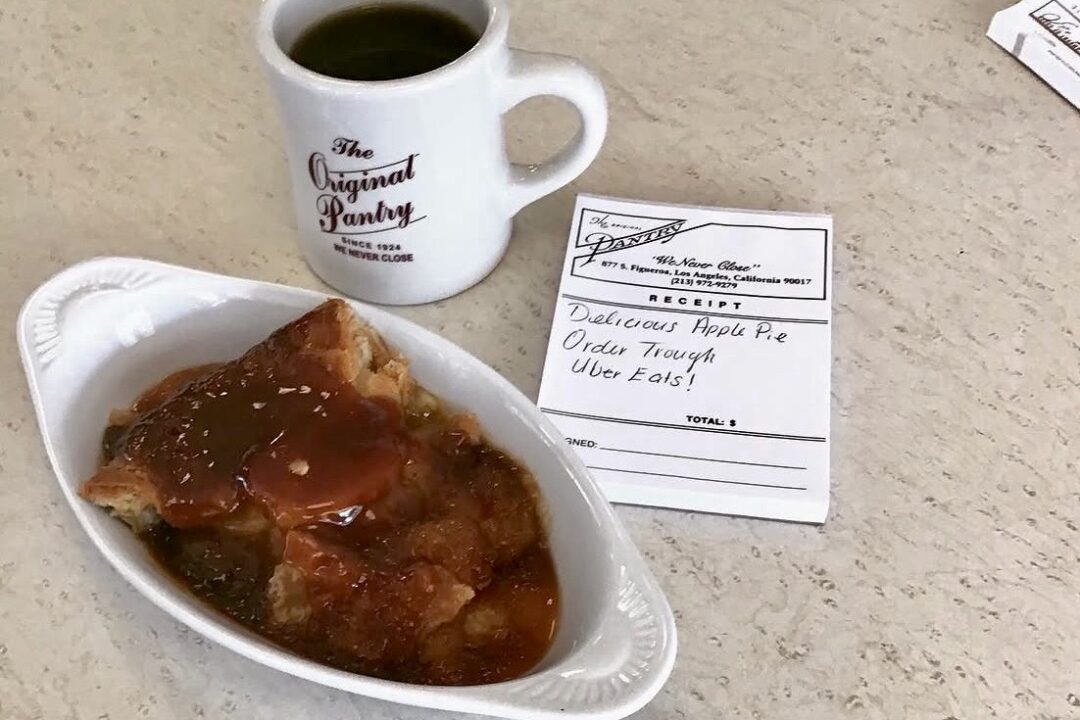
The legendary diner, which opened in 1924, became famous for serving generations of Angelenos around the clock. Its closure in March 2025 ended a remarkable chapter in Los Angeles restaurant history, leaving longtime customers wondering whether its grills would ever fire up again.
Now, following its acquisition by real estate entrepreneur Leo Pustilnikov, The Pantry is scheduled to reopen November 19, 2026.
The comeback also carries a community mission. Through a partnership with nonprofit Hope the Mission, the restaurant plans to support programs assisting people experiencing homelessness while bringing back jobs and preserving an important piece of Downtown’s culinary history.
Meanwhile, another Downtown institution is preparing to reclaim its place in the city’s restaurant scene.
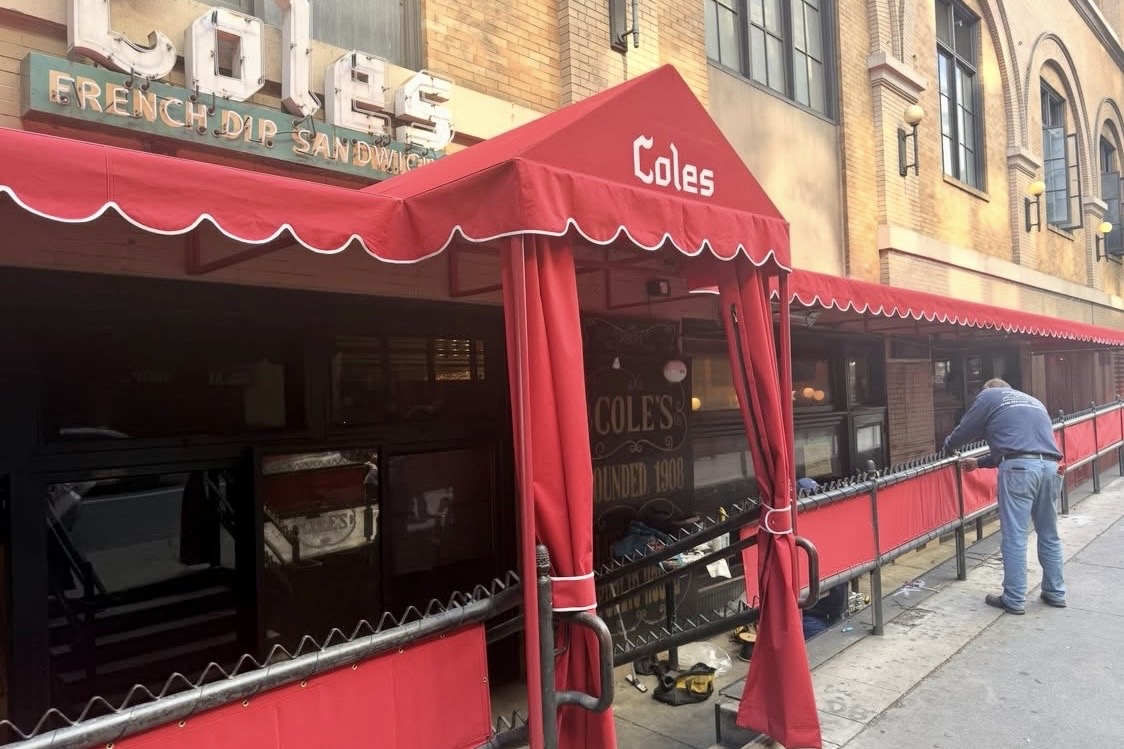
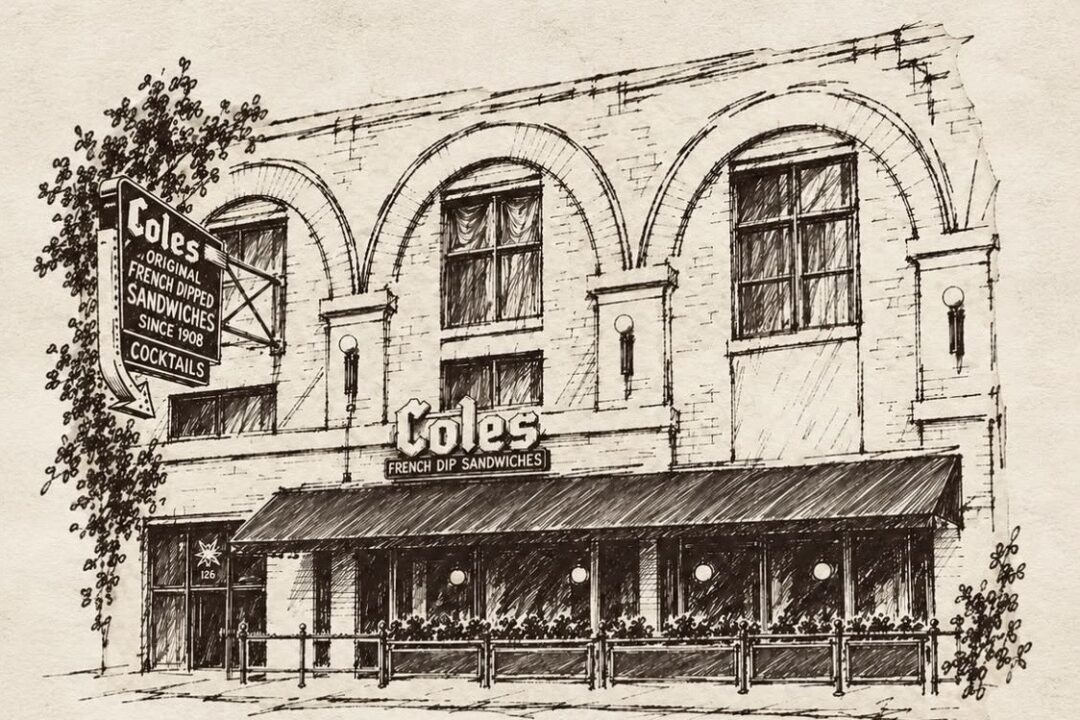
Cole’s, the historic public house established in 1908 and famous for its disputed claim to inventing the French dip sandwich, closed in March 2026 after more than a century in business.
For generations, Cole’s was more than a place to order a sandwich. Its dark wood interiors, historic booths, and association with Los Angeles’ colorful past made it a living piece of the city’s history.
Now restaurateurs Jeremy Fall and Sean Maloney are working to bring Cole’s back, with plans to preserve its historic character while introducing an updated menu. A November reopening is being targeted, pending final approvals.
And then there’s Clifton’s, which hasn’t simply returned to Downtown Los Angeles. It’s making its presence felt in a big way.
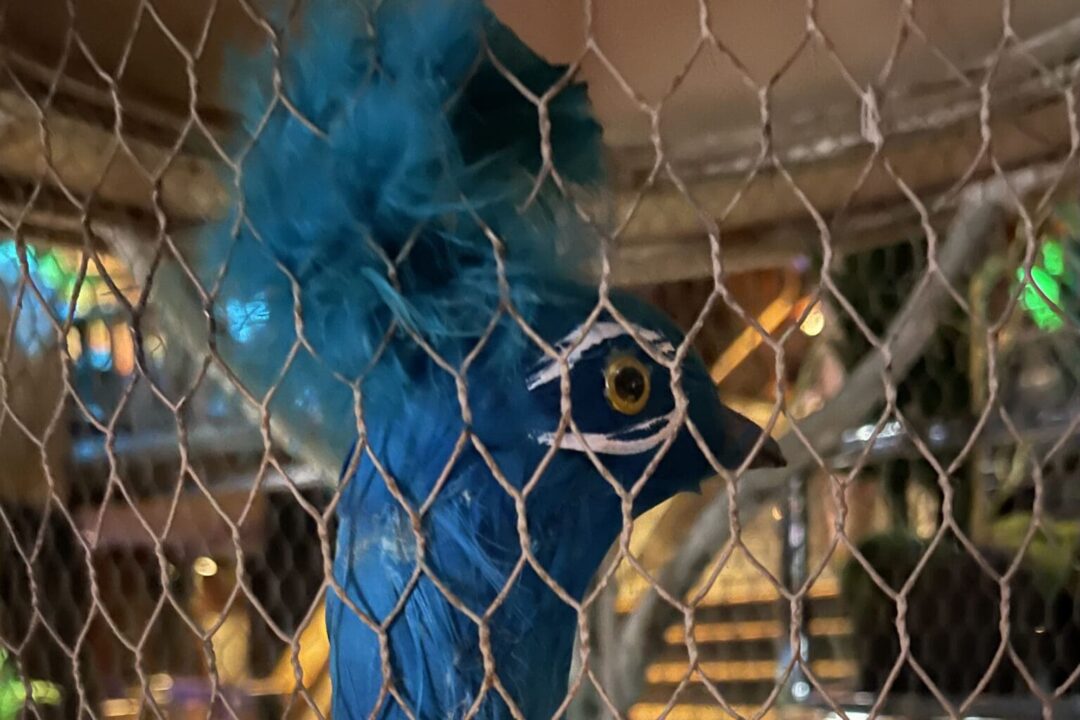
The legendary Broadway institution, famous for its towering artificial redwood tree, fantastical forest interiors, elaborate themed rooms, and nearly century-long history, has entered another chapter under the Robhana Group.
Its revival gained attention during the 2026 FIFA World Cup, when Clifton’s transformed into a lively viewing destination with giant screens, soccer-inspired cocktails, specialty pizzas, and crowds gathering to celebrate the international tournament.
But the World Cup was only part of the excitement. Art Night gatherings and comedy performances have helped bring new audiences into the historic venue, expanding its appeal beyond traditional dining and nightlife.
And then there’s Pacific Seas, Clifton’s extraordinary fourth-floor tiki lounge, known for its tropical atmosphere, vintage Chris-Craft boat, and elaborate rum cocktails. The room remains one of the property’s most distinctive attractions, contributing to the immersive experience that separates Clifton’s from conventional nightlife destinations.
For a landmark that has endured repeated closures, renovations, and uncertainty, Clifton’s renewed activity represents one of Downtown’s more encouraging comeback stories.
Clifton’s isn’t waiting for its comeback. The comeback is already underway.
But the revival of Downtown’s hospitality scene isn’t limited to restaurants that have been closed for a year or two.
Some of the city’s oldest establishments are returning after decades of uncertainty.
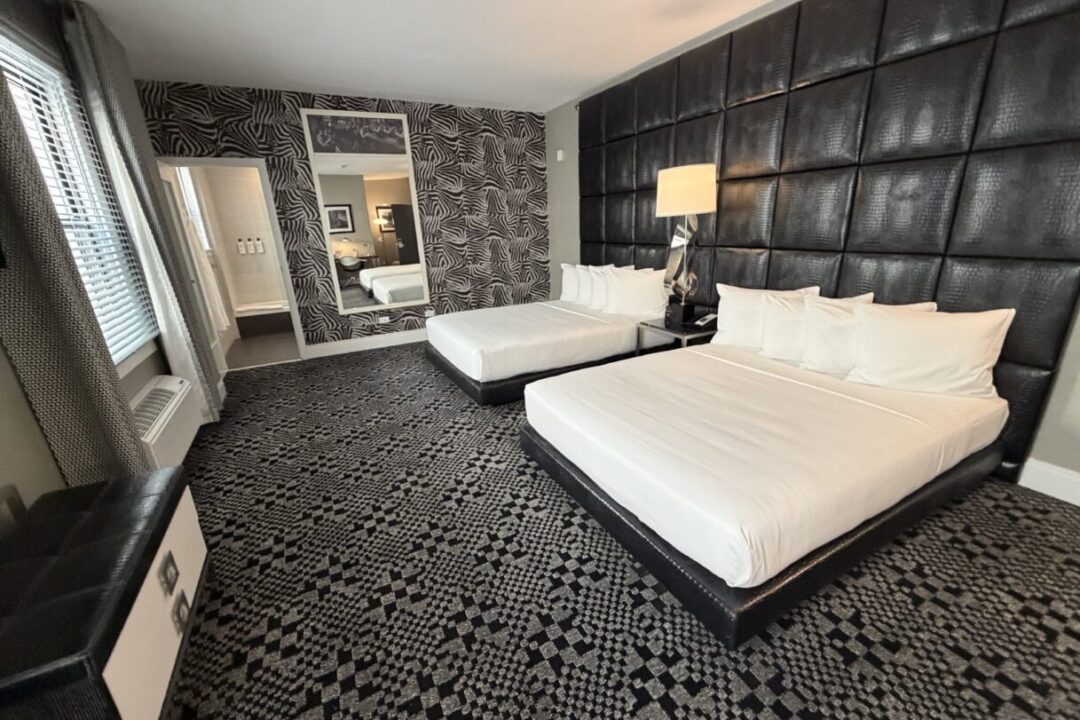
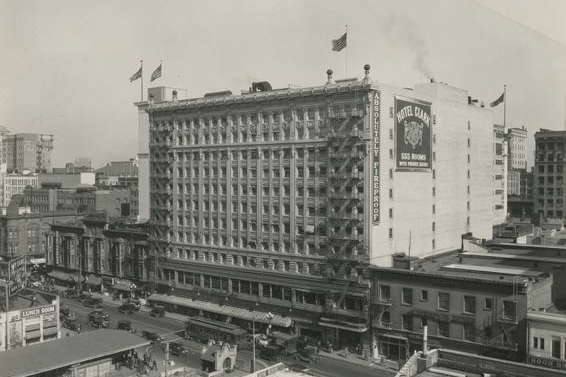
After more than 30 years without paying guests, the historic Hotel Clark at 426 S. Hill Street has finally reopened.
Built in 1914, the landmark spent decades awaiting a successful revival, enduring stalled renovation plans and years of uncertainty. Its September 2026 reopening introduced a 348-room hotel, Mediterranean-inspired dining at Votana, a cocktail lounge, and additional hospitality amenities.
For a Downtown neighborhood that has watched historic buildings sit vacant for generations, the Hotel Clark’s return represents something considerably larger than another hotel opening. It demonstrates the possibilities of bringing dormant architectural landmarks back into productive use.
Over on Olvera Street, another historic favorite has already made its comeback.
Cielito Lindo, the nearly century-old food stand famous for its rolled beef taquitos smothered in avocado sauce, reopened in late June 2026, just in time for Olvera Street’s Heritage Festival.
For generations, the family-operated establishment has been part of the culinary identity of Los Angeles. Its return preserves a food tradition that has survived changing neighborhoods, economic downturns, and nearly a century of competition.
The Arts District has also welcomed a familiar name in a new location.
Holy Basil, the acclaimed Thai restaurant known for its bold regional flavors, relocated from its original Downtown location to a larger space formerly occupied by Guerrilla Tacos. Rather than disappearing from the restaurant landscape, Holy Basil expanded its possibilities with a larger kitchen, full-service dining, and room to introduce additional dishes.
And on Hill Street, the former Shibumi space has been reinvented as Izakaya Toki, a Japanese restaurant that opened in September 2026.
Operated by the hospitality group behind Mo-Mo-Paradise and Guzzu Bento-ya, Izakaya Toki replaces Shibumi’s refined tasting-menu experience with the more casual atmosphere of a Japanese izakaya. The menu features grilled yakitori skewers, karaage, tuna carpaccio, wagyu steak, and inventive cocktails.
Among its more unusual creations is the Dirty Yakitori Martini, garnished with grilled chicken and a shishito pepper. The new restaurant brings a different interpretation of Japanese dining to the same Downtown address, demonstrating how established restaurant spaces can find new life under different operators.
And at Union Station, another piece of Los Angeles history has found new life.
Everywhere Beer has taken over the historic Fred Harvey restaurant space, bringing craft beer, food, and contemporary hospitality to one of the city’s most remarkable Art Deco interiors.
The former Fred Harvey dining room, dating to Union Station’s 1939 opening, once represented an era when train travel and elegant dining went hand in hand. Today, Everywhere has helped return the space to public use, offering visitors a chance to enjoy a drink surrounded by the station’s historic architecture. An adjoining cocktail bar, The Streamliner, adds another reason to visit.
Taken together, these developments tell a fascinating story about Downtown Los Angeles.
Rising operating costs, changing consumer habits, building maintenance problems, and the unpredictable economics of hospitality continue to reshape the restaurant landscape. Yet the return of historic institutions suggests that Downtown’s identity remains valuable enough for entrepreneurs and investors to take another chance.
Not every comeback is the same. Some businesses are reopening under new ownership, others are relocating, and historic spaces are finding entirely new purposes. But each represents another investment in Downtown’s future.
For every closing announcement, there seems to be someone willing to reopen the kitchen, restore the bar, revive a landmark, and give Los Angeles another opportunity to fall in love with its past.
The Pantry is preparing its return. Cole’s is getting another chance. Clifton’s is already welcoming crowds. Cielito Lindo is serving taquitos again, Hotel Clark is welcoming guests, Holy Basil has found a new home, Izakaya Toki is bringing fresh energy to Hill Street, and Union Station’s Fred Harvey dining room has a new reason to celebrate.
Now, if they could only bring back the Pacific Dining Car.


 Keri Freeman
 Jackson Roberts

