|
Getting your Trinity Audio player ready...
|
Downtown Los Angeles is about to welcome a cultural institution unlike anything it’s seen before. Opening to the public on June 20, 2026, DATALAND positions itself as the world’s first museum dedicated entirely to AI art—an ambitious new space where technology, data, and human imagination converge.
Photos courtesy ©Refik Anadol Studio for Dataland
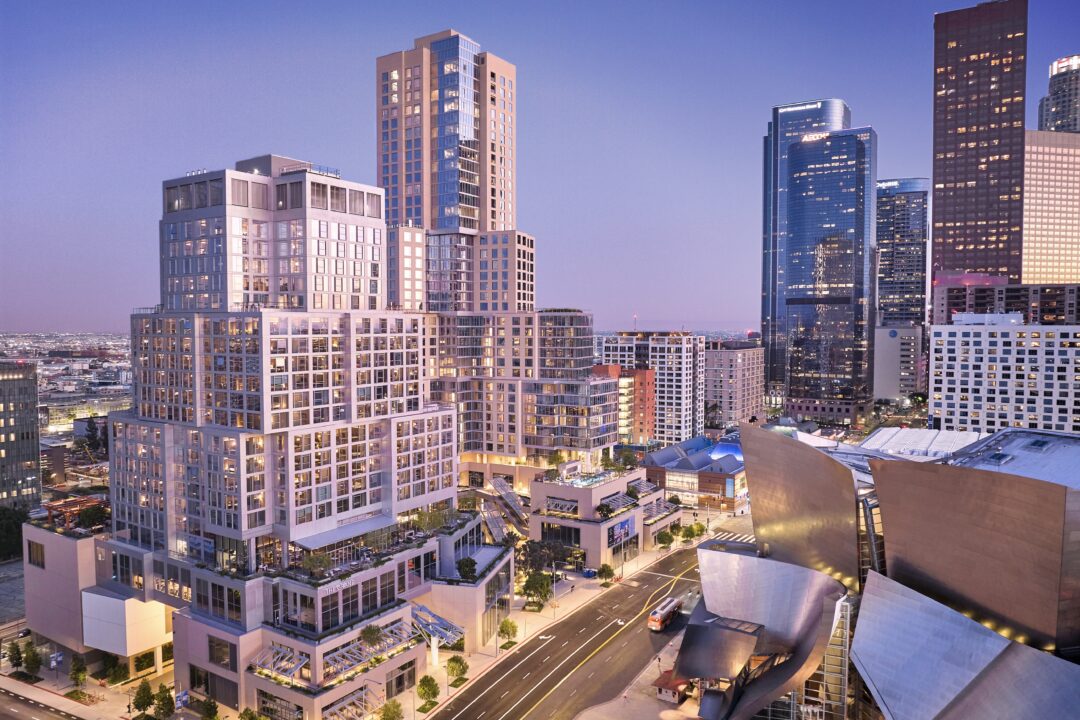
Located within The Grand LA, the Frank Gehry-designed complex that anchors Grand Avenue’s cultural corridor, DATALAND enters a neighborhood already defined by iconic institutions. But rather than simply joining that landscape, it aims to expand it—challenging what a museum can be in an era shaped by machine intelligence.
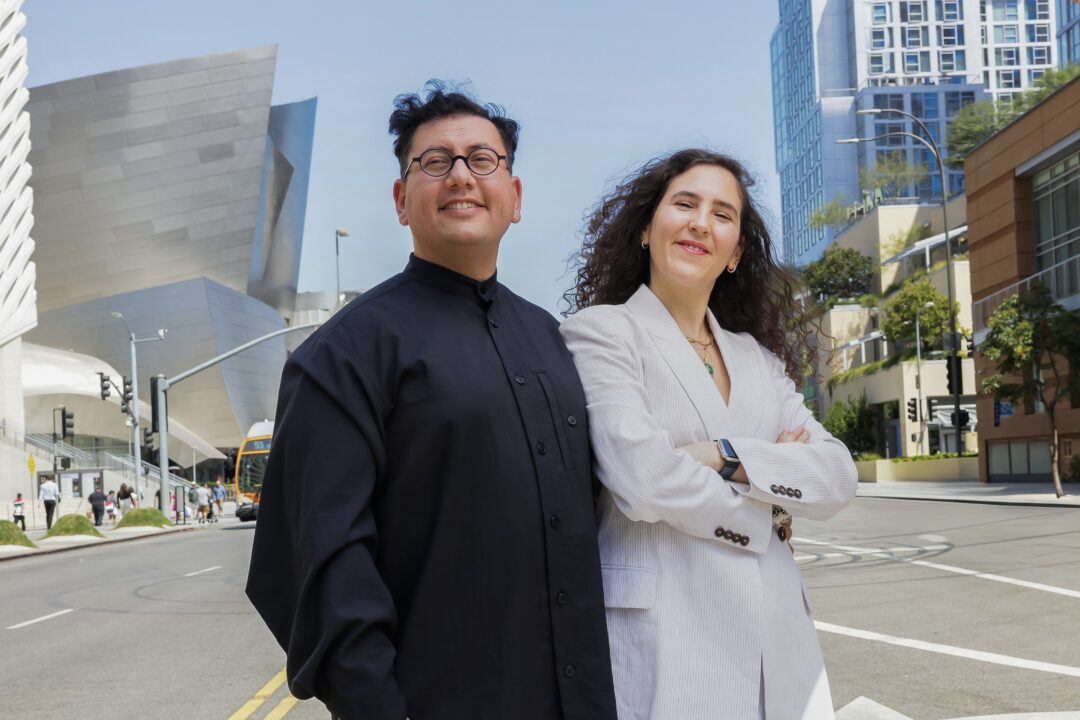
Founded by media artist Refik Anadol and creative director Efsun Erkılıç, DATALAND is conceived not as a static exhibition space, but as a living, evolving environment. Here, architecture, data, and audience interaction are part of the same system. The result is a museum that doesn’t just display art—it continuously generates it.
Photos courtesy ©Refik Anadol Studio for Dataland
At its core is the idea that data itself can be a medium, and that artificial intelligence can function not just as a tool, but as a collaborator in the creative process.
“LA is the center of creativity,” Anadol has said of the museum’s opening. “It’s a city that defines the future of art, music, cinema, and architecture.” For a city constantly reinventing itself, DATALAND feels like a natural next step.
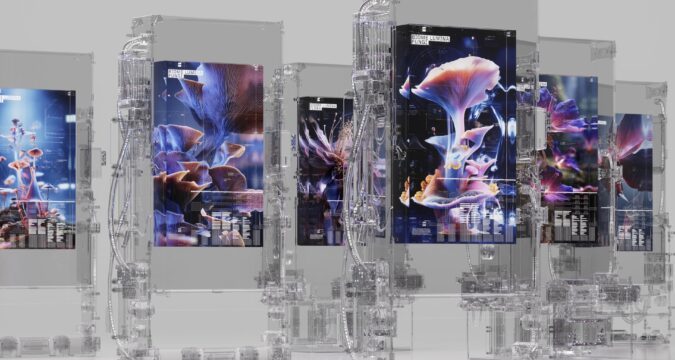
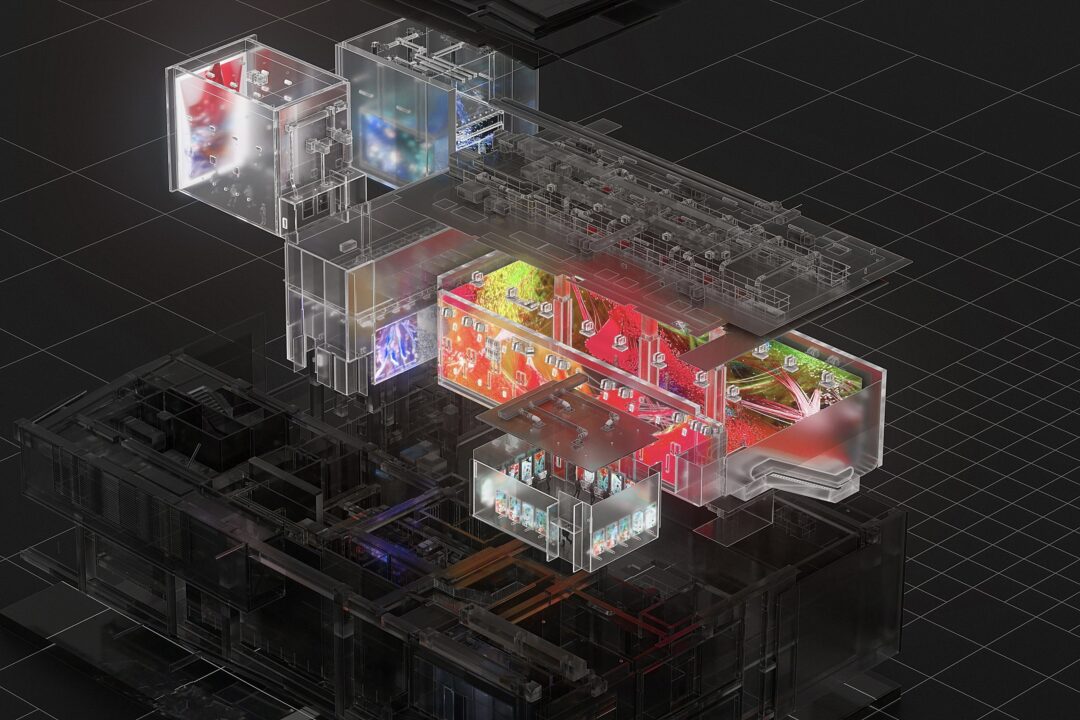
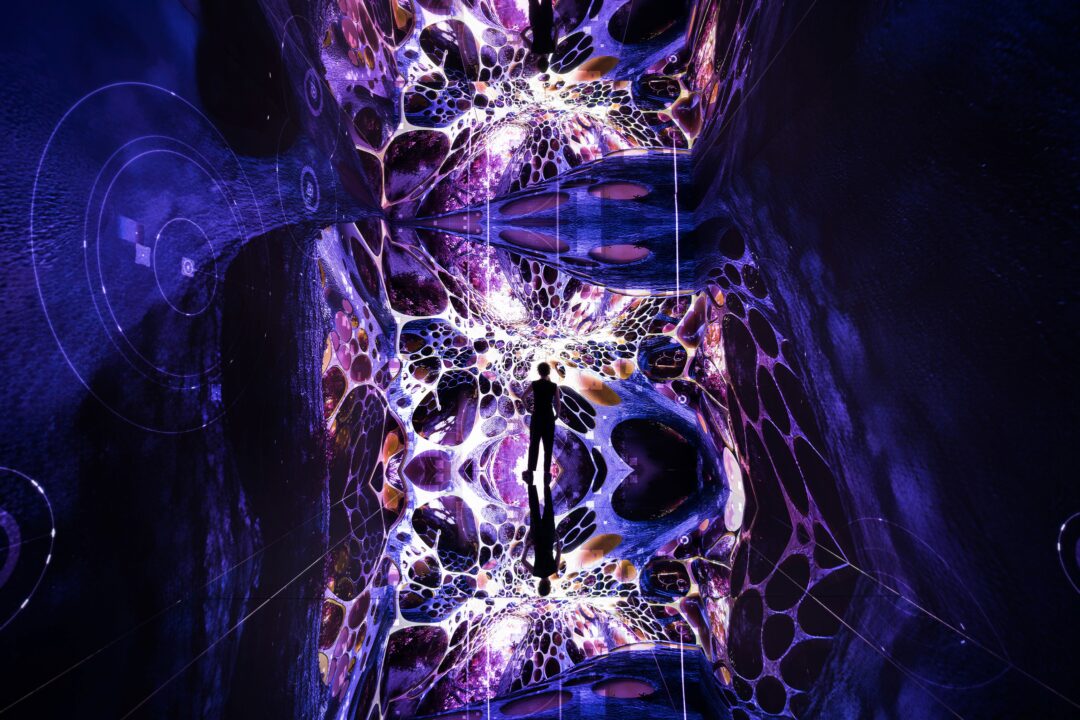
The museum’s inaugural exhibition, Machine Dreams: Rainforest, developed by Refik Anadol Studio, sets the tone for that vision. Running through January 31, 2027, the exhibition spans five galleries and immerses visitors in a multi-sensory experience shaped by vast ecological datasets and real-time inputs.
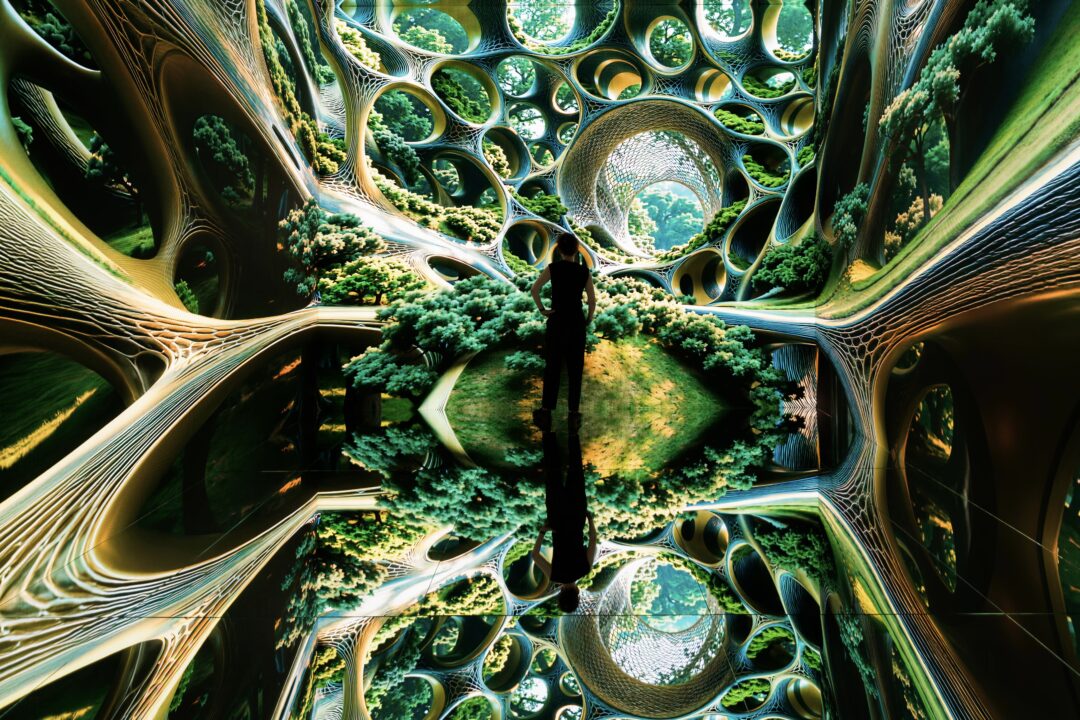
Rather than depicting nature in a traditional sense, Machine Dreams: Rainforest attempts something more complex: translating the intelligence of natural systems into a form that can be experienced through AI.
The concept traces back to Anadol’s time in the Amazon rainforest, where exposure to dense, interconnected ecosystems shifted his understanding of how nature operates. Instead of viewing it as a passive environment, he began to see it as an active, living intelligence—one that processes and transforms invisible forces like light, time, and moisture into tangible forms.
That idea now sits at the center of the exhibition.
Photos courtesy ©Refik Anadol Studio for Dataland
Using what the studio calls the Large Nature Model (LNM), a massive AI system trained on one of the most extensive datasets of the natural world, the installation generates a constantly evolving visual and sensory environment. Data sourced from institutions like the Smithsonian, the Cornell Lab of Ornithology, and the Natural History Museum feeds into the system, alongside material gathered from rainforest environments around the globe.
The result is not a fixed piece of art, but an ongoing process—one that shifts in response to both environmental data and the presence of visitors themselves.
Inside the galleries, that interaction becomes tangible. Changes in light, temperature, and visual composition reflect distant ecological activity, creating a subtle but continuous link between the physical space in downtown LA and ecosystems thousands of miles away.
Moments within the exhibition also carry deeper emotional weight. In one installation, visitors encounter the recorded call of the Kauaʻi ʻŌʻō, an extinct bird whose unanswered song becomes part of the experience—a reminder of loss embedded within the data itself.
At the same time, the project engages with Indigenous knowledge systems through collaboration with the Yawanawá people of the Amazon. Their cosmology and naming practices are woven into the exhibition, adding a cultural and spiritual layer that extends beyond the technological framework.
Photos courtesy ©Refik Anadol Studio for Dataland
This intersection—between advanced computation and ancestral knowledge—is where DATALAND begins to distinguish itself.
The museum also places emphasis on sustainability, a consideration often overlooked in conversations around AI. The Large Nature Model is hosted on a low-carbon Google Cloud infrastructure powered largely by renewable energy, with the energy consumption of a single visit roughly equivalent to charging a smartphone. It’s a deliberate attempt to balance digital innovation with environmental responsibility.
Beyond the exhibition itself, DATALAND introduces a new model for how audiences engage with cultural institutions. Memberships, now available ahead of opening, offer early access to the space along with ongoing entry, priority reservations, and digital programming. These include “salons” and an interactive platform called the Living Encyclopedia, where users can explore the datasets and AI systems behind the work.
It’s a structure that extends the museum experience beyond its physical walls, positioning DATALAND as both a destination and an evolving digital ecosystem.
For Downtown LA, the arrival of DATALAND signals more than just another opening. It reflects a broader shift in how art is created, experienced, and understood—one where boundaries between disciplines continue to blur.
In a neighborhood already defined by experimentation and cultural overlap, DATALAND fits squarely into the conversation. But it also pushes it forward, asking a question that feels increasingly relevant: if machines can learn from the world around us, what new forms of storytelling become possible?
Photos courtesy ©Refik Anadol Studio for Dataland
Beginning June 20, Los Angeles will have a place to start finding out.DATALAND Opens in Downtown LA, Redefining the Museum Experience Through AI Art
By Darlene Danielle Ricabo, DTLA Weekly
Downtown Los Angeles is about to welcome a cultural institution unlike anything it’s seen before. Opening to the public on June 20, 2026, DATALAND positions itself as the world’s first museum dedicated entirely to AI art—an ambitious new space where technology, data, and human imagination converge.
Located within The Grand LA, the Frank Gehry-designed complex that anchors Grand Avenue’s cultural corridor, DATALAND enters a neighborhood already defined by iconic institutions. But rather than simply joining that landscape, it aims to expand it—challenging what a museum can be in an era shaped by machine intelligence.
Founded by media artist Refik Anadol and creative director Efsun Erkılıç, DATALAND is conceived not as a static exhibition space, but as a living, evolving environment. Here, architecture, data, and audience interaction are part of the same system. The result is a museum that doesn’t just display art—it continuously generates it.
At its core is the idea that data itself can be a medium, and that artificial intelligence can function not just as a tool, but as a collaborator in the creative process.
“LA is the center of creativity,” Anadol has said of the museum’s opening. “It’s a city that defines the future of art, music, cinema, and architecture.” For a city constantly reinventing itself, DATALAND feels like a natural next step.
The museum’s inaugural exhibition, Machine Dreams: Rainforest, developed by Refik Anadol Studio, sets the tone for that vision. Running through January 31, 2027, the exhibition spans five galleries and immerses visitors in a multi-sensory experience shaped by vast ecological datasets and real-time inputs.
Rather than depicting nature in a traditional sense, Machine Dreams: Rainforest attempts something more complex: translating the intelligence of natural systems into a form that can be experienced through AI.
The concept traces back to Anadol’s time in the Amazon rainforest, where exposure to dense, interconnected ecosystems shifted his understanding of how nature operates. Instead of viewing it as a passive environment, he began to see it as an active, living intelligence—one that processes and transforms invisible forces like light, time, and moisture into tangible forms.
That idea now sits at the center of the exhibition.
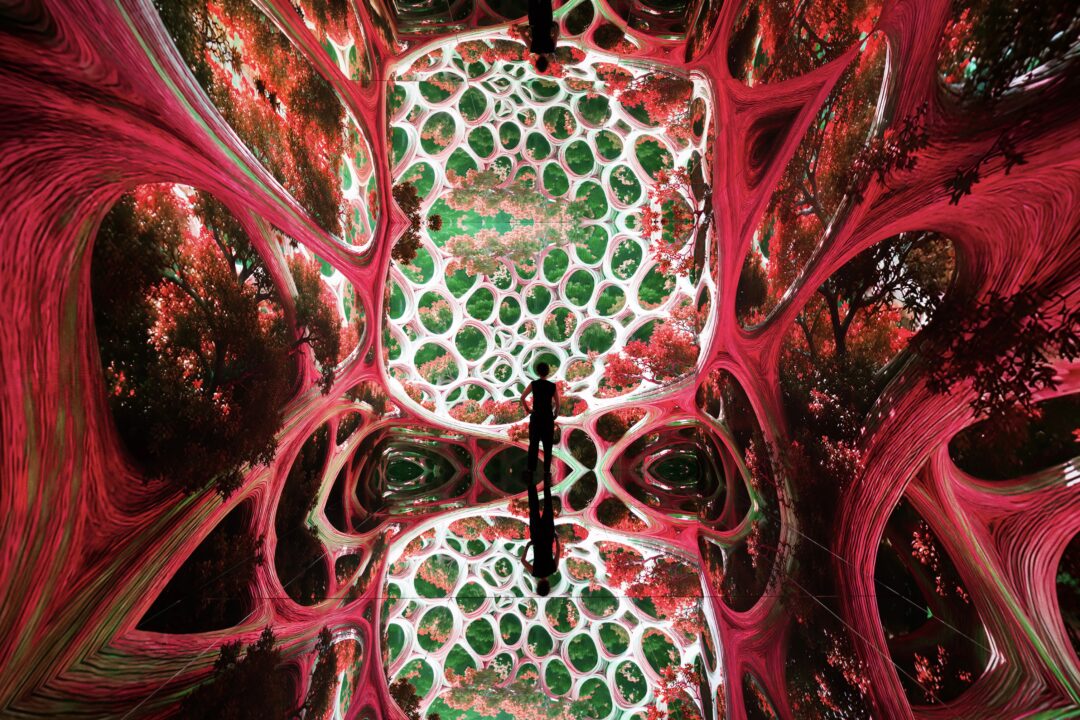
Photos courtesy ©Refik Anadol Studio for Dataland
Using what the studio calls the Large Nature Model (LNM), a massive AI system trained on one of the most extensive datasets of the natural world, the installation generates a constantly evolving visual and sensory environment. Data sourced from institutions like the Smithsonian, the Cornell Lab of Ornithology, and the Natural History Museum feeds into the system, alongside material gathered from rainforest environments around the globe.
The result is not a fixed piece of art, but an ongoing process—one that shifts in response to both environmental data and the presence of visitors themselves.
Inside the galleries, that interaction becomes tangible. Changes in light, temperature, and visual composition reflect distant ecological activity, creating a subtle but continuous link between the physical space in downtown LA and ecosystems thousands of miles away.
Moments within the exhibition also carry deeper emotional weight. In one installation, visitors encounter the recorded call of the Kauaʻi ʻŌʻō, an extinct bird whose unanswered song becomes part of the experience—a reminder of loss embedded within the data itself.
At the same time, the project engages with Indigenous knowledge systems through collaboration with the Yawanawá people of the Amazon. Their cosmology and naming practices are woven into the exhibition, adding a cultural and spiritual layer that extends beyond the technological framework.
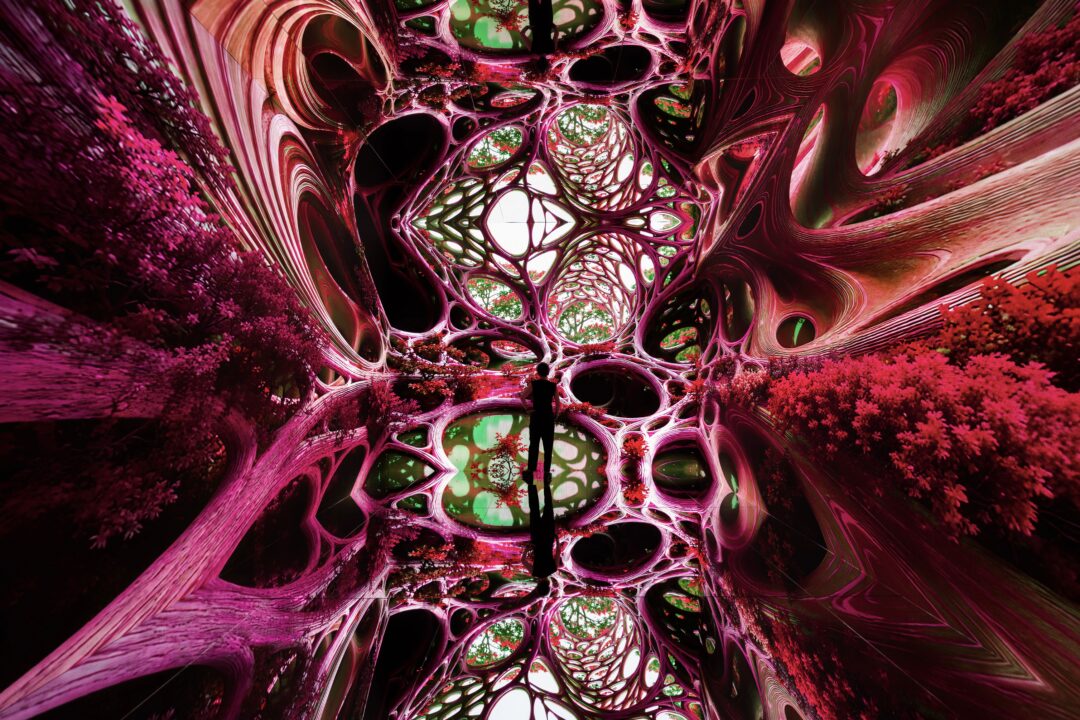
Photos courtesy ©Refik Anadol Studio for Dataland
This intersection—between advanced computation and ancestral knowledge—is where DATALAND begins to distinguish itself.
The museum also places emphasis on sustainability, a consideration often overlooked in conversations around AI. The Large Nature Model is hosted on a low-carbon Google Cloud infrastructure powered largely by renewable energy, with the energy consumption of a single visit roughly equivalent to charging a smartphone. It’s a deliberate attempt to balance digital innovation with environmental responsibility.
www.dataland.art