The downtown real estate landscape in Social District changed permanently this month as the City of Los Angeles officially moved into the heavy construction phase of the $2.6 billion Los Angeles Convention Center (LACC) Expansion and Modernization project.
For those who live, work, or play in the shadow of Crypto.com Arena, the most immediate sign of this evolution is the 24/7 closure of Pico Boulevard between LA Live Way and Figueroa Street. This closure is now a fixed part of our downtown commute and is scheduled to remain in place until March 31, 2028.
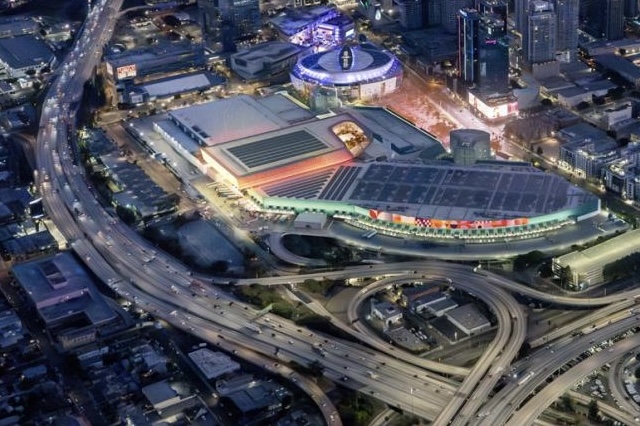
Photo courtesy Los Angeles Convention Center
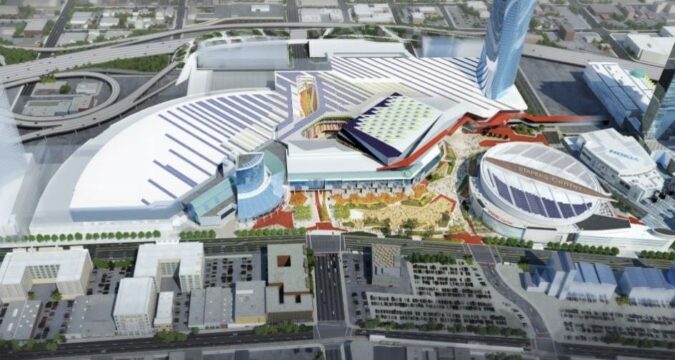
The centerpiece of the expansion is an ambitious structure designed to span directly over Pico Boulevard. This “bridge” building will physically connect the existing South and West Exhibit Halls for the first time. Once completed, the LACC will offer over one million square feet of contiguous exhibit space, finally allowing Los Angeles to compete for the world’s largest conventions against rivals like Chicago and New York. The design includes a signature “Skynode” lobby—a massive three-level atrium that will serve as the heart of the facility—and a 98,000-square-foot rooftop ballroom offering unparalleled views of the DTLA skyline.
With Pico Boulevard serving as a primary artery for the Social District, the LADOT has implemented a detour plan to keep the city moving.
For the next two years, motorists, cyclists, and pedestrians should prepare for significant shifts in traffic flow. Eastbound traffic is currently being routed north onto LA Live Way, east on Olympic Boulevard, and back south on Figueroa Street to reconnect with Pico. Westbound travelers are being diverted south on Figueroa Street, west on Venice Boulevard, and north on Union Avenue.
Public transit users are also feeling the impact as Metro Line 30 is officially on detour between Union Avenue and Figueroa Street. Riders should check the Metro website for specific temporary stop locations.
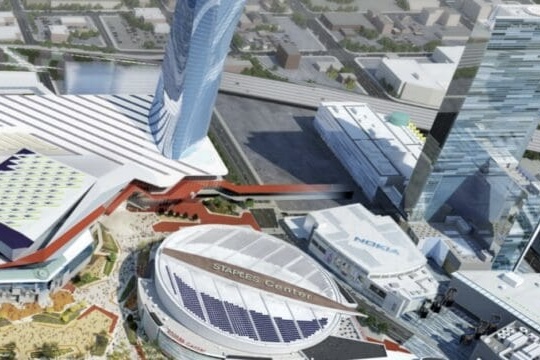
Photo courtesy Los Angeles Convention Center
While the fiscal scale of the project has sparked debate in City Hall regarding the long-term impact on the General Fund, proponents point to the massive economic engine being built. City officials estimate the project will create over 15,000 jobs and generate $150 million in additional annual visitor spending.
For DTLA shareholders, the expansion represents more than just square footage; it is a commitment to the neighborhood’s revitalization. The project includes a transformation of Gilbert Lindsay Plaza into a vibrant public space for outdoor events, markets, and community gatherings.
As the city races toward the 2028 Olympic and Paralympic Games, the sight of cranes over Pico Boulevard serves as a constant reminder that Downtown is no longer just a destination—it is a global contender.