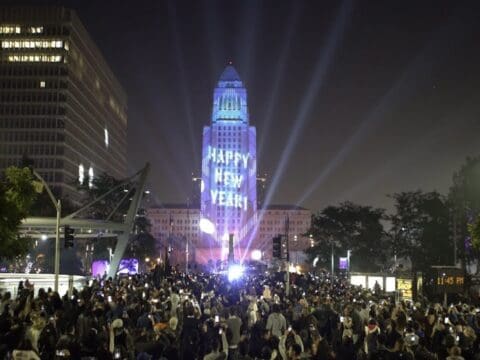
Downtown Los Angeles is no stranger to large-scale demonstrations. Within a single year, City Hall can be the backdrop for hundreds of protests in various forms, but since the pandemic, some of these gatherings have grown increasingly intense.
For the residents of Downtown Los Angeles, protest can be defined by the roar of overhead helicopters, flashing sirens, and the persistent anxiety that a peaceful march could transform into a chaotic confrontation at any moment.
For taxpayers, when the protest turn ugly: here is the bill for vandalism, theft, street repairs, and the constant deployment of barricades. Beyond the public cost, the local economy has taken a significant hit as small businesses face shattered storefronts and looted inventory, leading some to shutter their doors permanently. The instability has even pushed major corporate anchors to relocate their headquarters out of the city center, further hollowing out the district’s tax base and daytime foot traffic.
The Jam
Now imagine being stuck in gridlock for miles outside of downtown with no idea why, only to finally find out on the evening news that protesters were dancing, filming music videos, and even vending hot dogs on the 101.
It wasn’t an accident or regular rush hour traffic, and the moment law enforcement stepped in, the scene became a surreal mix of a block party and a battleground between rioters and police, complete with chunks of concrete raining down from above.
How did we get here?
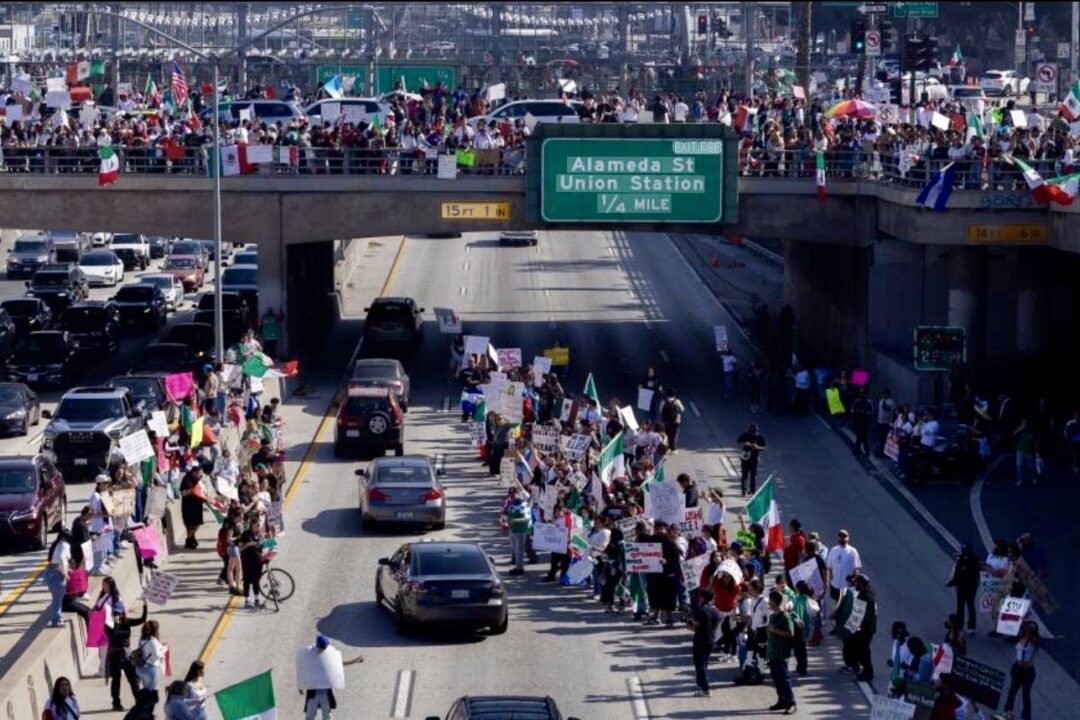
In recent years, a dangerous new pattern emerged where protestors purposely headed toward the freeway bridges and on-ramps to create high-visibility blockades.
Soon, it became clear to any observer that these were no longer just spontaneous marches; they had evolved into organized, deliberate takeovers on the 101.
Many times, after the tear gas fades, the sirens calm, debris lines streets and the historic buildings reveal their fresh new coats of graffiti, downtown LA is left to take the blame for its own condition. The prevailing sentiment for the new age is it’s okay to come and do what ever we want – “it’s downtown”.
Close the gates!
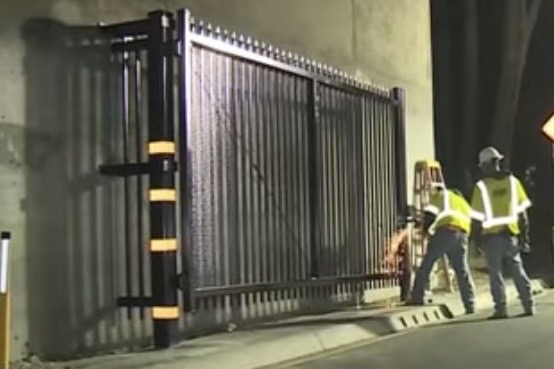
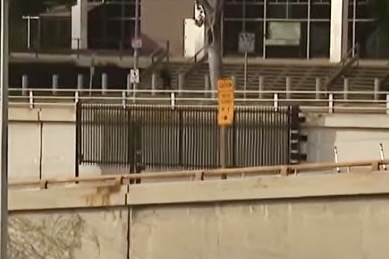
Completed in an unprecedented overnight operation just before the “No Kings” march on March 28, 2026, Caltrans, in collaboration with the California Highway Patrol, surprised the town with permanent steel swinging gates.
Costing approximately $400,000 to implement, the news hit the airwaves and many citizens across Los Angeles immediately began voicing their discontent. Some said the gates simply wouldn’t work, while others argued that the physical barriers infringed on the constitutional right to protest however, wherever, and whenever they chose.
Despite the outcry, the city maintained its position that the primary goal was to prevent the lethal risk of pedestrians entering high-speed traffic zones. Yet, for anyone ever trapped in traffic for half a day thanks to angry protesters, the debate over rights versus safety became the central theme of the weekend.
But would the gates work?
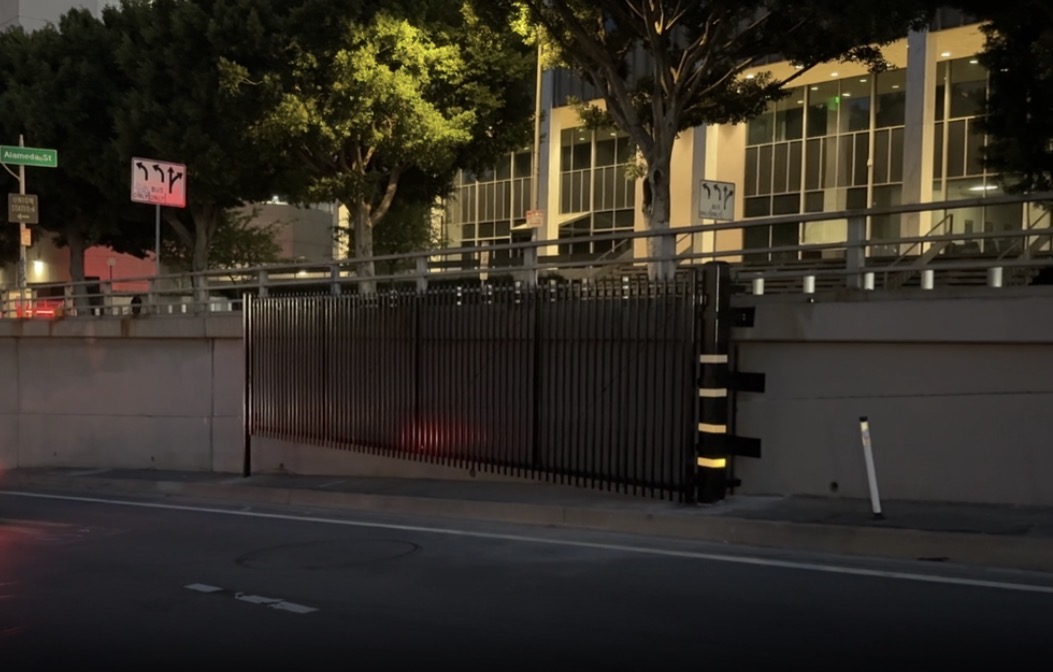
The ultimate test for the steel gates arrived this past Saturday, March 28, as millions of people took to the streets nationwide. In Downtown Los Angeles, crowds gathered around City Hall and Gloria Molina Grand Park, marched up and down Spring, chanted, gave speeches, bonded in solidarity and acknowledged each others causes while seasoned rioters and fearless press took on tear gas and rubber bullets at the Federal Building in Little Tokyo.
While the majority of the event remained peaceful, violence eventually broke out near the federal complex, where agitators reportedly threw rocks and broken concrete at officers. As tension escalated, the LAPD issued a tactical alert and a dispersal order around 5:30pm, with an Unlawful Assembly Declaration at 6pm sharp, ending 70 arrests for failure to disperse and weapons possession.
101 Unbothered
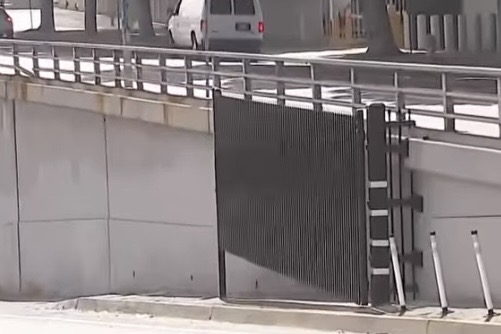
Despite the chaos on the surface streets, the 101 Freeway remained unbothered, blocking the primary access point that had been exploited in previous years, managing to successfully avoid the multi-mile gridlock and dangerous pedestrian-vehicle encounters that have defined past downtown uprisings.
These new gates scream “It’s Official”
The city is proactively working on preventing this type of chaos before it happens, starting with the volatile nature of large-scale protests. This successful trial has reinforced the argument for expanding similar barricades to other high-risk areas, allowing officials to prevent a march from spilling into high-speed traffic zones.
By integrating these permanent steel gates into the downtown loop, the city could also gain a mechanical advantage against illegal street takeovers and high-speed chases. These gates could also serve as effective temporary construction barriers, allowing city officials to toggle the accessibility of the freeways off and on at a moment’s notice.
This evolution in urban design suggests that the days of scrambling to block an on-ramp with a squad car are ending. Instead, the city is moving toward a future where the flow of traffic is managed with the flick of a switch.