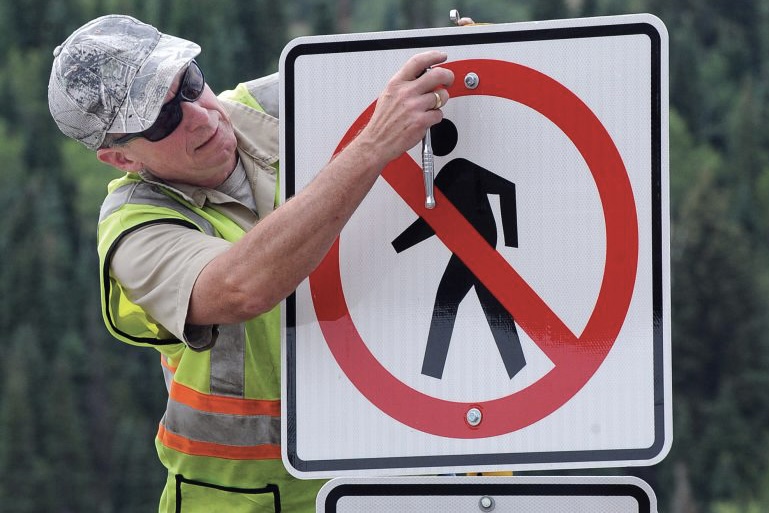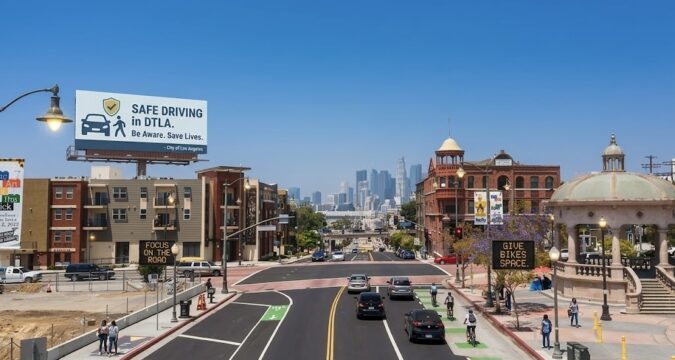
Downtown Los Angeles streets are alive with renewed energy as residents and visitors embrace walkable city living. At the same time, traffic safety remains a serious concern.
The city recorded 302 traffic fatalities in 2024, with more than half involving pedestrians. These numbers highlight ongoing risks for people walking in busy districts like DTLA. Although city leaders continue pushing initiatives aimed at reducing severe crashes, pedestrian deaths remain stubbornly high. The data underscores the urgency of safer street design and smarter mobility planning.
As DTLA grows denser and more vibrant, creating safer urban spaces has become central to protecting both community life and economic vitality.
The New Energy of DTLA Streets
Downtown Los Angeles is experiencing a visible surge in street activity and public life. Sidewalks feel fuller as new residents, workers, and visitors flow into the area daily.
According to DT News, Downtown now supports 747 retail, food, and beverage businesses per square mile. The district welcomed more than 18 million visitors in 2024 alone. Retail sales also surpassed 4.8 billion dollars, signaling strong economic momentum.
Survey participants reported noticing more restaurant openings within the past year. They also observed an increase in public events across the neighborhood. Attendance at those events and dining spots has steadily grown, reinforcing DTLA’s renewed urban energy.
Traffic Density and the Push for Safer Mobility
DTLA streets are busier than ever with rideshare vehicles, cyclists, and pedestrians sharing limited road space. Increased mobility options have improved convenience but also raised safety concerns. The city has responded with brighter crosswalk markings, protected bike lanes, and redesigned intersections to improve visibility. Signal timing adjustments now aim to slow vehicles in high foot traffic corridors.
To understand how serious pedestrian crashes can become, consider a recent example outside Los Angeles. RiverBender reports that a fatal pedestrian crash in Collinsville on I-55 in January 2025 claimed the life of a 26-year-old. In a situation like this, the victim’s family might have consulted a personal injury lawyer in Collinsville to understand their legal options.
Gianaris Trial Lawyers suggest that cases involving severe injuries or fatalities often require experienced legal guidance. This support helps families address medical costs, insurance claims, and complex liability issues.
Incidents like these reinforce why cities such as DTLA continue pushing for safer mobility solutions.
Vision Zero and Urban Safety Initiatives
Vision Zero is a comprehensive public safety strategy designed to eliminate traffic-related fatalities across Los Angeles County. The initiative reflects a growing recognition that most serious crashes are preventable through better planning and enforcement.
Los Angeles County has formally committed to achieving zero traffic deaths on unincorporated roadways by the year 2035. This ambitious goal signals a long-term shift toward accountability and measurable safety outcomes. To support that commitment, the County developed a detailed Action Plan outlining infrastructure upgrades, enforcement strategies, and community education programs.
In urban centers like DTLA, these coordinated efforts influence street redesigns and mobility improvements aimed at protecting pedestrians, cyclists, and drivers alike.
Designing Streets for People, Not Just Cars
City designers are rethinking how streets function beyond simply moving traffic efficiently. Wider sidewalks encourage walking, outdoor dining, and spontaneous social interaction. Protected bike lanes create safer routes for commuters choosing alternative transportation.
Curb extensions shorten crossing distances and improve pedestrian visibility at intersections. Street trees and shaded areas also enhance comfort during warmer months. Traffic calming features, including raised crosswalks and narrower lanes, help slow speeding vehicles. Smart signal systems now adjust timing to accommodate heavier foot traffic.
These thoughtful design choices create safer, more welcoming public spaces. As DTLA evolves, human-centered street planning supports both safety and vibrant community life.
Community Involvement in Safety Advocacy
Safer streets in DTLA depend not only on policy changes but also on active community participation. Residents, business owners, and advocacy groups regularly push for improvements in traffic safety and accessibility. Public meetings and neighborhood councils give locals a voice in infrastructure decisions.
LA2050 highlights Los Angeles Walks, a fiscally sponsored community advocacy organization. The group works with historically disinvested neighborhoods to reshape streets into safer, more welcoming public spaces. Its mission promotes environments where people who walk, roll, or use transit feel protected. The broader vision supports a just Los Angeles where mobility is safe regardless of race, income, age, or ability.
Community engagement continues driving meaningful urban safety progress.
The Future of Urban Living in Downtown LA
Downtown LA continues to redefine what modern city living looks like in Southern California. Growing residential developments are bringing more full-time residents into formerly commercial corridors. This shift increases demand for safer sidewalks, reliable transit, and accessible public spaces.
Mixed-use projects now blend housing, retail, and entertainment within walkable districts. Urban planners are prioritizing sustainable transportation and pedestrian-friendly design strategies. Expanded bike infrastructure and improved lighting aim to enhance daily safety. Community groups are also shaping conversations around equitable street improvements.
As density rises, thoughtful planning becomes essential for long-term livability. A safer, more connected DTLA supports economic growth while strengthening neighborhood identity and community trust.
Frequently Asked Questions
Are certain DTLA intersections considered high-risk areas?
Yes, certain DTLA intersections are considered higher risk due to heavy pedestrian activity and dense traffic flow. City data often identifies corridors with frequent collisions. These locations typically receive priority for safety upgrades such as improved lighting, signal timing adjustments, and redesigned crosswalks.
How can visitors stay safe when exploring DTLA on foot?
Visitors can stay safe by using marked crosswalks, staying visible at intersections, and avoiding distracted walking. It is wise to remain aware of traffic patterns, especially near busy corridors. Exploring well-lit streets and traveling with companions at night also enhances safety.
What role do electric scooters play in street safety concerns?
Electric scooters increase mobility but can create safety concerns in crowded urban areas. Conflicts often arise when scooters share sidewalks or bike lanes with pedestrians and cyclists. Improper parking and unpredictable riding behavior may also contribute to collisions and street congestion.
Building a Safer, More Connected DTLA
Downtown Los Angeles stands at a pivotal moment where growth and safety must advance together. Rising foot traffic, expanding residential communities, and thriving businesses signal strong urban momentum. At the same time, persistent traffic risks highlight the importance of thoughtful design and accountability.
Initiatives like Vision Zero, community advocacy, and people-centered street planning are shaping a more secure environment. Safer crosswalks, protected bike lanes, and inclusive mobility strategies benefit everyone who lives, works, or visits DTLA.
Continued collaboration between city leaders and residents will determine how successfully energy and safety coexist. A vibrant Downtown ultimately depends on streets that protect and connect its community.