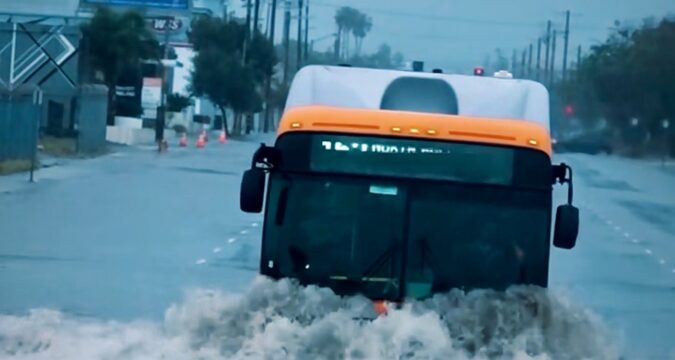
Waymo’s taking on flooded intersections where no other cars dare to go. Food delivery robots stuck halfway up a crosswalks, LA River raging like the Grand Rapids. Cars turning into submersibles…
Why is Los Angeles having so much trouble with the rain?
That’s the question echoing across the 101 as drivers squint through windshield wipers set to “aggressive jazz hands.” It’s the question hovering over the Los Angeles River, which every few years transforms from “concrete suggestion of water” into “biblical audition tape.” It’s the question being silently processed by an autonomous vehicle somewhere in West Hollywood that did not sign up for amphibious mode.
To understand why LA melts down at the first serious storm, you have to understand that Los Angeles is, at heart, a city in denial about weather. This is a place that treats “partly cloudy” like a plot twist. The entire metropolitan identity is built around the assumption that the sky is decorative.
Then it rains.
Not cute rain. Not romantic drizzle. Real rain. The kind that falls with intent. The kind that arrives in sheets and says, “I’ve read the topography, and I have notes.”
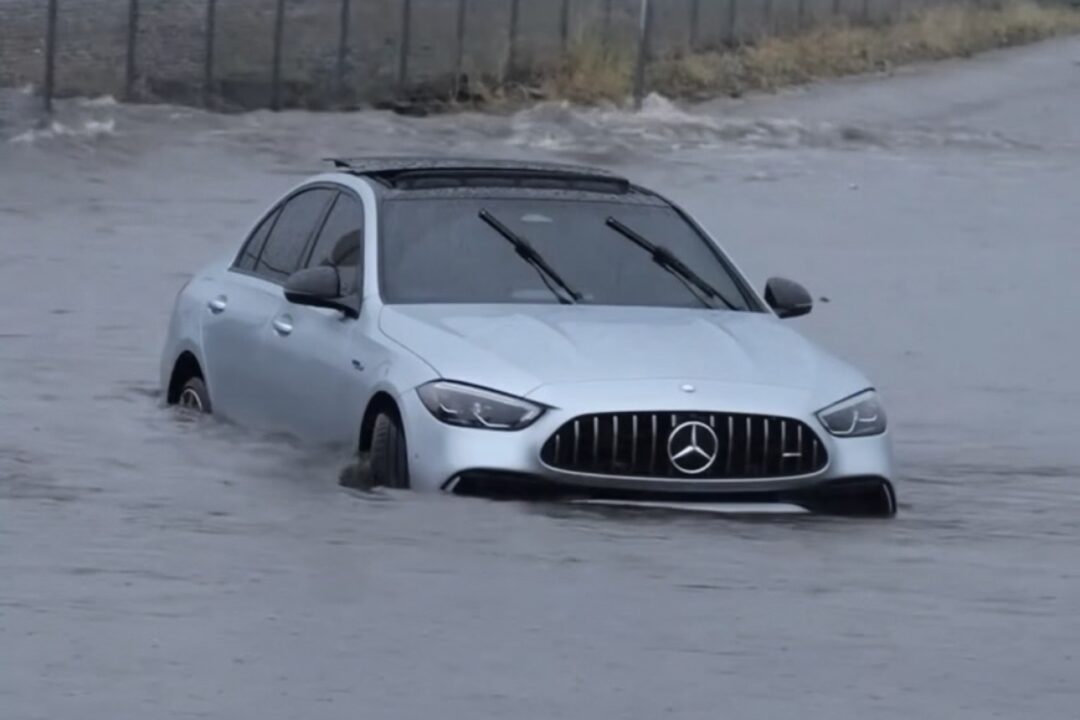
Geographically, Los Angeles sits in a basin. Which is a polite way of saying: it’s a bowl. Mountains ring the city like nature’s retaining wall, and when storms roll in, gravity does what gravity has always done. Water runs downhill. It runs off the San Gabriels, off the Santa Monicas, off every slope that ever felt confident five minutes earlier, and it all heads toward the same place: the part where millions of people decided to install asphalt.
And asphalt, while excellent for convertibles and film shoots, is famously bad at absorbing anything. LA is paved. Paved and sealed and layered in concrete like a lasagna of infrastructure. When rain hits that surface, it doesn’t soak in. It skids. It gathers. It teams up with other raindrops and forms a union.
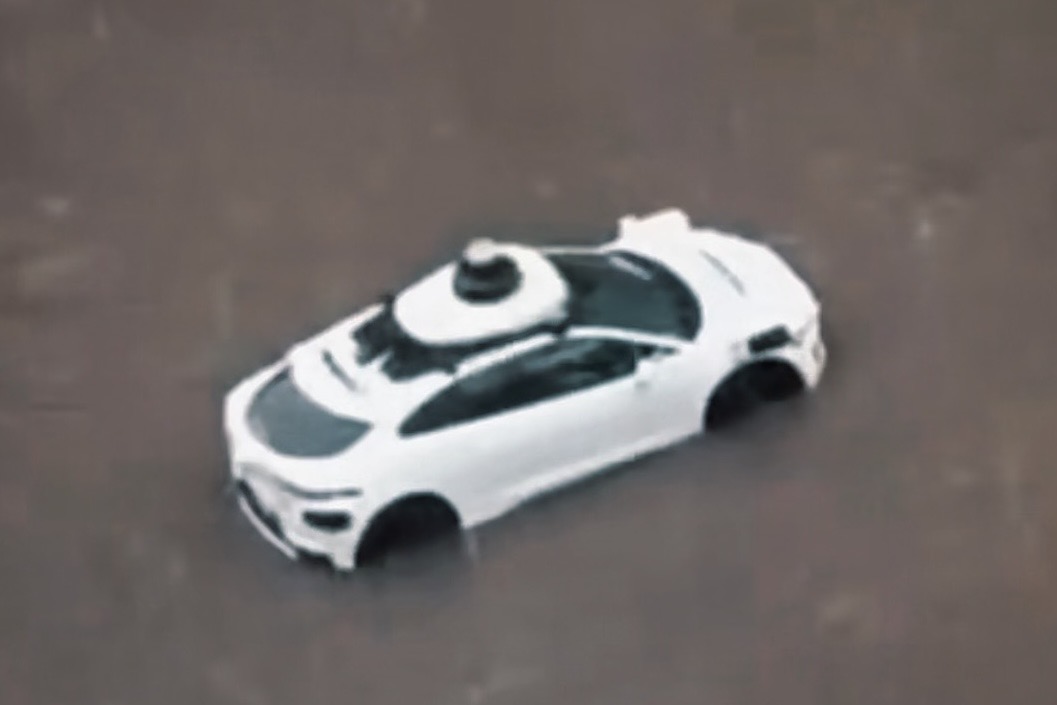
Storm drains try their best, but they were built for “occasional inconvenience,” not “atmospheric river flexing.” So water pools in intersections. Freeways turn into reflective art installations. Crosswalks become philosophical obstacles. A Waymo, trained on millions of miles of California sunshine, suddenly finds itself staring at a flooded lane and thinking, “This was not in the simulation.”
There’s also the drought factor, which makes the whole thing feel especially unfair. For years, everyone talks about water conservation. Lawns go beige. Showers get shorter. The sky forgets how to participate. And then, when it finally does rain, the ground reacts like someone trying to chug water after a marathon. Dry soil can repel water at first. Instead of absorbing it, it sends it rushing across the surface, straight into streets and gutters that were already overwhelmed.
So the city that can barely choreograph traffic for awards season cannot choreograph a storm.
Why is Los Angeles having so much trouble with the rain?
Because LA was built for sun, sold on sun, and spiritually aligned with sun. When the sky decides to improvise, the whole city has to learn, very quickly, that even paradise needs drainage.
And just like that, someone will declare the drought officially over—while the mountains linger in high definition, the hills glow briefly green, and the Los Angeles River resumes its quiet performance, —until the hills fade back to sepia, the waterlines drop, and we once again ask how the next rain storm came upon us so suddenly.