It’s a Wednesday night at one of L.A.’s many underlit dives. The regulars have flown elsewhere, the rain falls into the dark night, and the sharp cold of winter has started to make its way into the city. Interspersed among lone couples and the holdout barflies is Andre Menchavez. It’s the last place they’d expect to run into anyone, yet, looking up from a weathered table, Andre sees a man making a beeline toward their booth.
“Andre!?!” he exclaims.
“Oh my God, it’s been so long!” Andre shouts back.
“Was it the last event? No way!”
“I think it was!” says Andre.
“That night was insane,” he says back.
As two others flock to join him, he turns and says, “ I met Andre at Queer LiberAsian back in May. Andre, it’s so good!”
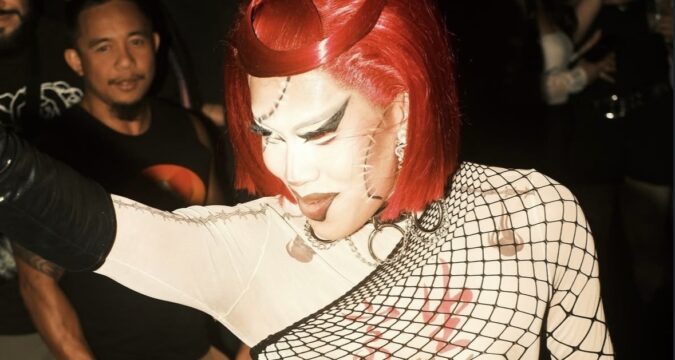
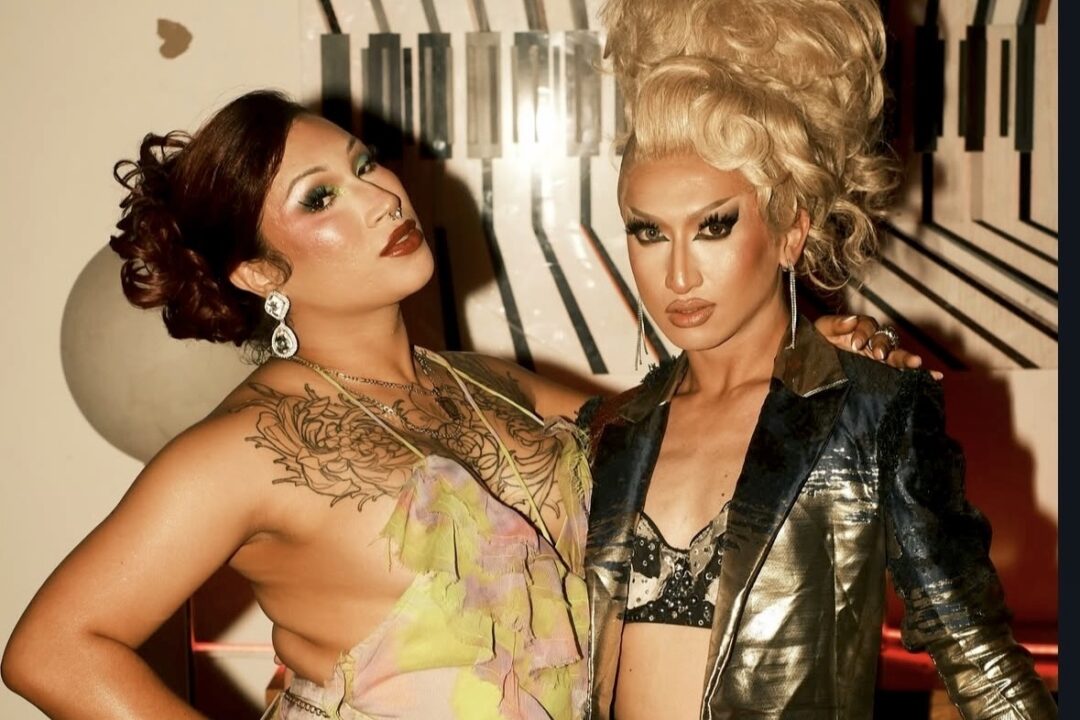
The conversation dies down, the group disembarks, and the bar returns to its dull state of humming. Leaving Andre to sit in the bizarre serendipity. From appearances by world-renowned K-pop group Katseye to collaborations with Patrick Starr’s cosmetic brand ONE/SIZE, Queer LiberAsian is becoming an unexpected force. The sometimes roving pop-up party has been settling in the Arts District as of late, bringing new and old faces back to the heart of it all in the midst of what has been its busiest season.
For Menchavez, Queer LiberAsian is as much a labor of love as it is a reflex. Andre has had a long career in activism—a path that started with on-the-ground protests in the Bay and deep involvement in social justice work during college, ultimately leading them to interview then-President Joe Biden for GLAAD. That passion remains to this day as Queer LiberAsian is funded entirely by Andre, who donates 100% of the event’s proceeds to rotating causes. In their own words, “Queer LiberAsian is a response.” Whether that be to recent ICE raids, trans causes, or queer AAPI issues.
DTW: Where does the name Queer LiberAsian come from?
It’s about the liberation of our communities, helping aid the work of liberating communities and organizations. I love a pun, so I was like, let’s do Queer LiberAsian.
DTW: What was it like getting event off the ground?
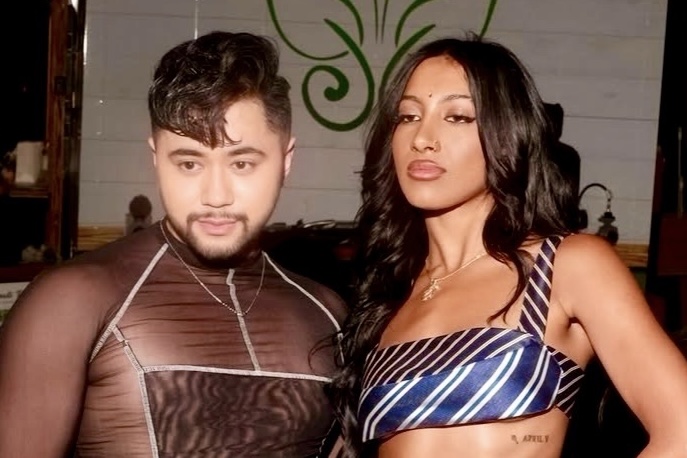
I started in 2018 on my college campus, seven years ago. It’s pretty rare to find a queer, trans, all-AAPI show, even though we’ve made these advances with representation— but especially so in 2018. So it was pretty hard to create it back then. I mean, my first ever show had like 20 people in the crowd, and it was mainly my friends from my dorm.
DTW: What was the initial thought behind the event?
I wanted to blend my worlds: activism, and I’ve also been dancing since I was like 11. So blending my worlds of activism, performing arts, and then my queer Asian identity— I was like, what could that look like? What’s not been done yet? And then I was like, let’s create for liberation, let’s put on a show.
DTW: What made you want to continue? I mean, theoretically, you could have just left it there.
Yeah, well, technically, I kind of did… In 2021, I moved to LA for grad school, and I stopped putting it on. But then I got into an accident that split my foot open, and I didn’t know if I was going to be able to walk again. In that recovery process, it made me realize how much I missed performing and how much I missed that creative part of me. So when I graduated that summer in 2022, I was like, let’s bring Queer LiberAsian back… So now I’m in this new city, I’m now 21. I might as well evolve it into something new. So it became a nightlife party.
DTW: What did that entail at the time?
It’s never changed since that first one in LA. It starts off with a networking community-building event with an open bar, which has always been our standard: an open bar. You’ll always get that open bar. And then you get a show full of queer, trans, Asian, Pacific Islander performers— drag artists, dancers, singers, spoken word— and then a dance party after. And I use 100% of profits for local nonprofits, and that’s never changed since the initial show.
DTW: What was the moment where you noticed that the event was picking up traction?
It continuously kept growing, but I think the moment was when we collaborated with the LA LGBT Center this May, and we had the girls from Katseye, and we gave the first-ever openly queer South Asian K-pop artist, Lara Raj, an award at our show. That was the moment that people were like, what is this?
DTW: What makes Queer LiberAsian different from other drag shows?
We want to show the spectrum of what it looks like to be a queer Asian person and what it looks like to be a queer Asian performer in the scene. We also provide space for people who are performing for the first time. I can list off a number of girls—Rae Oblivion, Ally Meda, Hen Thia. These are drag queens who are title holders now in Los Angeles.
DTW: How much has the event raised so far this year?
We’re about to hit $20,000 raised this year alone. For context, in 2023, we raised, I think, $11,000; we hit $11,000 in the summer. So it’s really growing.
DTW: In the last few years, there’s been a lot of new challenges to the queer space. How does Queer LiberAsian tackle that?
Nine times out of ten, queer liberation is in response to something. If there’s a community concern—like when there were numerous ICE raids in June— we were supposed to have a fun little Pride party. I was like, no, we’re going to raise money for CHRLA, so we’re going to help our immigrant families in Los Angeles during this time.
DTW: What are some challenges that you’ve faced during this event?
Oh my God, a lot. Well, I run it all by myself, so, you know, money, time, energy, effort. I think it’s hard to get sponsors, I would say, because of the political nature of the event. And when we have had sponsors in the past, it was a very watered-down version of support.
DTW: To that effect, nightlife is a hard place to be in. Have there been any difficulties within that environment for you?
You go to WeHo; you go to a lot of these queer Asian events in LA, and I don’t see people who look like me in there, who dress like me in there. I think about one of the guests at my last show… They were in their own personal drag, and they were like, I couldn’t feel comfortable doing this in spaces in West Hollywood, you know?
DTW: What is the next step or goal with Queer LiberAsian?
This year, I wanted to do an all-dance Queer LiberAsian—only queer trans dancers in the community— which is something where there’s never been a show like that ever, and I got to do that. But with next year, I really just want to go for consistency and quality.
DTW: What about in the next few years?
If I had to say something— world tour. I would love to take it across the world, bring it back to the Philippines eventually one day, because I have brought it across the country. Last year, we brought it to New York; the year before that, we did Seattle, SF. So yeah, it’s been a lot of space. But I’m mainly just focused on quality and consistency.
DTW: If you could describe Queer LiberAsian in three words, what would they be?
Revolutionary, familial, and fiery. I want it to feel like a family reunion.
Gen Z, often remarked as the first generation of digital natives, is eagerly looking for spaces in which to bring their online communities to life. Unlike the dozens of offerings that may appear on your digital feed, Queer LiberAsian is taking that sense of community to heart. A ten-year vet within the performing arts space, Menchavez’s know-how and passion shine. Every aspect of the DTLA pop-up serves to uplift its community— whether that be the event’s partnerships with Downtown and city-wide organizations, its commitment to inclusive drag, or its education efforts. Truly, Andre is firing on all cylinders.
For those looking to come ingratiate themselves, info can be found for the limited events @Queer.LiberAsian on Instagram.