|
Getting your Trinity Audio player ready...
|
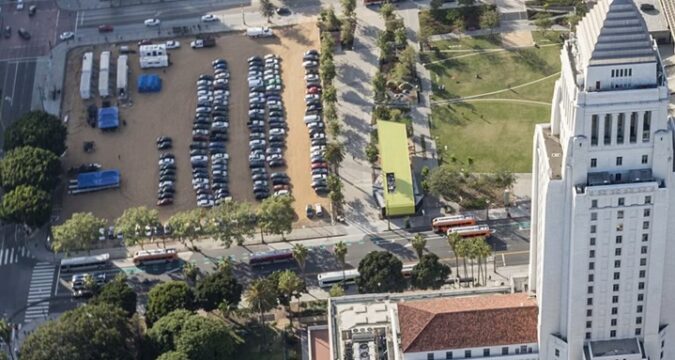
The City of Los Angeles has recently set AltaMed Health Services’ El Corazón Art Park in motion at First Street and Broadway, approving a temporary transformation of the long-vacant city-owned property into a public space celebrating Chicano and Mexican art, culture and wellness. After decades of fencing, stalled plans and an abandoned vision for a permanent civic park, something is finally happening on one of Downtown Los Angeles’ most prominent vacant parcels. But as El Corazón moves forward, another question is emerging:
Should the people who live Downtown have a say in what ultimately happens to this public land?
The Los Angeles Board of Recreation and Park Commissioners initially approved a temporary license agreement with AltaMed on February 5, 2026. On May 7, the commission approved the final plans and specifications for El Corazón Art Park along with an amendment to the AltaMed agreement reflecting the final site plan and additional uses. AltaMed is leasing the property through February 2027 for $175,000, transforming the site into a temporary public space featuring Chicano and Mexican art, wellness programming, community events, food vendors, performances, approximately 30 boxed trees, an art gallery, wellness facilities and a massive heart-shaped installation incorporating a digital sphere.
Long before AltaMed entered the picture, however, the property was slated to become a permanent public park.
The parcel formerly housed the California State Building, which was severely damaged during the 1971 Sylmar earthquake and demolished in 1976. After sitting vacant for decades, the City purchased the property from the State of California in 2013 for approximately $7.5 million as part of former Mayor Antonio Villaraigosa’s 50 Parks Initiative.
The vision was the First & Broadway Civic Center Park, commonly known as FAB Park.
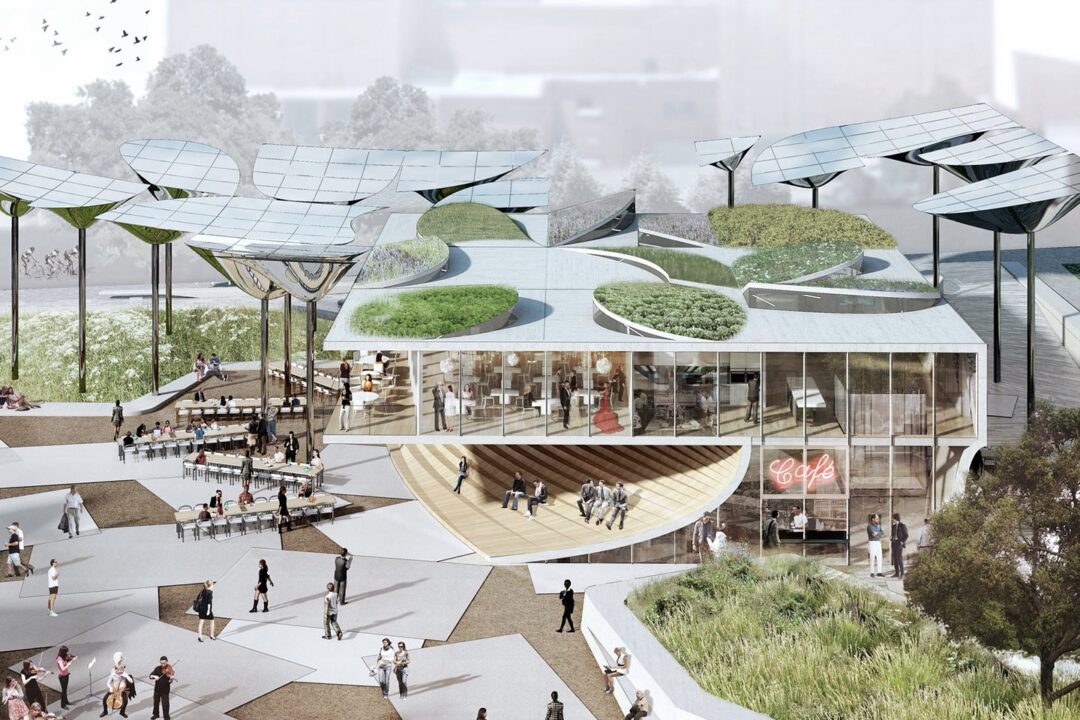
Photo Courtesy: Mia Lehrer and OMA to Design New “FAB Park” in Los Angeles, 2016 — USA Metalocus, Elena Gallego, Paloma de la Quintana
FAB Park also had a powerful political champion at City Hall: then-Councilmember José Huizar, whose 14th District included Downtown Los Angeles. Huizar and his office helped advance the park, and millions of dollars in Quimby development funds were directed toward the project during his tenure. His office worked with Recreation and Parks and other City departments as FAB moved through planning and design.
The City then conducted an international design competition involving four finalist teams: Mia Lehrer + Associates, now Studio-MLA; AECOM; Eric Owen Moss Architects; and Brooks + Scarpa. The City ultimately selected a team led by renowned landscape architect Mia Lehrer in partnership with OMA and IDEO.
The winning team brought considerable credentials. Studio-MLA has worked on major Southern California public-space and landscape projects, including the Los Angeles River, the Natural History Museum gardens, Hollywood Park and Destination Crenshaw. OMA, co-founded by Rem Koolhaas, is among the world’s best-known architecture firms.
But perhaps more important to the current controversy is how FAB Park was developed.
Downtown residents actually participated in shaping it.
During the original planning process, the City solicited public input about what people wanted from the park, with shade emerging as a major priority. Community involvement continued after the winning design was selected. In 2017, following additional public feedback, the designers revised the plan and replaced nearly 10,000 square feet of proposed hardscape with grassy meadow after residents asked for more greenery and plantings.
A 2020 Recreation and Parks report also documented community and stakeholder consultation concerning food, art and other programming planned for FAB Park.
Approximately $20 million was eventually reserved for construction.
Then the project unraveled.
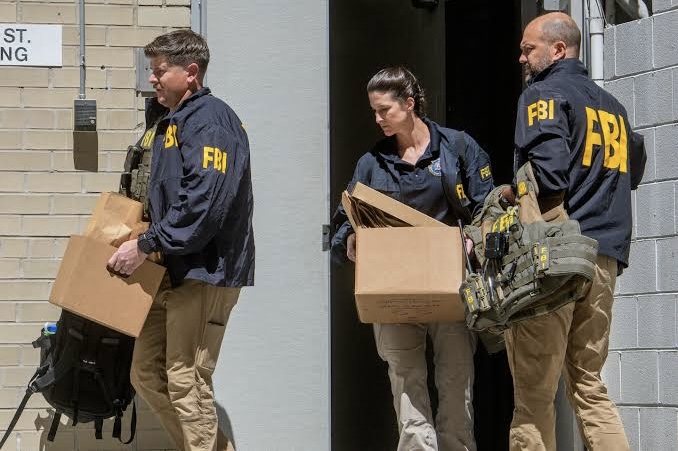
Costs climbed beyond the available budget, but FAB Park also lost one of its most powerful political advocates. Huizar left office amid the federal corruption investigation that eventually resulted in his guilty plea and prison sentence. His downfall became part of the broader political backdrop surrounding the stalled project, although there is no evidence that FAB Park itself was part of the criminal conduct to which Huizar pleaded guilty.
Without its former City Hall champion and with construction costs escalating, FAB Park remained stalled. By 2023, approximately $20 million reserved for the project had been redirected to other park improvements, including the park beneath the Sixth Street Viaduct. First and Broadway remained fenced, empty and undeveloped.
But residents did not simply forget about it.
When a proposal emerged in 2023 to temporarily use First and Broadway for homeless housing, residents from surrounding Downtown buildings organized and spoke before the Downtown Los Angeles Neighborhood Council, which ultimately voted against supporting the proposal. The episode demonstrated that Downtown residents continued to view the property and its planned park use as an important neighborhood issue years after FAB’s construction had stalled.
The timing of the AltaMed approvals is particularly significant.
According to the Los Angeles Times, AltaMed began discussing the property with City officials by 2024. By September 2025, the organization had developed a long-term proposal seeking a 35- to 55-year ground lease for a permanent cultural campus at First and Broadway.
That proposal was much larger than El Corazón Art Park. The envisioned campus could include a museum dedicated to Chicano and Mexican art, a theater, library, restaurant, bar, health clinic, underground parking and storage. Earlier communications placed parts of the proposed development at approximately $218 million.
On February 5, 2026, the Board of Recreation and Park Commissioners approved only a temporary license agreement allowing AltaMed to operate El Corazón Art Park through February 2027. On May 7, the commission approved the park’s final plans and an amendment reflecting its final design and uses. AltaMed’s current agreement does not grant it a 35- to 55-year lease or permanent control of the property.
The controversy comes from the order in which these events occurred. AltaMed had already developed and discussed a long-term vision for the property before seeking approval for the temporary park. Materials connected to El Corazón have also described the temporary project as laying the foundation for a longer-term partnership involving a future Museum of Chicano and Mexican Art.
The key distinction is simple: the permanent campus was a proposal; the temporary art park is the project that was approved.
Councilmember Ysabel Jurado has similarly distinguished her support for the temporary activation from support for any permanent development. For now, the only AltaMed project approved for First and Broadway is the temporary El Corazón Art Park, scheduled to operate through February 2027.
Enter DTLA RA
That history is now fueling questions from the Downtown Los Angeles Residents Association, or DTLA RA, a grassroots, all-volunteer and nonpartisan organization that describes its mission as lifting up the voices of Downtown residents and advocating for improvements affecting their community.
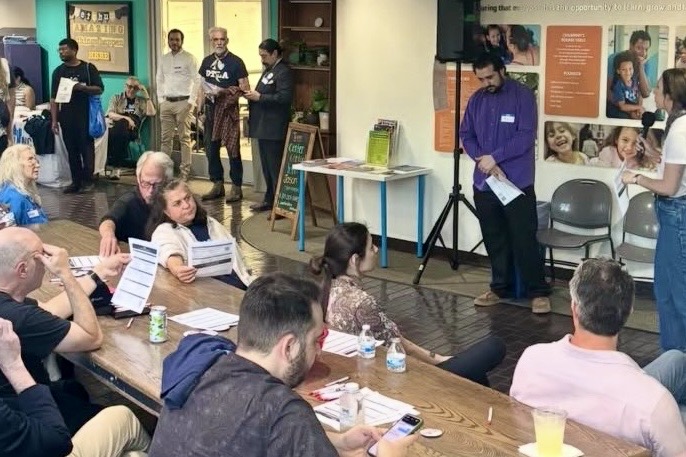
“We’re asking for a full, fair and transparent process for the long-term use.” — Cassy Horton, DTLA RA co-founder, told the L.A. Times. “This pattern of moving funding away from long-promised community-supported projects is a huge concern for the neighborhood.”
To be certain, DTLA RA has made it known that they weren’t for or against the park and it would be better than the existing dirt lot. However, residents surveyed by DTLA RA said they were concerned of future projects moving forward without residence input was the paramount issue.
“This parcel sits across from City Hall, arguably the most significant piece of land in Los Angeles. It deserves commensurate care that it has not yet received.” — Cassy Horton during City Council public comment.
The associations public statement reads, “Residents are entitled to ask whether the ‘temporary’ framing is serving as a bridge to something more permanent before the public has had a fair opportunity to weigh in.” — Downtown Los Angeles Residents Association
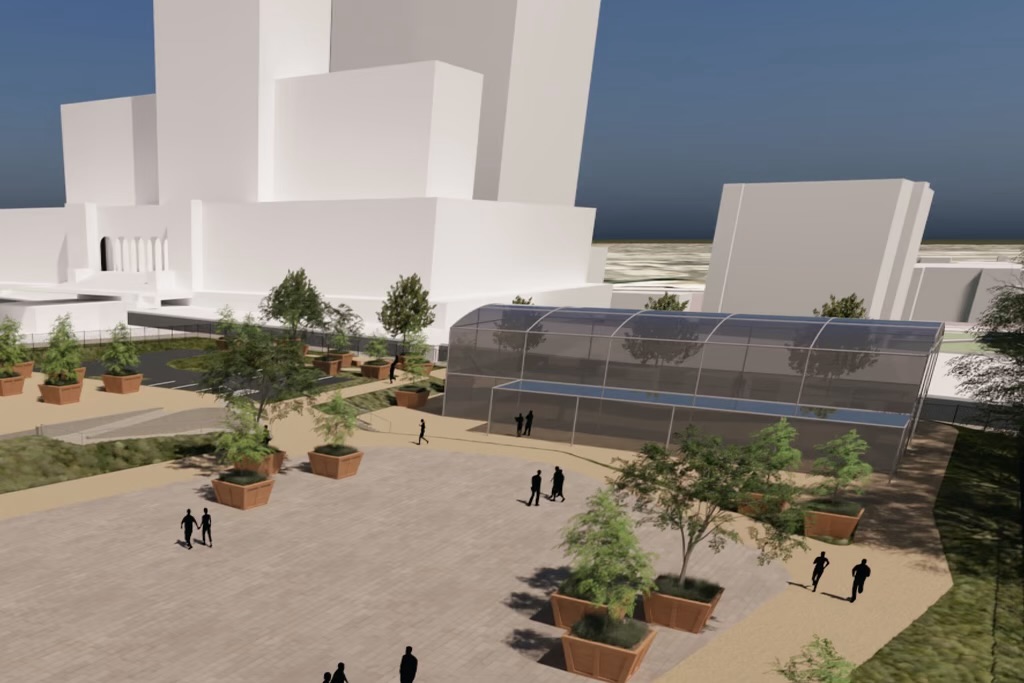
For DTLA RA, the argument is not that the organization itself should decide what happens at First and Broadway. It is that residents had previously been given a role in determining the future of this particular piece of public land, and when the City began moving away from the park they had helped shape toward a substantially different use, residents should have been invited back into that conversation.
But AltaMed’s own history makes this considerably more complicated than a simple residents-versus-developer story.
AltaMed is not a healthcare organization that suddenly developed an interest in Chicano culture.
Its history reaches directly into the Chicano Movement. A core group of Brown Berets established the East LA Barrio Free Clinic in 1969 to provide affordable healthcare to Mexican and Latino communities that lacked adequate access to medical care. That clinic ultimately evolved into AltaMed, which today operates more than 60 community clinics and related healthcare services throughout Los Angeles and Orange counties.
AltaMed’s cultural accomplishments are equally significant.
The organization began collecting art in the 1970s and today maintains approximately 4,000 works dating from the early 1900s to the present. AltaMed says its collecting strategy seeks to tell the story of Chicano history and culture through visual art.
Its collection includes works by major Chicano artists including Carlos Almaraz, Judith F. Baca, Frank Romero, Patssi Valdez, John Valadez, Laura Aguilar, Roberto Gil de Montes and César Martínez, along with Mexican artists including Rufino Tamayo, Raúl Anguiano, Graciela Iturbide and José Chávez Morado.
AltaMed has also incorporated art throughout its healthcare facilities, commissioned murals and sculptures, offered art programming and loaned pieces to exhibitions around the country. Its institutional history even intersects with one of the defining moments of the Chicano Movement: the collection includes Frank Romero’s Death of Ruben Salazar, memorializing journalist Rubén Salazar, who was killed during the 1970 National Chicano Moratorium in East Los Angeles.
Those accomplishments establish something important in this debate: AltaMed has a legitimate and decades-long connection to Chicano healthcare, history, art and culture. Its proposal for a Chicano cultural institution did not appear out of nowhere.
But impressive credentials do not eliminate questions about public process. Shouldn’t the same standard should be applied to the celebrated designers behind FAB Park?
Studio-MLA’s Destination Crenshaw, for example, was conceived as a major outdoor cultural project celebrating Black Los Angeles and protecting the cultural identity of the Crenshaw community. Yet the project has existed within a larger conversation about gentrification and displacement along the Crenshaw corridor.
That does not establish wrongdoing by Studio-MLA or Destination Crenshaw. Rather, it demonstrates why even culturally significant projects created with admirable intentions can generate legitimate questions about development, neighborhood change and community participation.
Supporters see El Corazón as a practical solution to an embarrassing problem. A prominent piece of public property directly across from City Hall that has remained fenced and barren for years can finally become accessible while providing art, landscaping, wellness programming and cultural activities.
Critics see an unanswered question:
What comes next?
If AltaMed has already developed a permanent vision for the property, could establishing El Corazón there create momentum for that much larger development later?
Materials associated with El Corazón have described the temporary activation as laying a foundation for a longer-term partnership involving a future Museum of Chicano and Mexican Art. That language has contributed to concerns that what begins as a temporary activation could eventually influence the City’s decision about the permanent use of the property.
AltaMed has not been granted permanent control of First and Broadway. Its current agreement runs only through February 2027, and Councilmember Ysabel Jurado has distinguished her support for the temporary activation from support for any future permanent development.
Still, the comparison between the two visions is difficult to ignore.
FAB Park emerged from a City-backed international competition involving accomplished designers, substantial public funding and direct community participation before escalating costs and political changes ultimately helped stop it.
AltaMed brings an equally compelling history: roots in the Chicano Movement, more than half a century of community healthcare work and an approximately 4,000-piece collection documenting generations of Chicano and Latino artistic achievement.
Neither history needs to be diminished for the other to be taken seriously.
Nor does this have to become a fight over whether Chicano art belongs in Downtown Los Angeles. AltaMed’s cultural credentials are substantial. The separate question is how Los Angeles should decide the permanent future of public land.
The City purchased First and Broadway with public money for a public park. Residents participated in shaping that park. Their feedback changed its design. Millions of dollars were allocated. Residents continued taking an interest in the property even after construction stalled.
If Los Angeles has now concluded that FAB Park is no longer the best future for First and Broadway, that may ultimately be a legitimate decision.
But should changing direction does not erase the process that came before it?
El Corazón could prove to be an extraordinary addition to Downtown Los Angeles. FAB Park could still deserve another opportunity. A future project might even combine substantial public green space with AltaMed’s cultural vision.
The question is not whether one side deserves to win. It is whether the people who live around this publicly owned property deserve a meaningful opportunity to participate when its future changes.
After more than a decade of promises, competitions, designs, community meetings, political upheaval, funding, delays and changing plans, First and Broadway has become a test of something much larger than what gets built on one vacant lot: when Los Angeles changes its mind about the future of public land, how much of a voice should the public have in deciding what comes next?