|
Getting your Trinity Audio player ready...
|
On almost any given day in downtown Los Angeles, volunteers arrive in Skid Row carrying trays of food, bottled water, and the best of intentions. But there’s one critical item many forget to bring: trash bags. While food distribution addresses immediate hunger, the packaging and leftover waste are often left behind, adding to an already severe problem in a neighborhood where trash collection is inconsistent and city resources are stretched thin.
As hundreds of churches, community groups, and individuals distribute tacos, burritos, sandwiches, and hot meals to the thousands of people living within Skid Row’s dense network of encampments, oversight may seem minor, yet community organizers say it has become a major contributor to the growing sanitation crisis across Skid Row’s roughly 50-block area.
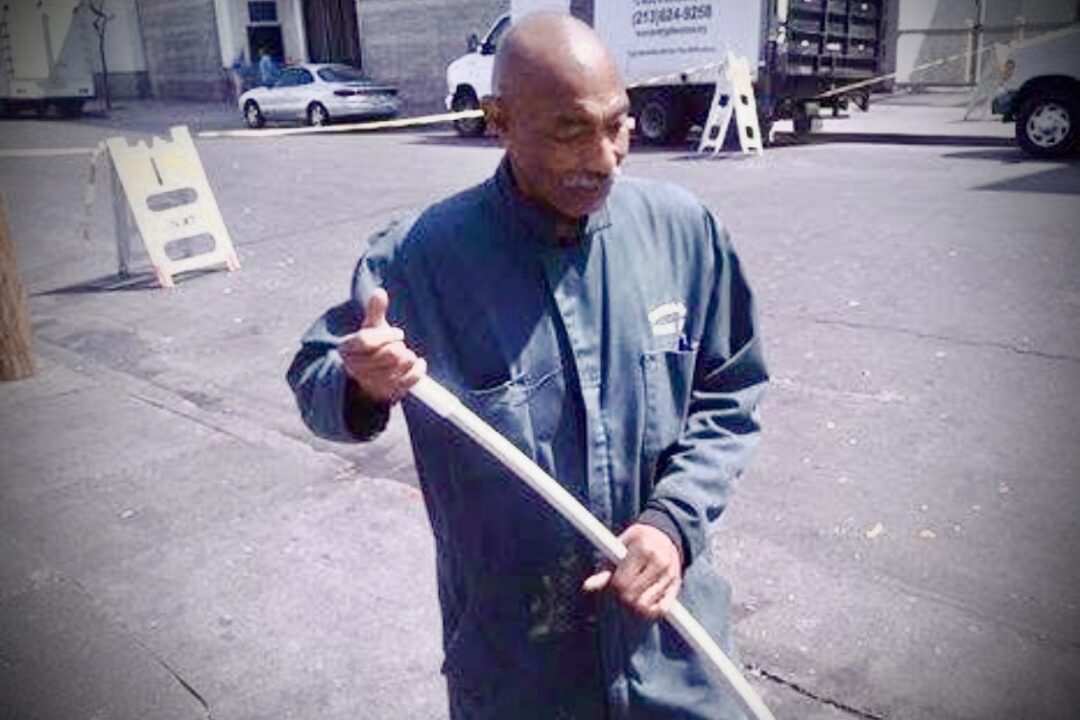
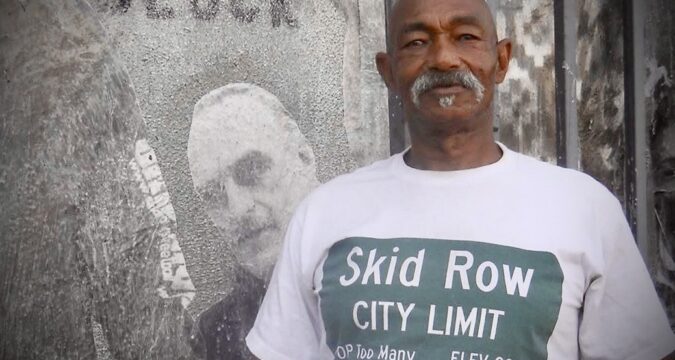
For longtime Skid Row advocate Manuel “OG Man” Compito, the issue has taken decades of direct action and is still, quite urgent.
“We, Skid Row, want a clean, safe, healthy neighborhood,” Compito said.
A Neighborhood Under Pressure
Skid Row has long been one of the most visible centers of homelessness in the United States. Alongside established programs, independent volunteers frequently arrive to distribute food directly on the streets with multiple groups setting up along the same block.
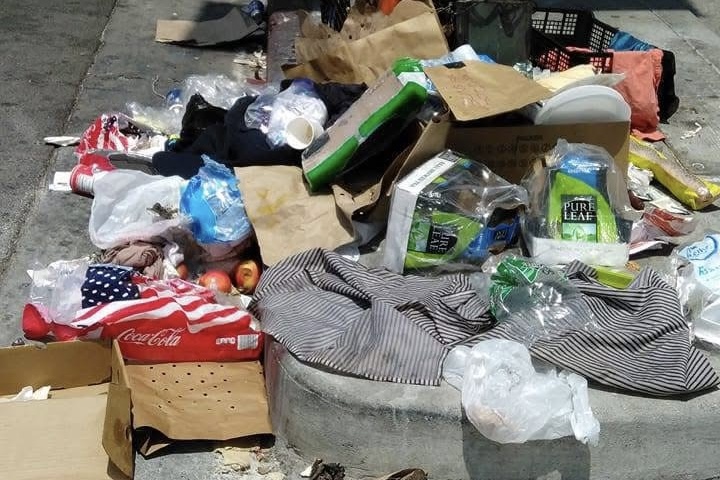
While driven by compassion, these efforts can unintentionally worsen sanitation issues as food containers, plastic utensils, napkins, and bags quickly accumulate when hundreds of meals are handed out in areas lacking sufficient trash bins or collection services.
Photos Courtesy Skid Row Brigade
The situation is further compounded by illegal dumping, which has become increasingly common. Furniture, construction debris, and household waste often appear overnight in alleyways and on sidewalks.
With the city’s sanitation system under strain, the neighborhood struggles to keep pace with mounting waste.
A Longstanding Call for “Feed & Clean”
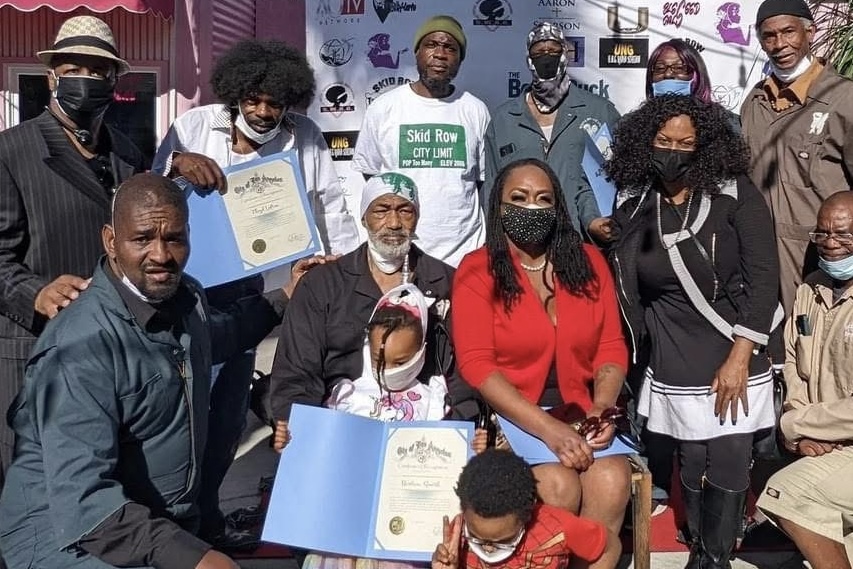
Photos Courtesy Skid Row Brigade
The issue is not new. In 2014, a Skid Row community meeting addressed whether outside groups should even be allowed to distribute food in the neighborhood. The outcome was a simple, community-driven standard: groups should “Feed & Clean.”
The idea was straightforward—if you come to serve meals, you also take responsibility for the waste created in the process.
According to community advocates, that policy has not received the legislative support needed to be formally implemented or consistently enforced. As a result, the burden of cleanup continues to fall largely on residents and grassroots organizations already working with limited resources.
Skid Row Brigade – Grassroots Cleanup Efforts
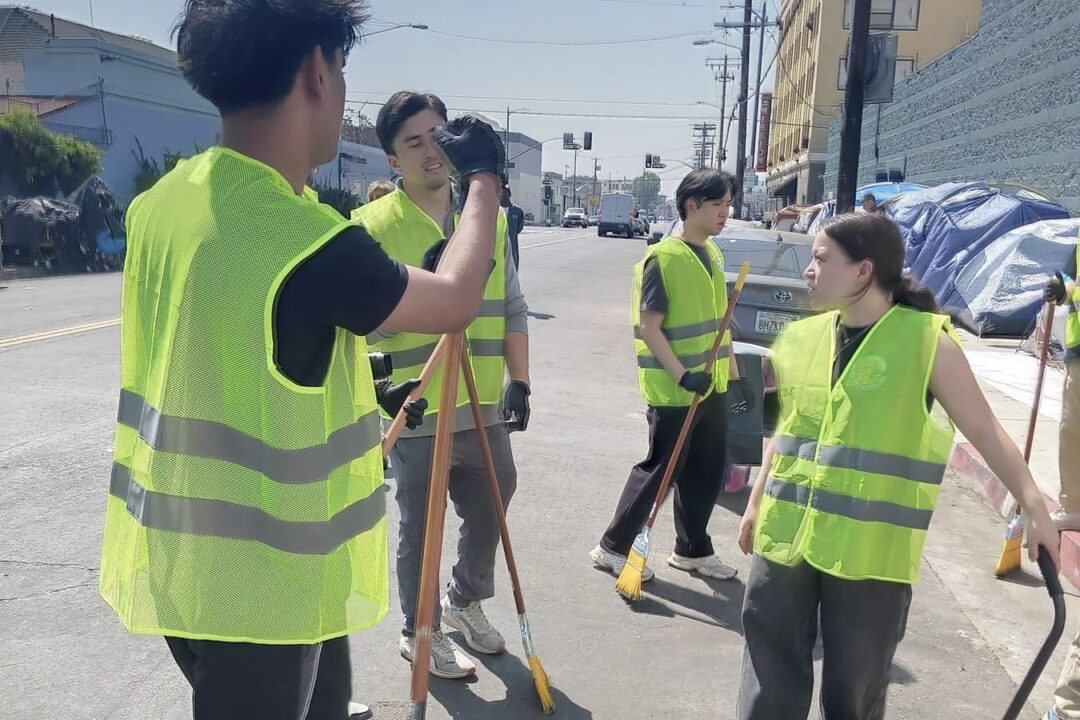
Photos Courtesy Skid Row Brigade
In response, some residents and activists have taken matters into their own hands.
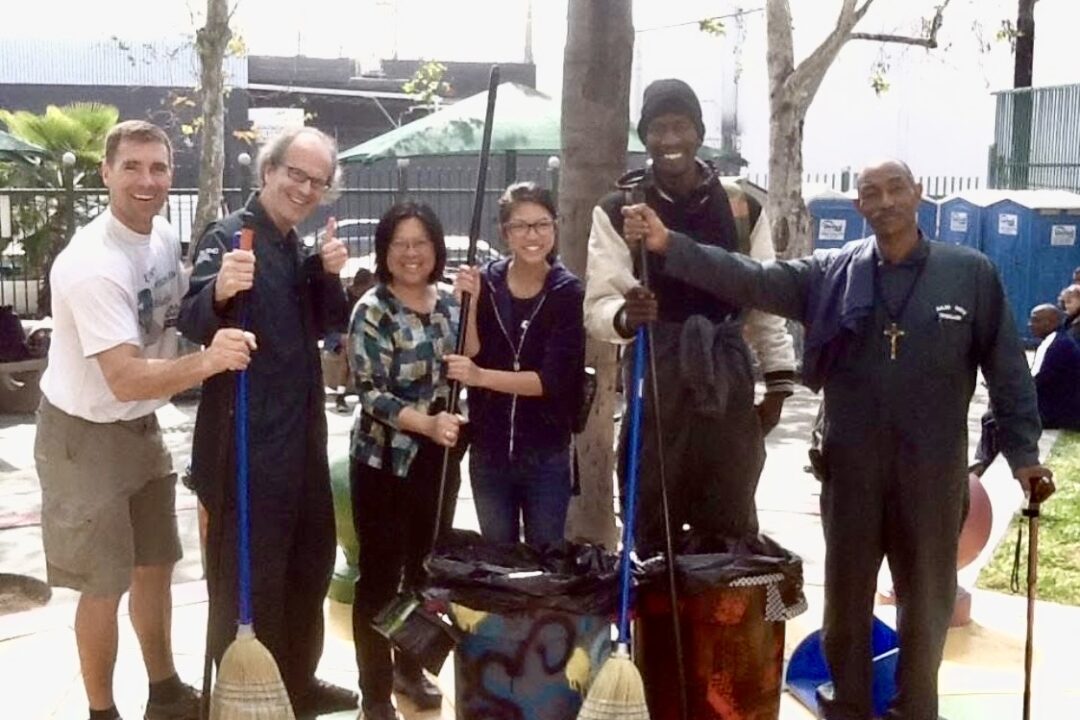
Among the most visible is Compito, a longtime community organizer dedicated to improving conditions in Skid Row. Through initiatives like Skid Row Brigade, Operation Face-Lift Skid Row, the Funky Trash Can campaign, and the Skid Row Adopt-A-Block program, he has mobilized volunteers to collect garbage, distribute trash cans, and promote shared responsibility for keeping the neighborhood clean.
His message to those who come to serve meals remains simple: bring trash bags—and clean up after yourself.
He believes feeding people must go hand-in-hand with maintaining the environment they live in. Without that balance, well-meaning efforts risk contributing to the very challenges they aim to address.
Beyond Sanitation
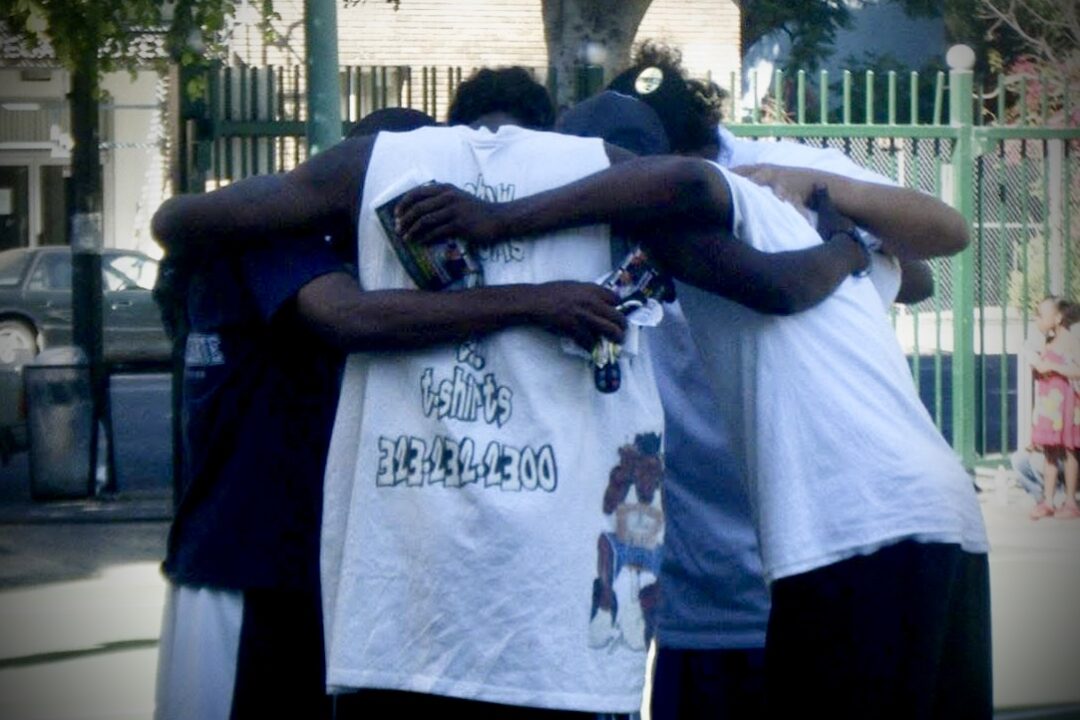
Photos Courtesy Skid Row Brigade
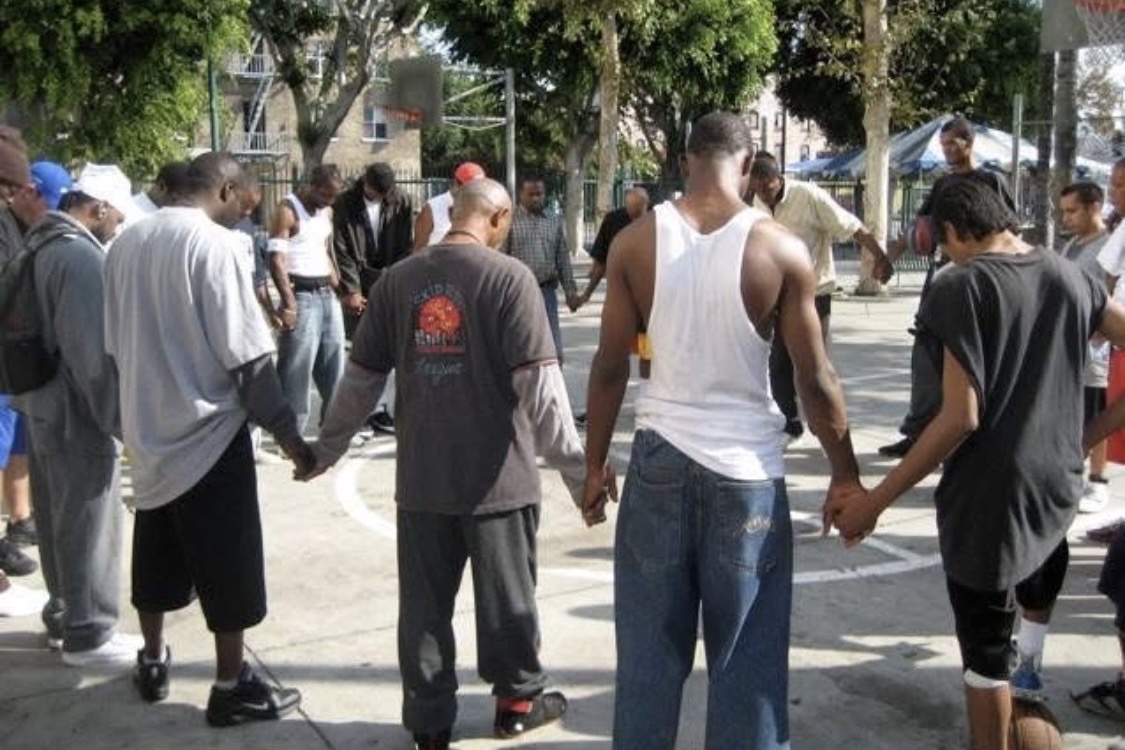
Compito’s work extends beyond sanitation. Through his nonprofit, OG’s N Service Association, he has organized beautification projects, youth programs, and community events. One standout initiative is the Skid Row Streetball League at Gladys Park, which fosters connection, teamwork, and positive engagement among residents.
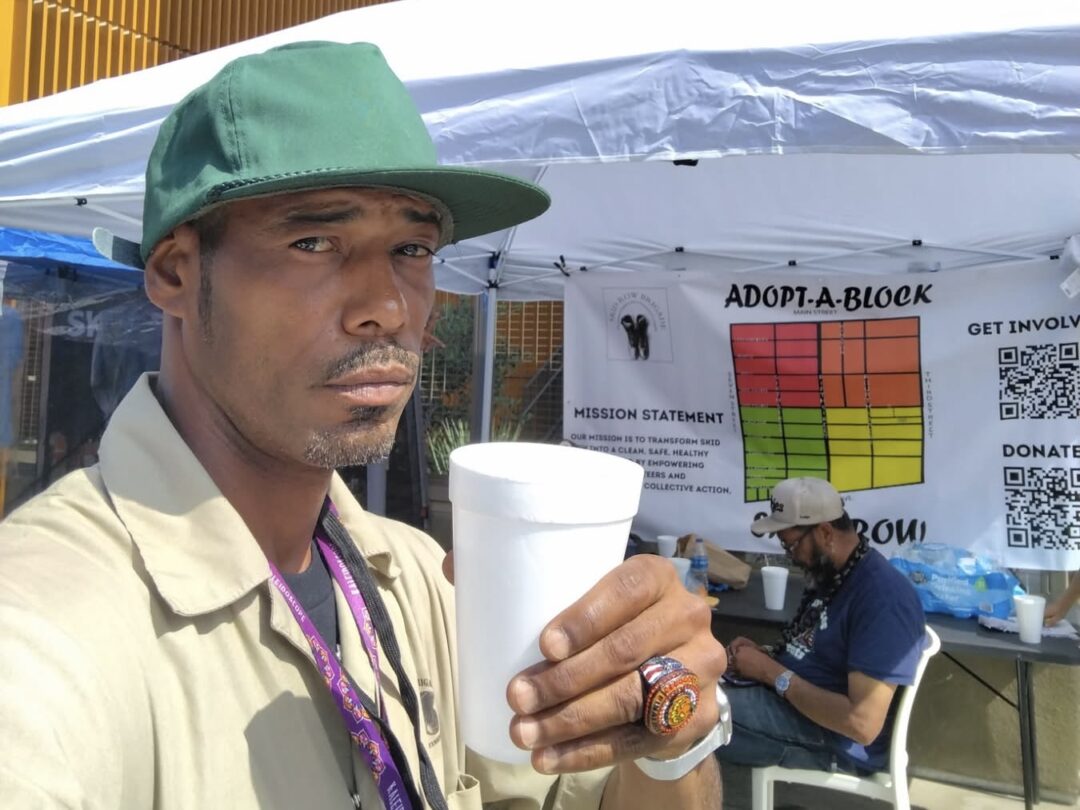
Skid Row Adopt-A-Block!
Photos Courtesy Skid Row Brigade
A key component of this broader effort is the Skid Row Adopt-A-Block initiative, which emphasizes long-term, community-led stewardship. Its mission reflects a focus on both accountability and empowerment:
“We are committed to shifting the mindset of our community from negative to positive through consistent engagement, block-by-block stewardship, and a shared belief in dignity, hope, and possibility. Through initiatives like Operation Facelift/Skid Row, Adopt-A-Block, and the Skid Row Positive Movement, we work to restore pride, strengthen unity, and create lasting change. Together, we build solutions not by standing on the sidelines, but by lifting one another up and taking responsibility for the future of Skid Row.” – Manuel “OG Man” Compito.
That philosophy was recently put into action during a four-day community engagement event in Skid Row. During the event, Skid Row Brigade brought together residents, stakeholders, service providers, local partners, and community members to directly address growing concerns around trash and unsanitary street conditions.
Photos Courtesy Skid Row Brigade
The effort focused on direct engagement—encouraging shared responsibility while taking meaningful steps toward improving cleanliness, safety, and overall quality of life throughout the neighborhood.
Programs like “CA$H 4 TRA$H” further reinforce this approach by incentivizing residents to collect and properly dispose of waste, offering compensation for each bag turned in. The initiative not only helps reduce trash but also promotes dignity, ownership, and active participation in improving the community.
Calling for Coordination and Support
Community advocates say that solving Skid Row’s sanitation challenges will require stronger coordination between volunteer groups, service providers, and public agencies—as well as meaningful institutional and legislative support.
Without that alignment, even the most well-intentioned efforts risk falling short.
Feeding the hungry will always be essential. But those working closest to the issue say the next step is making those efforts more sustainable—ensuring that anyone who comes to help also brings the tools and accountability needed to protect the environment.
Sometimes, the most helpful contribution isn’t another meal.
It’s a box of trash bags—or a commitment to support .