|
Getting your Trinity Audio player ready...
|
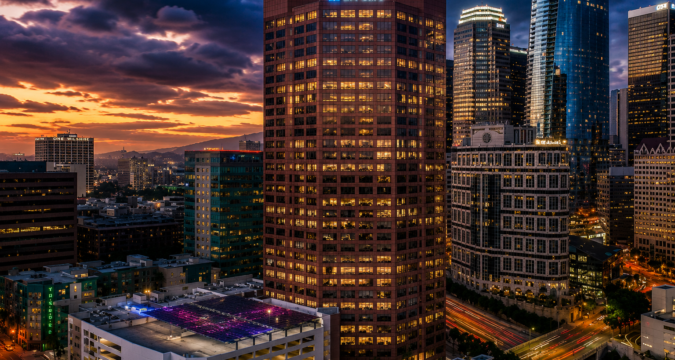
Not long ago, finding office space in Downtown Los Angeles meant competing for it. Today, many of those same buildings sit partially empty, their darkened windows reflecting a dramatically different reality. Rather than waiting for businesses to return, property owners are embracing a new idea: transforming vacant office buildings into places people can call home.
According to the City of Los Angeles Planning Department, the city recently expanded its Adaptive Reuse Ordinance, making it significantly easier to convert underutilized office buildings, hotels, and commercial properties into housing. The policy change comes as Los Angeles faces both a severe housing shortage and historically high office vacancy rates, particularly in Downtown. City officials estimate the revised ordinance could eventually help create as many as 43,000 new housing units throughout Los Angeles.
The idea of converting office buildings into housing is not new. In 1999, Los Angeles adopted one of the nation’s first Adaptive Reuse Ordinances, helping transform dozens of vacant early 20th-century office buildings into the lofts that helped spark Downtown’s residential revival. According to the Los Angeles Conservancy, more than 12,000 housing units were created through adaptive reuse during the ordinance’s first two decades, turning once-empty financial buildings into thriving residential communities throughout the Historic Core and Broadway Theater District.
But much has changed since then.
The COVID-19 pandemic permanently altered how many companies use office space. Remote and hybrid work became commonplace, leaving millions of square feet vacant across Downtown Los Angeles. According to the CBRE, Downtown continues to experience some of the highest office vacancy rates in Southern California as businesses reduce their footprints or relocate to newer, more efficient buildings. Older office towers, many built in the 1960s through the 1980s, have struggled the most to attract tenants.
Historic hotels such as the Morrison Hotel are also returning to their original purpose as affordable housing, while other office and hotel conversions continue to move through the planning process. Together, these projects signal a major shift in how Downtown’s older buildings are being repurposed for the future.
Rather than allowing those buildings to remain underutilized, developers are increasingly choosing residential conversion. Leading the way Jamison Properties recently began converting a 33-story office tower at 1055 W. 7th Street into 686 apartments. The World Trade Center at 350 South Figueroa Street, will be redeveloped into Sky Castle, a 512-unit affordable housing community by Jamison and Kennedy Wilson.
Supporters argue the strategy solves two problems at once. Instead of demolishing structurally sound buildings, adaptive reuse preserves architecture, reduces construction waste, and delivers housing much faster than building entirely new towers. It also brings more residents to Downtown, creating additional customers for restaurants, grocery stores, retailers, and neighborhood businesses that rely on foot traffic.
Challenges remain. Not every office building can be converted economically, and many older structures require extensive plumbing, electrical, seismic, and mechanical upgrades before apartments can be created. Financing also remains difficult as construction costs and interest rates continue to fluctuate. Even so, many developers believe conversions make more financial sense than trying to lease aging office space in today’s market.
Downtown Los Angeles has reinvented itself before—from banking district to loft district, from industrial center to entertainment destination. The next transformation may be its most significant yet. As office vacancies continue to reshape the skyline, the buildings that once housed businesses are increasingly becoming homes, offering a new vision for the future of Downtown while helping address one of Los Angeles’ most urgent needs: housing.