
 Jamie Herrera

|
Getting your Trinity Audio player ready...
|
From billion-dollar security plans and transportation challenges to brighter streetlights, cleaner sidewalks and entertainment zones, Downtown Los Angeles has less than two years to prepare for the world.
Imagine Downtown Los Angeles in the summer of 2028. Olympic banners decorate the streets from the LA Social District to Little Tokyo, while rideshares navigate the Arts District, Fashion District and Historic Core.
Metro trains arrive on schedule, sidewalks are spotless, streetlights illuminate every corner, and police officers maintain steady patrols as spectators explore the city.
Restaurants are packed, hotels are bustling, Gallery Row welcomes new audiences, and entertainment venues, bars and nightclubs come alive with Olympic celebrations.
All is well in the DT, and America takes home the gold!
But are we pipe dreaming?
While preparations for the 2028 Olympic and Paralympic Games are well underway, some of Downtown’s most important improvements remain unfinished, underfunded or awaiting final approval.
With the Olympic flame scheduled to be lit on July 14, 2028, the question remains: Can Downtown Los Angeles get it together in time?
Can We Pull It Off?
Absolutely.
But delivering the perfect Olympics will require more than stadiums, athletes and international television coverage. It will demand unprecedented cooperation between law enforcement agencies, transportation officials, city departments, Business Improvement Districts, property owners, neighborhood organizations and the people who call Downtown home.
It will also require something Los Angeles has struggled with for decades: making sure the money, manpower and political commitments actually translate into visible improvements on the streets.
Here’s to Downtown needs, what’s already happening and what remains to be done.
DOWNTOWN IS SAFE! A Multibillion-Dollar Security Challenge
Public safety will be one of the largest and most expensive undertakings of the 2028 Olympic and Paralympic Games.
On November 18, 2026, LAPD Chief Jim McDonnell estimated that approximately 9,400 officers would be needed daily during the busiest periods just to secure Olympic competition venues. The LAPD expects to supply between one-quarter and one-third of those officers, with the remaining personnel coming from other law enforcement agencies throughout California and potentially beyond.
The United States Secret Service is leading the broader security coordination effort, bringing together federal, state and local agencies to address threats ranging from ordinary street crime to terrorism, drones and cybersecurity.
The estimated price tag is staggering.
According to McDonnell, policing and security for the Games could cost between $3.5 billion and $4 billion, including approximately $1.3 billion for Los Angeles policing alone.
Congress approved $1 billion in federal Olympic security funding in 2025, with distribution anticipated in 2027. Compared with McDonnell’s latest estimates, that leaves a potential funding gap of $2.5 billion to $3 billion, although additional appropriations and funding arrangements could change the picture.
For Downtown, however, security cannot stop at the entrance to an Olympic venue.
Visitors must also feel comfortable walking between hotels, restaurants, parking structures, transit stations and entertainment destinations. Residents and employees must be able to continue their daily routines without losing access to their neighborhoods.
The perfect Olympics could mean a visible, coordinated law enforcement presence, rapid emergency response and effective communication between agencies, private security teams and Downtown stakeholders.
TRANSPORTATION: Moving the World Without Stopping Downtown
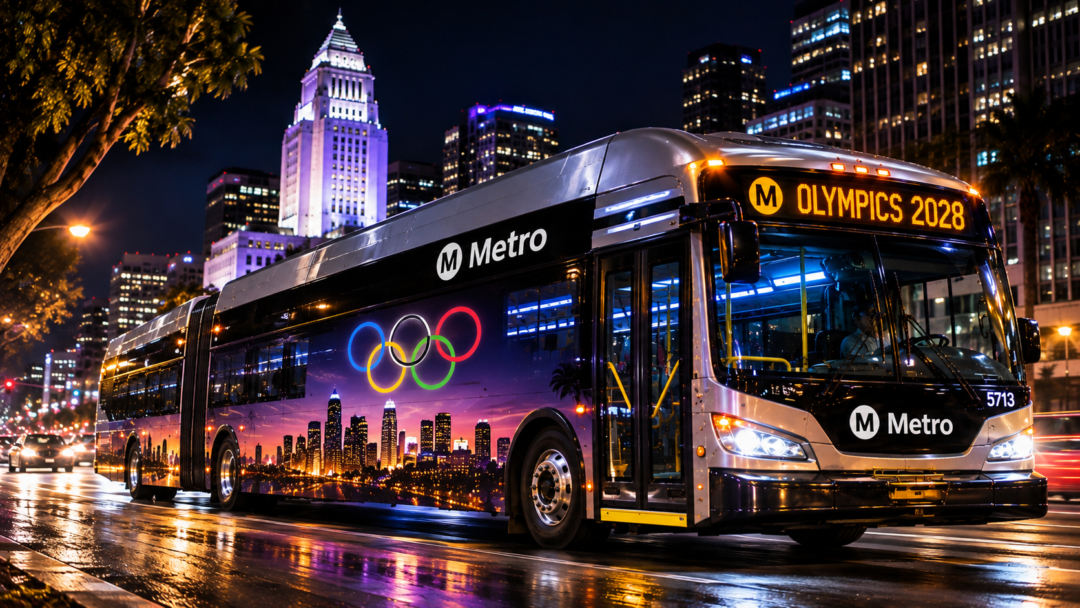
Imagine thousands of international visitors arriving at Union Station, transferring to Metro trains, boarding shuttles and making their way toward Olympic competitions throughout Southern California.
Now imagine that happening while Downtown’s residents, office workers, delivery drivers, restaurant employees and businesses are attempting to maintain their regular schedules.
Transportation may become one of the most complicated logistical challenges of the Games.
Metro anticipates approximately one million additional daily transit trips and is preparing an enhanced transportation network involving roughly 1,750 supplemental buses, temporary bus facilities, shuttle services and priority travel routes.
The agency has requested approximately $2 billion in federal funding to support Olympic transportation. Nearly half would help secure, operate and maintain the additional buses, along with the personnel and facilities needed to support the network.
But securing the money has proved difficult.
Congress approved approximately $94.3 million in Olympic transit funding in February 2026. Another $875 million advanced through a House appropriations committee in June, but that proposal had not become a final appropriation in the reporting reviewed.
Metro also requested $379 million from California lawmakers for Olympic-related transportation improvements, but the state’s 2026–27 budget did not include the requested amount.
Despite those challenges, Metro reported commitments from 28 transit agencies to provide more than 1,000 buses and over 300 personnel as of May 2026.
Transportation officials are also developing a Games Route Network that could include designated lanes on freeways and local streets for authorized Olympic transportation.
CLEAN STREETS: The City, the BIDs and Who Pays for What?
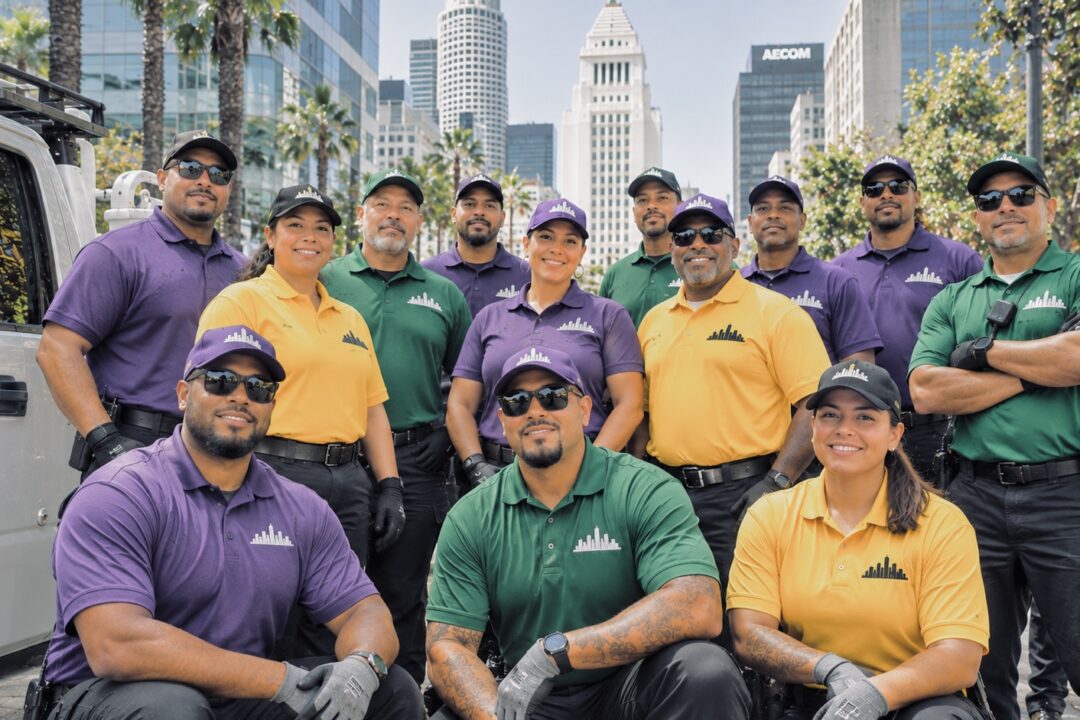
Nothing says a city is ready to welcome the world quite like clean sidewalks, maintained public spaces and streets free of overflowing trash.
Downtown’s Business Improvement Districts, commonly called BIDs, already provide supplemental neighborhood services that include sidewalk cleaning, graffiti removal, trash collection, beautification and maintenance.
These services are largely funded through assessments paid by property owners within their respective districts.
Meanwhile, city agencies, including LA Sanitation and Environment and StreetsLA, maintain their own responsibilities for public infrastructure and municipal services.
During the Olympics, the demands on both systems could increase dramatically.
Thousands of additional pedestrians, visitors, vendors and spectators will require more frequent trash collection, sanitation services and cleanup crews, particularly around transit stations, entertainment zones and major gathering places.
Downtown’s BIDs already have established cleaning operations and valuable neighborhood knowledge, making them natural partners in the preparation effort. And property owners are the ones paying for these supplemental neighborhood services.
The reviewed information does not establish a comprehensive Olympic cleanup budget or a finalized agreement dividing additional sanitation costs among the city, event organizers and Downtown’s BIDs.
LET THERE BE LIGHT! Downtown’s Streetlight Repairs
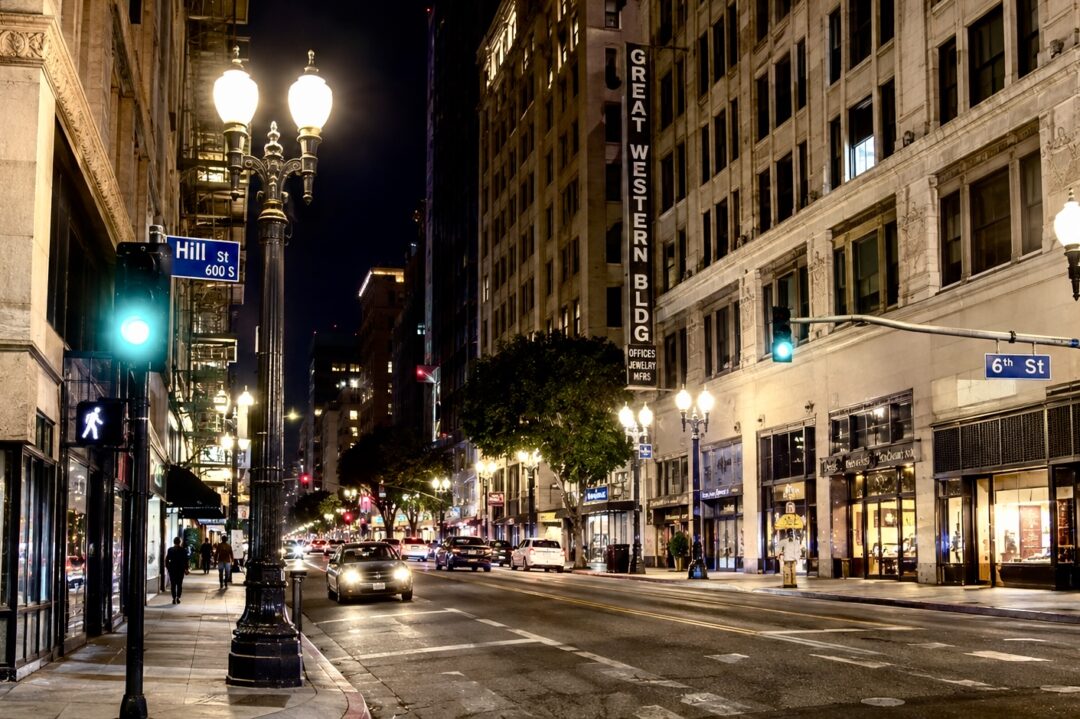
Another essential ingredient in creating a safe and welcoming Downtown is something residents and businesses have been requesting for years: working streetlights.
On November 17, 2026, the Los Angeles City Council voted 13–0 to approve a proposal from Councilmember Ysabel Jurado allocating $1.2 million for a dedicated streetlight repair crew serving Council District 14, which includes much of Downtown Los Angeles.
The proposed funding comes from Council District 14’s AB1290 redevelopment funds, not from federal Olympic security funding, and the transfer remains subject to mayoral approval.
The allocation follows an earlier $1.07 million investment in district streetlight repairs, bringing the two allocations to approximately $2.27 million.
Jurado’s office reported in February 2026 that its dedicated repair program had restored or strengthened more than 400 streetlights throughout the district, with work expanding into Downtown.
Meanwhile, Mayor Karen Bass announced a separate citywide streetlight initiative in March 2026, setting a goal of repairing or replacing up to 60,000 streetlights over two years using solar technology.
The initiative addresses a longstanding repair backlog and damage associated with copper wire theft.
By late October, the Mayor’s Office reported nearly 5,000 solar streetlights installed citywide, with approximately 6,500 expected by the end of 2026.
For Downtown, these investments could make an enormous difference.
Well-lit intersections, transit stops, parking areas and pedestrian corridors can improve visibility and help residents and visitors feel more comfortable navigating the city after dark.
SURVEILLANCE: The Social District’s SafeCity Connect Initiative
Downtown’s Social District is exploring another approach to improving public safety through coordinated surveillance technology.
Under the leadership of Nolan Marshall III, the Social District has been advancing neighborhood safety initiatives designed to strengthen cooperation among property owners, businesses and security providers.
At the district’s October 2026 annual meeting, plans involving SafeCity Connect were highlighted as part of an effort to link existing private security cameras facing public streets.
The proposed network would make relevant footage more accessible when investigating incidents, identifying suspects and documenting criminal activity.
According to reporting from the South Park Neighborhood Association, SafeCity Connect has contracted with the district to develop the system, although a test area must be determined before final approval.
The program was not described as a fully operational, real-time police dispatch network. Future capabilities could potentially include more advanced monitoring technology.
ENTERTAINMENT: Making the Olympics a Citywide Celebration
The perfect Olympics would not be limited to spectators fortunate enough to hold tickets to competition venues.
It would transform Los Angeles into a citywide celebration of sports, culture, music, food, art and international friendship.
City officials are already developing plans for Olympic activation zones, public viewing parties and cultural celebrations that would allow residents and visitors to participate in the excitement without entering a stadium.
In September 2026, Los Angeles released a report examining potential activation locations, community celebrations and public viewing opportunities.
The City Council has directed planning for at least 28 activation locations, with at least one in every council district.
These locations could host public screenings, performances, cultural programming and other community gatherings.
But the program remains a work in progress.
The city’s September report indicated that funding for the activation-zone program had not been identified or provided in the 2026–27 municipal budget.
Security fencing, staffing, private security contractors, sanitation and other operational expenses could add considerably to the final cost.
The city’s Department of Cultural Affairs is also developing a broader Olympic and Paralympic cultural framework that could bring performances, exhibitions, festivals and public art to communities throughout Los Angeles.
HOW DO WE GET TO THE PERFECT OLYMPICS?
A successful Olympics will require more than a spectacular opening ceremony and a few weeks of international attention.
It will require coordinated action, reliable funding and a commitment to improving the daily experience of Downtown Los Angeles.
The city must secure the resources needed for public safety, finalize transportation plans, coordinate sanitation services, repair damaged infrastructure and establish a workable framework for neighborhood entertainment and cultural celebrations.
City departments, elected officials, Business Improvement Districts, businesses, residents and community organizations will need to work together, with clear responsibilities and realistic deadlines.
And the public will demand to know how much these preparations will cost, where the money is coming from and which improvements will remain when the Games are over.


 KeriSellsLA
 Hanny Playa

